Summary
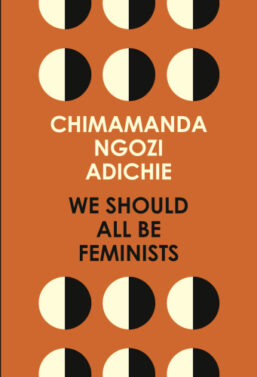
We Should All Be Feminists is a modified version of a TED talk delivered by Chimamanda Ngozi Adichie in 2012. The work offers a modern definition of feminism, rooted in the belief that gender as it functions today is a grave injustice. Adichie argues that both men and women must do better to fix the systemic problems of gender inequality. She emphasizes that feminism is not about hating men or renouncing culture, but about advocating for the social, political, and economic equality of the sexes. The essay concludes with a call to change how we socialize children to create a fairer, happier world where individuals can be truer to themselves.
Plot
As a non-fiction essay based on a speech, the “plot” follows a thematic progression through personal anecdotes and social commentary:
- Childhood Foundations: Adichie begins with the story of her friend Okoloma, the first person to call her a feminist, which at the time was used as a “not a compliment”. She also recounts a primary school incident where she was denied the role of “class monitor” despite having the highest test score, simply because she was female.
- Adult Observations: She shares experiences in Lagos and abroad, such as being ignored by waiters who only greet her male companions, and the “theatrics” of a parking attendant who thanked her male friend for a tip she provided.
- Analysis of Socialization: The narrative shifts to an analysis of how we raise children. Adichie discusses the “hard, small cage” of masculinity that stifles boys and the pressure on girls to shrink themselves to cater to male egos.
- The Call to Action: Adichie addresses common counter-arguments—such as those involving biology or “culture”—and ends by redefining a feminist as anyone who recognizes the problem with gender and wants to fix it.
Setting
The setting is central to Adichie’s observations on gender:
- Nigeria: Much of the text is set in Nsukka (where she attended primary school) and Lagos (the metropolis where she observes modern social dynamics in restaurants and clubs).
- The United Kingdom: Specifically TEDxEuston in London, where the talk was originally delivered in 2012.
- The United States: Adichie references the experiences of friends in the US and her own time spent there.
Themes
- Gender Socialization: The primary theme is how society “prescribes how we should be rather than recognizing how we are”. This includes teaching girls to aspire to marriage and teaching boys to be afraid of vulnerability.
- The Burden of Masculinity: Adichie explores how defining masculinity narrowly leaves men with “fragile egos” and the pressure to always prove their status through material means.
- Cultural Evolution: She argues that “culture does not make people. People make culture”. She uses the historical change in the treatment of twins in Igbo culture to show that traditions can and should evolve when they no longer serve humanity.
- The Specificity of Feminism: She rejects the vague term “human rights” in favor of “feminism,” arguing that using a general term denies the specific and particular problem of gender that targets women.
Characters
Major Character
- Chimamanda Ngozi Adichie: The narrator and protagonist of the essay. She shares her personal journey from a “Happy African Feminist Who Does Not Hate Men” to a woman who unapologetically embraces her femininity while demanding respect.
Minor Characters
- Okoloma: A close childhood friend who died in a 2005 plane crash; he was the first person to call Adichie a feminist.
- Louis: A “brilliant, progressive” friend of Adichie who initially struggled to see the systemic challenges women face until witnessing them firsthand.
- Kene: Adichie’s brother, whom she describes as the “best feminist I know” because of his masculine yet kind nature.
- The Teacher: A primary school teacher who insisted the class monitor must be a boy.
- The American Friends: Women in managerial or high-paying roles who struggle with the need to be “liked” and the fear of appearing “aggressive”.
Literary Devices
- Personal Anecdote: Adichie uses stories from her own life—like the “ugly suit” she wore to be taken seriously as a teacher—to make abstract concepts of gender inequality relatable.
- Metaphor: She describes masculinity as a “hard, small cage” to illustrate the restrictive nature of traditional gender roles for men.
- Irony: Adichie uses irony when discussing the “baggage” of the word feminist, listing contradictory stereotypes like “you hate bras” or “you don’t use deodorant”.
- Rhetorical Questions: She frequently asks questions to challenge the reader’s assumptions, such as, “Why should a woman’s success be a threat to a man?”.
- Alliteration: She mentions the “Lilly Ledbetter law” while discussing the reality of the gender pay gap in the US.