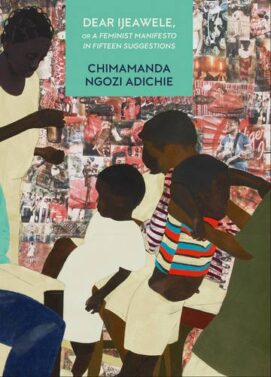
Summary
The book is a feminist manifesto written in the form of a letter from Chimamanda Ngozi Adichie to her childhood friend, Ijeawele. The letter is a response to Ijeawele’s request for advice on how to raise her newborn daughter, Chizalum, as a feminist. Adichie provides fifteen specific suggestions that serve as a practical map for feminist thinking, emphasizing the importance of equality, authenticity, and the rejection of restrictive gender roles. The book argues that raising a child differently is a “morally urgent” task to create a fairer world for both women and men.
Plot
Because the work is a manifesto and a letter rather than a traditional narrative, its “plot” follows a structured progression of ideas rather than a chronological story:
- The Request and Premise: The letter begins with the author’s reaction to Ijeawele’s request and the introduction of two “Feminist Tools”: the premise that “I matter equally” and the “reversal test” to identify gender inequality.
- The Early Years (Suggestions 1–5): The focus is on the parents’ behavior, urging the mother to remain a “full person” beyond motherhood, demanding equal participation from the father, and teaching the child that gender roles are “absolute nonsense”.
- Socialization and Language (Suggestions 6–9): Adichie discusses the importance of questioning language (e.g., rejecting “princess” or “lady mechanic”), teaching the child to read, and ensuring she does not see marriage as an achievement.
- Identity and Appearance (Suggestions 10–11): The advice shifts to encouraging physical activity, redefining beauty and “neatness” (especially regarding hair), and providing a strong Igbo and African identity.
- Autonomy and Difference (Suggestions 12–15): The final sections cover delicate topics like talking about sex early to remove shame, navigating romance and money, acknowledging that the “oppressed” are not saints, and finally, teaching the child to respect difference as a normal part of the human experience.
Setting
The book is set in a contemporary, globalized context, frequently shifting between Nigeria (Lagos and Nsukka) and the United States. It is deeply rooted in Igbo culture and tradition, referencing specific customs, language, and social expectations prevalent in South-Eastern Nigeria while also addressing Western feminist debates.
Themes
- Full Equality: The unbending belief that women matter as much as men, rejecting “Feminism Lite” or conditional equality.
- The Absurdity of Gender Roles: The idea that domestic work, cooking, and career choices should be gender-neutral life skills rather than biological mandates.
- The Power of Language: How words like “allow,” “help,” and “princess” reinforce power imbalances and patriarchal assumptions.
- Rejecting Likeability: The importance of teaching girls to be honest, kind, and brave instead of merely trying to please others.
- Identity and Heritage: The value of a proud Igbo and African identity to counter globalized images of white-centric beauty and achievement.
- The Deconstruction of Shame: Removing shame from female biology (periods) and sexuality.
Characters
Major Characters
- Chimamanda Ngozi Adichie: The author and narrator of the letter; a celebrated feminist writer who draws on her own experiences as a daughter, sister, and mother.
- Ijeawele: The recipient of the letter and Adichie’s “brilliant, strong, kind” childhood friend. She is a new mother seeking to raise her daughter with feminist values.
- Chizalum Adaora: Ijeawele’s infant daughter, who is the subject of the suggestions and represents the next generation.
Minor Characters
- Chudi: Ijeawele’s husband, who is encouraged to be an equal participant in parenting.
- Ugomba and Chinakueze: Mentioned as “good non-blustering men” who serve as positive male role models.
- Nwabu: A friend whose experience as a single father is used to illustrate that fathers should not be praised for “helping” but simply for being parents.
- Ikenga: A friend used as an example of someone who dismisses sexism or minimizes its impact.
- The “Village of Aunties”: Notable African women like Ama Ata Aidoo, Dora Akunyili, and Ngozi Okonjo-Iweala, suggested as inspirations for Chizalum.
Literary Devices
- Epistolary Form: The book is written as a personal letter, which makes the political manifesto feel intimate, urgent, and accessible.
- The “Reversal Test”: A recurring analytical tool where Adichie asks if a situation would be perceived differently if the genders were reversed.
- Personal Anecdotes: The use of real-life stories—such as the “lady mechanic,” the cashier horrified by a girl in blue, or a seven-year-old wanting a toy helicopter—to ground abstract concepts in reality.
- Metaphor and Simile: For example, comparing feminism to pregnancy (“You either are or you are not”) or gender roles to a “straitjacket”.
- Rhetorical Questions: Used to challenge the reader’s assumptions, such as asking why power must be disguised when held by a woman.
- Allusion: Referencing historical figures and contemporary political events (like Hillary Clinton’s Twitter bio) to illustrate global feminist issues.