Summary
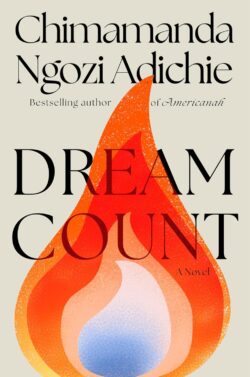
Dream Count is a multi-perspective novel exploring the interconnected lives of three Nigerian-born women Chiamaka, Zikora, and Omelogor alongside Nafissatou, a Guinean immigrant. Framed by the COVID-19 pandemic lockdown, the narrative delves into the women’s pasts, their romantic failures (the titular “dream count”), and their struggles with cultural expectations, trauma, and the desire to be “truly known”. While Chiamaka reflects on a string of international lovers from her home in Maryland, Zikora navigates the isolation of single motherhood after being abandoned by her partner. Simultaneously, the story follows Nafissatou’s harrowing experience with sexual assault by a powerful French diplomat and the subsequent media and legal fallout. Through these lenses, the novel examines the complexities of the African diaspora, the weight of memory, and the resilience of the human spirit.
Plot
- Chiamaka’s Reflection: During the pandemic lockdown in Maryland, travel writer Chiamaka (Chia) begins to “sift through” her life, naming long-held yearnings. She reviews her “dream count” a list of past lovers including a Korean student, an arrogant academic named Darnell, a married Englishman, a stable Nigerian engineer named Chuka, and a Dutch executive named Luuk. Each relationship highlights her tendency to “hide her worth” or “fake pleasure” to please men.
- Zikora’s Betrayal: Zikora, a high-achieving lawyer in DC, finds herself unexpectedly pregnant by her partner, Kwame. Despite their seemingly perfect connection, Kwame abandons her immediately upon hearing the news, leading her into a period of deep shame and depression. She gives birth alone with her mother, with whom she has a strained and silent relationship, eventually revealing a long-held secret about a past abortion.
- Nafissatou’s Trauma: Nafissatou, Chia’s housekeeper and a Guinean asylum seeker, is sexually assaulted by a high-profile “VIP” guest while cleaning a luxury hotel suite. The incident turns her life into a media spectacle, with the press labeling her a “prostitute” and an “unlikely choice” for assault. Her history losing her father, her sister Amina, and her first husband Saidou haunts her as she faces a cold legal system.
- Omelogor’s Cynicism: Chia’s cousin, Omelogor, provides a sharp contrast as a successful consultant in Abuja. She reflects on her time in the corrupt Nigerian banking sector and her later alienation in an American graduate school, where she felt stifled by “pious” liberal ideologies. She uses her wealth to provide “Robin Hood grants” to women in her village.
- The Conclusion: As the lockdown ends, Zikora finds some reconciliation with her mother and joy in her son, Chidera. Chiamaka realizes her desire for “the resplendence of being truly known” remains unfulfilled but looks toward the future. Finally, the criminal charges against Nafissatou’s attacker are dropped; while Chia and Omelogor are outraged by the lack of “justice,” Nafi and her daughter Amina are flooded with relief that she will not have to endure a public trial.
Setting
- Maryland and Washington D.C., USA: The primary setting for the contemporary timeline, characterized by “suburban silence” during the pandemic and “airless” hospital rooms.
- Enugu, Lagos, and Abuja, Nigeria: These cities serve as backdrops for flashbacks and Omelogor’s narrative, highlighting “Big Man” culture, gated estates, and the “ancient smell” of the village during Christmas.
- Guinea (Conakry and Rural Villages): Nafissatou’s backstory unfolds in a mining town choked by “relentless, marauding dust” and a village where life is defined by traditional Fula customs.
- Global Travel: Various cities London, Paris, Amsterdam, Mauritius, and Mexico City are visited by Chiamaka and Luuk, often emphasizing Chiamaka’s sense of being “unmoored” or a “spectator”.
Themes
- Loneliness and the Search for Connection: Chiamaka’s central drive is the longing to be “truly known,” a goal she often sabotages by being “pliant and docile” in relationships.
- Resilience and Survival: Nafissatou embodies the ability to endure “untamed pain” and still maintain “contagious dignity” despite repeated trauma.
- Cultural Identity and Displacement: The characters navigate being “African” in America, dealing with visa humiliations, racism, and the differing expectations of their home cultures.
- Gender and Power Dynamics: The novel explores how powerful men (like the “VIP” guest or Darnell) wield control over women, and how women like Zikora and Nafi are often “discarded” after they cease to be convenient.
- Memory and the Past: Characters are frequently “flooded by regret” or “pursued by the past,” with memories often lying or shifting.
- Class and Entitlement: The contrast between the wealth of Chiamaka’s family and the poverty of Nafissatou’s background highlights how “money is an armor” but also a source of resentment.
Characters
Major Characters
- Chiamaka (Chia): A beautiful, “dreamy” travel writer who struggles with self-esteem and a history of unsatisfying relationships.
- Zikora: A “buttoned up” and ambitious lawyer who experiences deep shame after being abandoned while pregnant.
- Nafissatou (Nafi): A quiet, “dutiful” housekeeper whose survival of systemic and personal violence is the novel’s emotional core.
- Omelogor: Chia’s brilliant, blunt, and fiercely independent cousin who rejects traditional marriage in favor of her own “full life”.
Minor Characters
- Kwame: Zikora’s seemingly “genuine” partner who disappears the moment he faces the reality of fatherhood.
- Darnell: A “Denzel Washington of academia” who uses his intellect to demean and control Chiamaka.
- Chuka: A stable, “proper” Igbo engineer whom Chiamaka rejects because their connection lacks “incandescence”.
- Luuk: A charismatic Dutch executive who loves Chiamaka but whose life is burdened by his family’s wartime secrets.
- Amadou: Nafissatou’s “big-dreaming” love from Guinea who encourages her to lie for asylum and eventually ends up in an American prison.
- Zikora’s Mother: A stoic “Senior Wife” who values dignity and endurance over emotional openness but ultimately supports Zikora through childbirth.
- The Englishman: A married man Chiamaka loved in London, representing her most “visceral” regret.
- Jide: Omelogor’s closest friend, a gay man struggling with his own loneliness and family pressures in Abuja.
Literary Devices
- Non-Linear Structure: The novel frequently uses flashbacks and shifts in perspective to illustrate how the past informs the characters’ present pandemic reality.
- Motif of “Dream Count”: This serves as both a literal review of Chiamaka’s lovers and a symbolic inventory of her unfulfilled expectations.
- Symbolism of Trees: The “forest” behind Chiamaka’s house represents both a haven and a source of encroaching anxiety.
- Language Blending: The frequent use of Igbo and Pular phrases grounds the narrative in the characters’ specific cultural heritage.
- Contrasting Narrative Voices: The switch between Chiamaka’s first-person longing and Zikora’s third-person clinical detail during labor highlights their differing psychological states.
- Irony: For example, Zikora, a meticulous lawyer, is “blindsided” by the obvious deceit of her partner, Kwame.
- Metaphor: Relationships are described as a “prison”, a “shabby consolation prize”, or a “long-lasting collusion”.