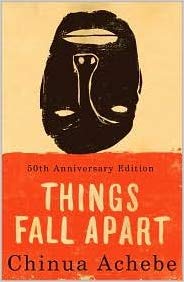
Summary
Things Fall Apart is a tragic narrative that chronicles the life of Okonkwo, a leader in the Ibo community of Umuofia, and the eventual collapse of his traditional society under the influence of British colonialism and Christian missionaries. The story is divided into two main dramas: the first explores Okonkwo’s personal struggle with his identity and society, leading to his fall from grace, and the second depicts the clash of cultures that occurs when European arrival fundamentally disrupts the Ibo way of life.
Plot
Part One: Rise and Accidental Exile. Okonkwo, driven by a fear of resembling his “lazy” father Unoka, rises to great power and wealth through hard work and martial prowess. He is tasked with caring for Ikemefuna, a boy taken from a rival village as a peace offering. Despite forming a bond, Okonkwo eventually participates in the boy’s ritual execution to avoid appearing “weak”. Later, during a funeral, Okonkwo’s gun accidentally explodes, killing a clansman’s son. For this “female” crime, he is exiled to his motherland, Mbanta, for seven years.
Part Two: Exile and the Arrival of Change. While in Mbanta, Okonkwo and his family witness the first arrival of white missionaries. His eldest son, Nwoye, finds comfort in the new religion and eventually deserts his father to join the church. Okonkwo is deeply grieved by what he sees as the “effeminacy” of his son and the growing influence of the Christians.
Part Three: Return and Tragedy. Upon returning to Umuofia, Okonkwo finds his village transformed by British administration and trade. Tensions escalate when a convert unmasks an egwugwu, leading the clan to burn the church. Okonkwo and other leaders are imprisoned and humiliated by the District Commissioner. At a final village meeting, Okonkwo kills a court messenger in a desperate attempt to incite war. Realizing his clan will not fight, he commits suicide by hanging himself, an act considered an abomination in his culture.
Setting
The novel is set in the Lower Niger region of Nigeria during the late 19th century. Specifically, the action takes place within the nine villages of Umuofia and the village of Mbanta. The setting is deeply tied to the seasonal cycles of the Ibo people, particularly the planting and harvesting of yams, which is considered the “king of crops”. The environment includes the “Evil Forest,” where those who die of “evil diseases” or commit abominations are cast out.
Themes
- Masculinity and Fear of Failure: Okonkwo’s entire life is dominated by the fear of being found weak or resembling his father, Unoka. This drives his aggression, his success, and ultimately his participation in Ikemefuna’s death.
- Tradition vs. Change: The novel explores the tension between established Ibo customs and the new values introduced by Christianity and British government.
- Fate (Chi) vs. Personal Achievement: The Ibo believe in a personal god called a “chi”. While Okonkwo believes he “cracked his own palm-kernels” through hard work, his eventual downfall leads him to believe his chi was not “made for great things”.
- Justice and Social Order: The narrative depicts the traditional justice system of the egwugwu (masked ancestral spirits) and its eventual replacement by the “ignorant” and “high-handed” British court system.
Characters
Major Characters
- Okonkwo: A “strong man” and wealthy farmer of Umuofia who is obsessed with status and masculinity.
- Nwoye: Okonkwo’s eldest son, who struggles with his father’s expectations and eventually converts to Christianity.
- Ikemefuna: A clever and lively boy from Mbaino who lives in Okonkwo’s household for three years before being killed by the clan.
- Obierika: Okonkwo’s close friend and a man of thought, who often questions the clan’s traditions and mourns Okonkwo’s tragic end.
- Mr. Brown: The first white missionary in Umuofia, who adopts a policy of compromise and education.
- Reverend James Smith: Mr. Brown’s successor, a fanatical man who sees things in “black and white” and provokes conflict between the church and the clan.
Minor Characters
- Unoka: Okonkwo’s father; a lazy, debt-ridden musician who Okonkwo despises.
- Ekwefi: Okonkwo’s second wife, who ran away from her first husband for him and has lost nine children in infancy.
- Ezinma: Ekwefi’s only daughter and Okonkwo’s favorite child; he frequently wishes she were a boy because of her spirit.
- Uchendu: Okonkwo’s maternal uncle in Mbanta who receives him during his exile and offers wise counsel about the importance of mothers.
- Enoch: A zealous Christian convert who unmasks an egwugwu, triggering the final conflict.
- District Commissioner: A British official who views the Ibo through a “primitive” lens and plans to write a book about his experiences.
Literary Devices
- Proverbs: The sources describe proverbs as the “palm-oil with which words are eaten,” used to enrich conversation and provide ancestral wisdom.
- Foreshadowing: The arrival of locusts—harbingers sent to survey the land before a boundless swarm descends—serves as a metaphor for the arrival of the white men.
- Irony: The ending is deeply ironic as the District Commissioner plans to reduce Okonkwo’s epic tragedy to a “reasonable paragraph” in his book, titled The Pacification of the Primitive Tribes of the Lower Niger.
- Allusion: The title is an allusion to W.B. Yeats’s poem “The Second Coming,” signaling a time when “the center cannot hold” and anarchy is loosed.
- Imagery: Vivid imagery is used to describe Ibo rituals, such as the masked egwugwu emerging from the earth and the “smoke-blackened” artifacts of their religion.