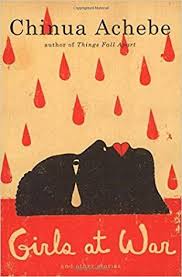
Summary
Girls at War and Other Stories is a collection of twelve short stories that span twenty years of Chinua Achebe’s writing career. The collection serves as a chronicle of Nigerian life, tracing the transition from traditional village structures and early colonial missionary influence to the political corruption of the post-independence era and the brutal reality of the Nigerian Civil War. The stories collectively explore how individuals navigate shifting social values, the tension between ancestral beliefs and Western education, and the struggle for survival in a rapidly changing society.
Plot Overview
The collection does not follow a single continuous plot but is organized to reflect Nigeria’s historical and cultural evolution.
- Traditional and Cultural Clashes: Early stories like “The Madman” and “Akueke” focus on the importance of social standing and the consequences of violating traditional taboos. Stories such as “Dead Men’s Path” and “Marriage Is a Private Affair” depict the direct conflict between modern, often Christian, perspectives and entrenched indigenous customs.
- Political Disillusionment: Middle stories like “The Voter” and “Vengeful Creditor” highlight the corruption of the political process and the failure of government promises, such as free primary education, which leave the poor disillusioned and desperate.
- The Biafran War: The final stories, including “Civil Peace” and the title story “Girls at War,” center on the devastation of the Nigerian Civil War. They follow characters as they endure starvation, the loss of family, and the moral erosion that occurs when survival becomes the only priority.
Setting
The stories are set entirely within Nigeria, moving across various regions and time periods.
- Geographic Locations: Settings include rural villages like Umuofia, Ogbu, and Ezi; the bustling river port of Umuru; and major urban centers like Lagos, Enugu, and Owerri.
- Historical Context: The timeframes range from the early colonial period (1919 in “Uncle Ben’s Choice”) to the 1940s and 50s era of missionary expansion, and finally to the late 1960s, covering the duration and immediate aftermath of the Biafran War.
Themes
- Tradition vs. Modernity: A central theme is the friction created when Western education and Christianity challenge traditional Igbo worldviews.
- The Corruption of Power: The sources depict how political and social leaders often exploit their positions for personal gain, leaving the “masses” to suffer the consequences of failed policies.
- Moral Decay in War: The later stories examine how the extreme pressures of war can transform idealistic individuals into cynical survivors, leading to a loss of innocence and integrity.
- Social Ostracization and Madness: The collection explores the fragility of social status and how easily an individual can be “marked” or discarded by their community.
- Resilience and Survival: Despite the tragedies, characters like Jonathan Iwegbu exemplify a theme of unshakeable optimism and the “happy survival” of the human spirit.
Characters
Major Characters
- Nwibe (The Madman): A man of wealth and integrity whose social ambitions are permanently destroyed after a madman steals his clothes, leading the community to believe Nwibe himself has gone mad.
- Roof/Rufus Okeke (The Voter): A clever political campaigner who is forced to choose between his loyalty to a corrupt Minister and a bribe from an opposition party.
- Nnaemeka (Marriage Is a Private Affair): A young man living in Lagos who defies his father’s traditional marriage arrangements to marry for love, leading to an eight-year estrangement.
- Michael Obi (Dead Men’s Path): An idealistic, “pivotal” headmaster whose rigid adherence to modern methods and disdain for “pagan” rituals leads to a violent confrontation with a local village.
- Jonathan Iwegbu (Civil Peace): A former miner who uses his resourcefulness and a “miracle” bicycle to provide for his family after the war.
- Reginald Nwankwo (Girls at War): A high-ranking ministry official who is initially impressed by the revolution but becomes cynical as he witnesses the moral decay and suffering around him.
- Gladys (Girls at War): A former idealistic militia girl who turns to “survival” tactics and relationships with powerful men to stay alive during the war.
Minor Characters
- Chief the Honourable Marcus Ibe: A corrupt Minister of Culture who uses his wealth to buy votes.
- Okeke: Nnaemeka’s father, a staunch traditionalist and devout Christian who eventually faces the emotional cost of his stubbornness.
- Vero: A young girl in “Vengeful Creditor” whose desperate desire for education leads her to commit a shocking act.
- Father Doherty: A relief worker in “Sugar Baby” whose nerves have been shattered by the war.
- The Madman: An unnamed wanderer who triggers the downfall of Nwibe.
Literary Devices
- Irony: Achebe uses situational irony frequently, such as in “The Voter” when Roof “splits” his vote to satisfy both his conscience and his bribe, or in “Dead Men’s Path” where Michael Obi’s attempt to “modernize” leads to the physical destruction of his school.
- Symbolism:
- The Sacrificial Egg: Represents a looming disaster or an omen of the smallpox epidemic.
- The Road/Path: In “The Madman,” the road represents the connection between sanity and the public gaze; in “Dead Men’s Path,” it symbolizes the link between the living and the ancestors.
- Proverbs and Folk Idioms: The narrative is rich with Igbo proverbs used to characterize the speakers and provide cultural context (e.g., “Those who gather ant-infested faggots must be prepared for the visit of lizards”).
- Satire: Achebe employs satire to critique the post-independence Nigerian elite and their “piece of hare-brained socialism”.
- Imagery: Vivid descriptions of the war—charred remains, “floating ribs,” and the “charred world”—heighten the emotional impact of the later stories.