Table of Contents
Summary
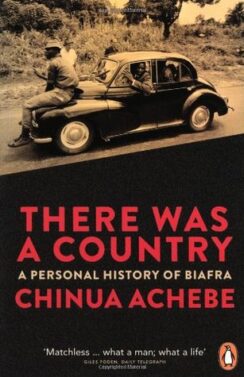
There Was a Country is a personal memoir and historical account that chronicles the birth, struggle, and eventual collapse of the short-lived Republic of Biafra. Achebe integrates his own life story his colonial-era upbringing, his education, and his literary career with the broader political history of Nigeria. The book serves as a “personal history,” seeking to explain how Nigeria’s early promise as a land of “immense resources” was derailed by a “cataclysmic” civil war. It concludes with a sharp reappraisal of modern Nigeria, focusing on the themes of leadership, corruption, and the enduring trauma of the war.
Plot
The narrative follows a chronological arc across four parts:
- Coming of Age and Independence: Achebe describes his childhood in Ogidi and his education at Government College Umuahia and University College Ibadan. This period is marked by the “magical years” of optimism surrounding Nigerian independence in 1960.
- The Road to Secession: Following the coups of 1966 and the subsequent pogroms against Igbos in Northern Nigeria, Achebe and his family flee Lagos for the East. The failure of peace talks like the Aburi Accord leads Colonel Ojukwu to declare the Republic of Biafra in 1967.
- The Civil War: The narrative details the thirty-month conflict, focusing on the Nigerian economic blockade and the resulting mass starvation. Achebe serves as a “roving ambassador” and works at the Citadel Press, while his close friend, the poet Christopher Okigbo, is killed in battle.
- The Fall and Reappraisal: Biafra collapses in January 1970. Achebe reflects on the legacy of the war, the failure of the Nigerian state to reintegrate the Igbo, and the rise of a “cult of mediocrity” and corruption in the post-war era.
Setting
- Geographic: The story moves from the rural villages of Ogidi and Nnobi to urban intellectual hubs like Ibadan, Lagos, and Enugu. During the war, the setting shifts to the shrinking Biafran enclave, including Umuahia, Owerri, and Oguta, as well as international locations like Senegal, Scandinavia, and Canada where Achebe traveled for diplomacy.
- Temporal: The timeline begins with Achebe’s father’s birth in the late 19th century but focuses primarily on the period from the 1930s to the 1970s, with a postscript reaching into the early 2000s.
Themes
- The Role of the Writer: Achebe argues that the African writer has a moral obligation to be a “protest writer” and to side with the powerless against the “emperor”.
- War and Atrocity: The book examines the horror of “starvation as a weapon of war” and the psychological impact of civilian massacres like those in Asaba.
- Identity and Resentment: A recurring theme is the history of ethnic tension, specifically the national resentment of the Igbo due to their rapid advancement in colonial society.
- Post-Colonial Failure: Achebe explores how the “British governed their colony with considerable care” but ultimately rigged elections to ensure a compliant, conservative leadership that led to state failure.
- Ingenuity and Self-Reliance: Despite the blockade, Biafran scientists and citizens showed remarkable innovation, such as inventing the Ogbunigwe bomb and refining their own oil.
Characters
Major Characters
- Chinua Achebe: The narrator, a world-renowned author and Biafran patriot.
- Chukwuemeka Odumegwu Ojukwu: The Biafran Head of State, described as an “aristocrat” whose unyielding nature influenced the war’s trajectory.
- Yakubu Gowon: The Nigerian Head of State, a “gentleman general” who Achebe critiques for overseeing the blockade and the starvation policy.
- Christopher Okigbo: A legendary poet and Achebe’s best friend; a “seer” whose death in combat becomes a central tragedy of the book.
Minor Characters
- Isaiah and Janet Achebe: The author’s parents, early Christian converts who bridged traditional and Western values.
- Christie Okoli Achebe: The author’s wife, who led a school for children during the war and survived harrowing narrow escapes.
- Nnamdi Azikiwe (“Zik”): The father of Nigerian independence who eventually withdrew his support for Biafra.
- Obafemi Awolowo: A Yoruba leader who Achebe accuses of hatching the “diabolical policy” of starvation.
- Carl Gustaf von Rosen: A Swedish aristocrat and pilot who became a Biafran war hero by flying relief and combat missions.
- Major Chukwuma Nzeogwu: The lead conspirator of the first Nigerian coup.
Literary Devices
- Juxtaposition: Achebe intentionally places his poetry alongside prose to tell “complementary stories” through two different art forms.
- Proverbs: He utilizes Igbo oral wisdom to frame historical complex events, most notably: “a man who does not know where the rain began to beat him cannot say where he dried his body”.
- Imagery: Vivid and often harrowing descriptions of war, such as the “bird of death” (planes) and the “sun-stricken waves” that beat against the hollowed feet of Biafra.
- Metaphor: Comparing the Nigerian political class to the Anwu (wasp) that paralyzes its prey and eats it alive.
- Symbolism: The “crossroads” represents the dangerous but potent site of cultural encounter between Africa and the West.
- Personal Narrative as History: By framing national history through the specific lens of his own family’s displacement and the loss of friends, Achebe humanizes the abstract statistics of the war.