Summary
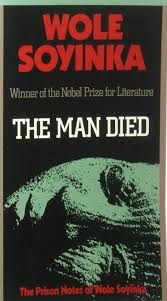
The Man Died: Prison Notes is Wole Soyinka’s personal record of his 27-month incarceration, mostly in solitary confinement, during the Nigerian Civil War from 1967 to 1969. The text is not merely a chronological history but a meditation on the “banality of evil” and a fierce indictment of the military regime of General Yakubu Gowon. Soyinka details his efforts to stop the war through a “Third Force” of intellectuals, his subsequent arrest on fabricated charges of aiding the Biafran secessionists, and his psychological battle to maintain sanity while isolated from the world. The book’s central philosophy is that “the man dies in all who keep silent in the face of tyranny,” urging readers to recognize that silence is a form of complicity in state-sponsored atrocities.
Plot
The narrative begins with Soyinka’s political activism, including his visit to the East and his recruitment of intellectuals to work for a total ban on arms supplies to Nigeria. He is arrested in August 1967 and subjected to interrogation by Mallam D. in Lagos, where he is initially held in chains. While in Kiri-kiri Prison, he smuggles out a letter exposing the state’s genocidal policies, which prompts the government to frame him for a “foiled escape” and a false confession involving the purchase of jet aircraft for the rebels.
Following this, Soyinka is transferred to Maximum Security (Shaki) and finally to Kaduna, where he spends fifteen months in a high-walled solitary cell he calls “the Crypt”. The middle section of the book focuses on his internal struggle for survival; he uses fasting, mathematics, and creative inventions like “mobiles” and “soy-ink” to occupy his mind and resist mental disintegration. A significant climax occurs in December 1968 when he is falsely promised release, only to have his hopes dashed and his meager belongings—books and a radio—seized. The plot concludes with Soyinka successfully demanding medical treatment, leading to a brief, sensory-rich visit to a hospital where he reaffirms his spirit of liberty despite his physical confinement.
Setting
The narrative spans several key locations across Nigeria during the heightened tensions of the Civil War:
- Ibadan and Lagos: The initial sites of Soyinka’s arrest and interrogation, specifically the Security Branch (“E” Branch) and the proximity of Dodan Barracks.
- Kiri-kiri and Shaki Prisons: Early locations of detention where Soyinka observes the collective suffering of Ibo detainees and the “Black Hole of Dodan”.
- Kaduna Prison (“The Crypt”): The primary setting for the latter half of the book, described as a “living tomb” with high-ceilinged cells and a small exercise yard that was eventually stripped of all vegetation to further isolate him.
- Historical Context: The overarching setting is the Nigerian Civil War (1967–1970), characterized by genocidal massacres in the North and a climate of fear and “state of anomy”.
Themes
- Complicity through Silence: The book’s titular theme is that the moral core of a person—the “man”—dies when they fail to speak out against injustice.
- The Corruption of Power: Soyinka explores the “madness of power” and how it dehumanizes both the victim and the perpetrator, turning students into torturers and leaders into “power profiteers”.
- Justice as a Human Absolute: He asserts that “justice is the first condition of humanity,” rejecting the “Bygones is bygones” mentality that allows state crimes to go unresolved.
- Resistance and the Human Will: The power of the individual will to survive solitary confinement through self-discipline and creative defiance.
- The Role of the Intellectual: Soyinka crititques “power prostitutes” and “boneless craniums” among the intelligentsia who serve the military regime instead of advocating for moral absolutes.
Characters
Major Characters
- Wole Soyinka: The narrator, a playwright and activist whose “unprecedented” security measures are designed to “contain and destroy” his mind.
- Mallam D.: Soyinka’s primary interrogator in Lagos; a young, cocky official who is internally conflicted and admits that sometimes he has to do things he knows are wrong.
- The Grand Seer (The Superintendent): The head of the Kaduna prison who struggles with the “Instructions” from his superiors and his own growing conviction that Soyinka is innocent.
- Yakubu Gowon: The Head of State, portrayed as a distant, reactionary figure who views city conquests as “wedding presents”.
Minor Characters
- Yisa Adejo (King Kong): An Assistant Commissioner and “Commissioner of Torture” known for his hysterical, violent register and illiteracy.
- Polyphemus: An eight-foot-tall Chief Warder in Kaduna who acts as a “tower of menace” but also shows moments of superstitious awe.
- Ambrose: A warder at Kaduna whose monotonous pacing and “slough depth expectoration” become a source of sonic torture for Soyinka.
- Victor Banjo: A Yoruba Colonel and leader of the Third Force who was eventually executed by Ojukwu’s regime.
- Segun Sowemimo: A journalist whose brutal beating and subsequent death from gangrene provided the inspiration for the book’s title.
Literary Devices
- Epistolary and Journalistic Style: The book is compiled from fragments of prison notes scribbled between the lines of other books and on toilet paper.
- Symbolism:
- The Crypt: Represents the total isolation and attempted mental burial of the dissident.
- Mobiles: These artistic creations symbolize the balance of the human mind and the triumph of creativity over a barren environment.
- The Pomegranate/Guava: Represents the “forbidden fruit” and the shared humanity between the warders and the prisoner.
- Allusion: Soyinka frequently alludes to mythological and literary figures such as Prometheus, Oedipus, Kafka, and the god Ogun to elevate his personal ordeal to a universal struggle against tyranny.
- Personification of Nature: He personifies the harmattan wind (iska) as a malicious entity that “knifes blood vessels” and “hurls itself from wall to wall”.
- Irony: Soyinka uses biting irony, such as describing the government’s attempt to pay the salaries of detainees as “childishly obvious bribery”.