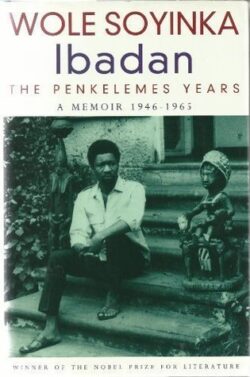
Summary
This memoir chronicles Wole Soyinka’s coming-of-age and political awakening in Nigeria from 1946 to 1965, told through a fictionalized narrator named Maren (also called Akinkoyi or Sobe). The narrative spans his years at Government College, Ibadan (Apataganga), his studies abroad in England, his return to an independent Nigeria, and his growing disillusionment with post-colonial politics.
Soyinka coins the term “penkelemes” a deliberate corruption of “peculiar mess” to describe the chaotic, corrupt, and often absurd political landscape of Nigeria during this period. The memoir opens with Maren’s secretive return from five years in England, avoiding the elaborate family welcome he fears. He takes up a Research Fellowship at University College, Ibadan, and eventually forms the Nineteen-Sixty Masks and Orisun Theatre companies.
The narrative interweaves personal history with national crisis: the fraudulent Anieke appointment scandal at Ibadan University, the destructive “Credo” speech at the University of Ife (which demanded university loyalty to the government of the day), the violent 1965 Western Region elections, and Soyinka’s own arrest, detention, and trial for allegedly hijacking a radio broadcast. The memoir culminates in the “Weti e” (spray and ignite) uprising against Premier Akintola’s NNDP government, with Soyinka awaiting his verdict.
Plot
Part One: Homecoming and Nostalgia (Chapters 1-4)
Maren returns to Nigeria secretly, avoiding family in Abeokuta. He reflects on his childhood, his entry into Government College, Ibadan, and the figure of Ezeoba, a bombastic senior boy who nicknames him “Sobe.” He recalls his first hostile encounter with a white teacher, Mr. Brown, and his growing love for the orchard path “Unter den Linden.”
Part Two: The European Interlude (Chapter 2)
Flashback to Maren’s time in England and Paris. Lured to Paris by a fraudulent impresario, he is abandoned penniless. He survives by working as a porter at Les Halles, befriending Latin American exiles in late-night cafés, and singing for drinks. He recounts an absurd, humiliating visit to a Nigerian politician (likely the Sardauna of Sokoto) in a Paris hotel, where he is treated with contempt by a protocol officer.
Part Three: Independence and Theatre (Chapters 3-4)
Maren produces A Dance of the Forests for Nigeria’s Independence celebrations, but the play is deemed subversive and banned from official events. He performs it at Ibadan University instead. At Zik’s inauguration as Governor-General, he serves as Master of Ceremonies and famously clashes with the tone-deaf American opera singer Madame Evanti, who refuses to leave the stage.
Part Four: University Scandals and Political Violence (Chapters 5-8)
The narrative shifts to the Anieke scandal: a disgraced doctor with a forged Toronto DSc is controversially appointed Chairman of the University Council. Maren unsuccessfully protests. Later, at the University of Ife, Premier Akintola’s government issues the “Credo” speech demanding university loyalty. Thugs raid the homes of dissident lecturers (the Alukos). Maren leads a retaliatory delegation and begins arming his theatre company for self-defense.
Part Five: Resistance and Arrest (Chapters 9-12)
Maren travels to Cuba, then returns to find the 1965 Western Region elections blatantly rigged. The Action Group’s secret radio transmitter is hidden in Awolowo’s house. When police raid it, Maren prevents its removal at gunpoint, records a seditious message, and during a live broadcast replaces Premier Akintola’s speech with his own demand: “Akintola, get out!” He becomes a wanted man, flees to the East, then returns voluntarily to stand trial. While detained, he is assaulted by Deputy Commissioner Loremikan and endures a painful family crisis when his partner abandons their young daughter at the police station.
Part Six: Waiting for Verdict (Chapter 13)
On the eve of his trial verdict, Maren reflects on his journey from idealism about Southern African liberation to confronting Nigeria’s “penkelemes.” He gives a friend a Christmas card poem about a collaborator chief nailed to a tree, titled “No Blood Flows.”
Setting
Abeokuta Maren’s hometown; his father’s parsonage at Ake; his aunt Beere’s activism.
Government College, Ibadan (Apataganga) Boarding school where Maren first encounters colonial racism, bullies, and intellectual awakening. Features the orchard path “Unter den Linden.”
Leeds, England Where Maren studies on scholarship; experiences racism and his first theatrical productions.
London (Sloane Square, Royal Court Theatre) George Devine’s circle; Maren’s Sunday night debut; friendships with South African exiles.
Paris Destitute survival among Latin American fugitives; near-arrest as a suspected Algerian terrorist.
Ibadan (University College, Eleiyele, Agodi, Felele) Main setting; Maren’s research, theatre work, political organizing, and eventual detention.
Cuba Maren attends a theatre conference; observes the personality cult of Fidel Castro and racial hierarchies.
Ife University (temporary campus) Site of the “Credo” crisis; Maren’s brief appointment and resignation.
Lagos Federal capital; political intrigue; the Broadcast House hijacking.
Themes
- Penkelemes (Peculiar Mess) – The central theme: Nigeria’s post-colonial chaos, corruption, and absurdity, captured in a deliberately corrupted phrase coined by politician Adelabu.
- The Betrayal of Independence – First-generation nationalists (Azikiwe, Awolowo, Akintola, Balewa) are exposed as power-hungry, hypocritical, and willing to destroy institutions for personal gain.
- University Autonomy vs. Political Control – The Anieke and Credo episodes show how universities, meant to be sanctuaries of free thought, are colonized by party politics.
- Violence as a Necessary Evil – Maren struggles with his own capacity for violence, ultimately accepting it as a legitimate response to state terror.
- Racism and Colonial Legacy – From Mr. Brown’s trick question to the Frog-Edibility Incident (where the class turns on Maren for telling a white teacher that Africans eat frogs), colonialism has poisoned even inter-African relations.
- The Artist as Activist – Theatre becomes a weapon: Before the Blackout, The Republicans, and the radio hijacking are acts of political insurrection.
- Family vs. Self-Determination – Maren constantly battles his parents’ interventions, their attempts to arrange traditional marriages, and the extended family’s claims on his life.
- Disembodiment / The Divided Self – Maren repeatedly describes watching his “other self” act in dangerous situations, suggesting a coping mechanism for trauma.
Characters
Major Characters
Maren / Akinkoyi / Sobe The narrator, a thinly veiled Wole Soyinka. A playwright, director, poet, and political activist. Combines intellectual brilliance, stubbornness, and a capacity for violence. Nicknamed “Sobe” after a near-fatal knife-throwing accident.
Komi Maren’s closest friend from secondary school through university. A Warri boy, pragmatic, often warning Maren against political recklessness.
Ezeoba A senior boy at Government College. Bombastic, humorous, verbally inventive. Bullies new boys but is essentially decent.
Adeyelu / Major Kakiika A schoolmate and bully, obsessed with dangerous chemical experiments. Nearly kills Maren by throwing him through a glass door.
Odali Another school bully; vain and image-conscious. Maren forms a “Tripartite Agreement” with two other small boys to resist him collectively.
Femi Johnson (O.B.J.) Insurance broker, actor, and loyal friend. Hosts legendary Saturday feasts. Provides Maren with a getaway car during the trial.
Kodak A former thug and conman who robbed an old woman. After prison, he apologizes to her and becomes Maren’s unlikely ally and bodyguard.
Premier S. L. Akintola The villain of the memoir. A witty, cynical politician who destroys university autonomy, unleashes thugs, and rigs elections. Dies in the 1966 coup.
Chief Obafemi Awolowo Imprisoned Action Group leader. His home is tear-gassed; Maren sleeps under his desk while guarding the secret transmitter.
Dr. Nnamdi Azikiwe (“Zik”) Governor-General. Appoints the fraudulent Anieke as his personal physician. Maren’s letter to him and the Madame Evanti incident create lasting tension.
Mr. Jefferies Acting Principal at Government College. His horror at Maren’s “frogs are edible” remark triggers a violent backlash from classmates.
Loremikan Deputy Commissioner of Police. A brutal, sadistic enforcer for Akintola. Assaults Maren in his cell.
Christopher Okigbo Poet. Visits Maren in detention, reading his poems aloud. (A real historical figure who would later die in the Biafran War.)
Minor Characters
Madame Evanti Tone-deaf American opera singer who insists on singing at Zik’s inauguration.
Dr. Sylvester Anieke The “quasi-quack” doctor with a forged DSc; appointed Chairman of University Council over Ibadan’s protests.
Risi Bar girl at Tunde Nightingale’s club; offers to cook fish-head for Maren.
Yanju Sickly, inoffensive schoolmate; the bullies’ favorite target.
Elizabeth Browne Pregnant Nigerian poet; accompanies Maren to Cairo, where he fights airport guards and she threatens an “international incident.”
Joan Littlewood Eccentric British theatre director; wants to film The Lion and the Jewel but gets distracted by the “Fun Palace.”
Ukonu Leader of the Eastern Nigeria Broadcasting team; Maren “arrests” him at gunpoint to keep the transmitter running.
Ojeli Assistant Commissioner of Police; Maren’s “old boy” from Government College; sympathetic but constrained.
The Mother-in-Law Never named; her anticipated arrival to wail and roll on the floor represents the crushing weight of family obligation.
Literary Devices
- Penkelemes (Neologism)
Soyinka deliberately corrupts “peculiar mess” into a Nigerian-English word that captures the absurd, chaotic, and farcical nature of post-colonial politics. The coinage is attributed to the Ibadan politician Adelabu.
- Disembodiment / The Divided Self
Repeated throughout the memoir, especially in moments of extreme stress:
- “He slipped into his other skin, watching from the sidelines.”
- “He watched himself walk through the short link road.”
- “This other Maren was no longer admiring the huge working desk…”
This technique distances the narrator from traumatic events while emphasizing his helplessness before his own violent reactions.
- Irony and Understatement
- After nearly being killed by airport guards in Cairo: “I felt a weariness within him, a formless but definitely spiritual weariness.”
- After Loremikan’s assault: “It was not such a lethal blow after all, though it hurt quite a lot.”
- Symbolic Snakes
Snakes recur obsessively: a python lives in Maren’s wardrobe for two years; a snake seeks shelter under his feet during a rainstorm; another coils under his pillow. They symbolize hidden danger, domesticity of evil, and perhaps ancestral protection (as his grandfather suggests).
- Harmattan as Metaphor
The dry, hazy season represents transition, blurring of past and present, and the dissolution of identity. The memoir opens and closes with Harmattan imagery.
- Cinematic Flashbacks
The narrative jumps between 1946, 1960, 1965, and even 1993 (the foreword). Soyinka uses the 1993 election annulment and his exile as a framing device to justify writing the memoir.
- Direct Address to the Reader
- “Did you have to sneak home like a thief in the night?” (repeated refrain)
- “Ah yes, penkelemes!”
This creates a confessional, almost conspiratorial tone.
- Parody and Quotation
- Shakespeare (Macbeth, “double, double toil and trouble”)
- William Blake (“Jerusalem” becomes a nationalist anthem)
- The Bible (the viper in the toilet, Naaman the captain)
- Yoruba proverbs and songs
- The “Frog-Edibility Incident” as Allegory
When Maren tells a white teacher that Africans eat frogs, his classmates attack him not for lying but for telling the truth in front of a white man. This episode exposes the internalized colonialism that silences even benign cultural facts.
- Repetition of Names and Nicknames
Maren accumulates names: Akinkoyi (“trouble”), Sobe (from the knife accident), Brother Ajasa, Okunrin Jeje (“gentle one”). Each name represents a different self or expectation imposed by others.