Summary
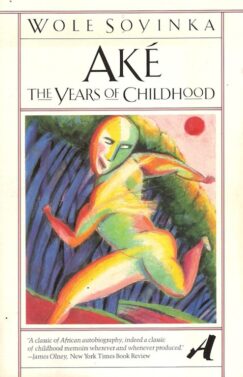
Aké: The Years of Childhood is an autobiographical account of the first eleven years of Wole Soyinka’s life, set primarily in the Aké parsonage in Abeokuta, Nigeria. The memoir provides a vivid window into a world where Christian colonial influence and traditional Yoruba culture coexist, often in a state of curious tension perceived through the eyes of a precocious child. Wole navigates a landscape filled with formidable adults, such as his father, whom he calls “Essay,” and his mother, “Wild Christian,” while balancing the rigors of formal education with the mysteries of local spirits and ancestral traditions. The narrative captures his personal growth alongside the political awakening of the community, culminating in a historic women’s uprising against unfair taxation. Ultimately, the book serves as a record of a vanished era, documenting the sights, sounds, and social structures of a mid-20th-century Nigerian childhood.
Plot
The narrative begins with Wole’s early childhood in the Aké parsonage, where he describes the “fortified” atmosphere of the mission compound and his imaginative interpretations of religious and supernatural figures. At the age of three, Wole displays his precocious nature by insisting on following his sister Tinu to school, carrying his father’s books to prove his readiness. His childhood is marked by significant physical experiences, including serious accidents like a fall from a see-saw and a cutlass injury to his eye, which his parents manage with a mix of practical care and psychological reassurance.
As Wole grows, his world expands beyond the parsonage, notably when he gets lost while following a police band all the way to Ibara, an event that introduces him to the broader geography of Abeokuta. He experiences the contrast between his father’s disciplined home and his Grandfather’s ancestral house in Isara, where he undergoes traditional protective incisions in his skin to prepare him for the “battles” of life. The arrival of World War II brings global politics into Aké via the radio (“As’oromagb’esi”) and the eccentric local warrior Paa Adatan, who prepares to fight Hitler single-handedly.
The latter portion of the book focuses on the Egba Women’s Union, led by Wole’s aunt, Mrs. Funmilayo Ransome-Kuti (Beere), and supported by Wild Christian. Wole acts as a courier and witness as the women transition from a self-improvement group to a militant political force protesting unfair taxes imposed by the Alake and the colonial government. The plot concludes with the successful siege of the palace and Wole’s departure for Government College, Ibadan, marking the end of his childhood years in Aké.
Setting
- Aké Parsonage, Abeokuta: The primary setting, described as a sprawling compound of schools, gardens, and the “white square monument” of the Canon’s residence.
- The Orchard: A “profuse” space at the parsonage that Wole associates with Biblical tales and childhood mystery.
- Isara: Wole’s father’s natal home, characterized by “the patina of ancestry,” indigo dyes, and a more traditional, earth-aged atmosphere.
- Abeokuta Markets (Ibarapa and Itoko): Vibrant centers of commerce and sensory overload that serve as gateways between the parsonage and the wider town.
- The Aafin (Alake’s Palace): The site of political power and the eventual climax of the women’s uprising.
- Time Period: The mid-1930s through the mid-1940s, spanning the years leading up to and during World War II.
Themes
- The Conflict and Fusion of Cultures: Wole constantly reconciles his Christian upbringing with Yoruba beliefs, such as viewing Biblical figures as “white” egungun or witnessing his mother use “Faith” to perform domestic tasks.
- Education and Discipline: The memoir highlights the immense value placed on “book-learning” by figures like Essay and Daodu, balanced against the physical and moral discipline enforced through the cane.
- Gender and Political Agency: The transformation of the market women into a cohesive political unit demonstrates the power of female solidarity and resistance against colonial and patriarchal oppression.
- Childhood Perspective vs. Adult Reality: The narrative often contrasts Wole’s logical but naive interpretations (e.g., the “dog in the gramophone”) with the complex and sometimes irrational world of adults.
- Loss of Innocence/Mystery: Wole reflects on how the “mystery” has been driven from the parsonage by modernization and how personal losses, like the death of his sister Folasade, impact his psyche.
Characters
Major Characters
- Wole: The protagonist; a highly observant, curious, and often argumentative child who is the “man of the family” in training.
- Essay (S.A. Soyinka): Wole’s father and Headmaster; a fastidious, intellectual man of “wicked patience” who values education above all else.
- Wild Christian (Eniola Soyinka): Wole’s mother; a devoutly religious and energetic woman who balances running a shop with managing a large household of “strays”.
- Daodu (Rev. I.O. Ransome-Kuti): Wole’s uncle and Principal of AGS; a larger-than-life figure who uses drama and “character-building” to run his school.
- Beere (Funmilayo Ransome-Kuti): Wole’s aunt and a formidable political leader; she spearheads the Egba Women’s Union and challenges both the Alake and the District Officer.
Minor Characters
- Tinu: Wole’s elder sister and his closest childhood companion.
- Father (Grandfather): The patriarch in Isara who embodies traditional Yoruba strength and provides Wole with “seasoning” incisions.
- Osiki: Wole’s school friend, famous for his phenomenal “Swiftness”.
- Bukola: The daughter of the bookseller; Wole believes she is an abiku, a child who cycles between the living and spirit worlds.
- Paa Adatan: An eccentric local character and self-styled warrior who seeks to fight Hitler with traditional charms.
- Mr. Lẹmọọ (Odejimi): A teacher who is hilariously tormented by Essay after plucking a rose from his garden.
- Folasade: Wole’s younger sister whose death on her first birthday profoundly affects the household.
Literary Devices
- Imagery: Soyinka uses rich, sensory descriptions to evoke the setting, such as the “perfumes of lemon leaves” and the “smoky sonority” of the church organ.
- Personification: Objects are often given life through a child’s eyes, such as the radio being named “As’oromagb’esi” (one who speaks without expecting a reply) or the “dragon face” of a derelict motor-hulk.
- Metaphor and Simile: The Canon is described as a “chunk from those rocks,” and the women’s head-ties are compared to “hundreds of banners” during their march.
- Foreshadowing: The somber “fiesta of photography” and Essay’s comments on “pitiful death” foreshadow his declining health and the end of Wole’s childhood era.
- Dialogue (Yoruba and Pidgin): Soyinka incorporates local dialects and traditional songs to ground the narrative in its specific cultural context.
- Irony: Wole notes the irony of adults who punish children for fighting while simultaneously egging on his younger brother Dipo to “beat” him as a joke.