Table of Contents
Summary
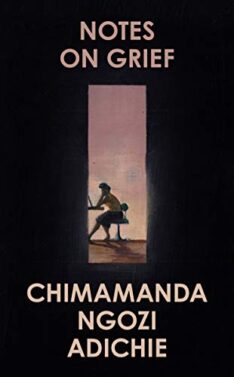
Notes on Grief is a visceral memoir and meditation by Chimamanda Ngozi Adichie on the death of her father, James Nwoye Adichie, in June 2020. The work explores the raw, physical nature of sorrow and the “cruel kind of education” that comes with losing a parent. Set against the backdrop of the COVID-19 pandemic, it examines the tension between private mourning and the communitarian rituals of Igbo culture, while serving as a tribute to her father’s legacy as Nigeria’s first professor of statistics.
Plot
The narrative follows a non-linear but emotionally progressive arc:
- The Zoom Calls: During the 2020 lockdown, the family maintains a “boisterous” ritual of Sunday video calls between Nigeria, England, and the US.
- The Sudden Loss: After a brief period of feeling “mildly unwell,” Adichie’s father passes away on June 10, 2020. The family witnesses his repose via a surreal Zoom call.
- The Immediate Aftermath: The author experiences a “vicious uprooting,” characterized by uncontrollable rage, physical pain, and denial.
- The Struggle with Ritual: As a “Family Worrier,” Adichie grapples with the “alien” requirements of Igbo mourning, such as condolence registers and “clearance” dues, while longing for isolation.
- Memory and Reflection: The narrative shifts into the past, recalling her father’s academic career, his kidnapping in 2015, and his quirky habits, like his love for Sudoku and his meticulous record-keeping.
- Logistical Limbo: The family faces “iridescent incompetence” from the Nigerian government regarding airport closures, which repeatedly delays the funeral.
- The Transformation: The book concludes with the author acknowledging that grief has permanently changed her, forcing a “new urgency” into her writing.
Setting
- Physical Locations: The narrative moves between Abba (the ancestral hometown in south-eastern Nigeria), Nsukka (where Adichie grew up on a university campus), and the United States (where the author resides during the lockdown).
- Temporal Setting: The peak of the COVID-19 pandemic in 2020, a time of global travel restrictions and “distorted” reality.
Themes
- The Physicality of Grief: Adichie describes grief not just as an emotion but as an affliction of the body, causing sore muscles, a bitter tongue, and a heart that feels like it is “running away”.
- The Failure of Language: The author explores how standard condolences (“demise,” “he is resting”) feel glib or presumptuous, preferring the metaphysical weight of the Igbo word Ndo.
- Ancestry and Identity: The book emphasizes the importance of Igbo culture and language, from the “properness” of ancestral stories to the decision to raise children to be bilingual.
- Mortality and Control: The sudden deaths of her father, her Aunt Caroline, and her Aunt Rebecca within a short period highlight the illusory nature of control over life.
Characters
Major Characters
- Chimamanda Ngozi Adichie: The narrator; a “daddy’s girl” who finds herself “undone” by the loss.
- James Nwoye Adichie (Daddy): The patriarch; a calm, honest, and hyper-punctual academic who worshipped integrity and loved his family fiercely.
Minor Characters
- Grace Adichie (Mummy): The author’s mother; a “placid” but brave widow and the first female registrar of the University of Nigeria.
- Okey: The brother who was physically present with their father at the time of death and manages the harrowing weekly visits to the mortuary.
- Ijeoma: A sister and doctor who consulted on their father’s health.
- Chuks, Kene, and Uche: The author’s other siblings who share in the “Zoom grief” and funeral planning.
- The Daughter: Adichie’s four-year-old child, whose “emotional alertness” and “hawk-eyed” vigilance of her mother’s tears provide moments of both pathos and levity.
- Aunt Caroline and Aunt Rebecca: Relatives whose sudden deaths shortly before and after their father exacerbate the family’s sense of “erosion”.
Literary Devices
- Metaphor: Grief is described as an “inferno,” a “vicious uprooting,” and an “iron clamp”.
- Imagery: Vivid descriptions of the physical toll of sorrow, such as “air turning to glue” and a stomach tight with “foreboding”.
- Flashback: The author uses memories of her father’s life—such as his PhD years at Berkeley or his Sunday morning rituals—to contrast the past’s vibrancy with the present’s desolation.
- Juxtaposition: Adichie contrasts the “banality” of English condolences with the deep, cultural resonance of Igbo titles like Odelu-Ora Abba.
- Personification: Grief is personified as a “maker of boxes” that cages thoughts and a force that “scrapes scales” from the eyes.