
Table of Contents
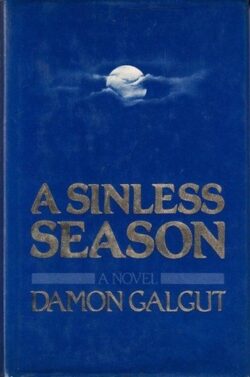
Damon Galgut’s A Sinless Season is a haunting, intensely atmospheric novel that explores the dark periphery of adolescence, the fragility of civilization, and the primitive forces of violence and obsession. Published in 1982 when Galgut was only nineteen, the narrative follows three juvenile delinquents Scott Berry, Raoul Dean, and Joseph Hamilton who are sentenced to the Bleda Reformatory, a remote institution on the South African coast designed to turn “errant youth” into “young gentlemen”. The book is a psychological thriller that subverts the traditional coming-of-age story, revealing that the “decency” of the institution is merely a thin veneer over a core of madness and suffering.
Arrival at Bleda: The Illusion of Order
The novel begins with the arrival of the trio at Bleda, a “comfortless fortress” built in 1927, characterized by grey stonework and bars on the windows. Scott Berry, the most sensitive and introspective of the three, feels like an “Aeneas in a metaphorical underworld,” sacrificing two years of his life for his past crimes. His companions represent different facets of troubled youth: Joseph Hamilton is plump, dark, and visibly nervous, while Raoul Dean, nearly sixteen, possesses the slight stature and deceptive innocence of a ten-year-old.
Eugene Hall, the principal, welcomes them with a rehearsed speech intended to distance the institution from the word “reformatory”. He claims the bars are relics of the past and that the boys are trusted to roam the grounds freely. He promises that Bleda has a tradition of turning boys into gentlemen, emphasizing a lack of “coarseness” and swearing. However, the reality of their situation is dictated by the heavy black book on Hall’s desk, which records their criminal history: shoplifting, attempted theft, assaulting a probation officer, and running away from home multiple times. They are legally obliged to remain at Bleda until they turn eighteen.
The Inhabitants and the “Summer Without Sin”
Upon entering the dormitory, the trio is introduced to a group of boys who seem unnervingly polite and well-adjusted. The most significant figure is Anthony Lord, a boy smaller even than Raoul, with “crystalline” blue eyes and a face epitomizing “benign innocence”. Scott is immediately drawn to Anthony, whose presence “shimmered through him like light”. Anthony is a creature of deep feeling, prone to weeping at both flaws and perfection, and he suggests that they make the season a “summer without sin”.
Other notable inmates include:
- Spencer Hardy: A shirtless boy obsessed with his own strength, who represents a more overtly aggressive element within the school.
- Mark Archer: A “silent, steady, strong” boy who eventually reveals the latent violence beneath the school’s facade.
- William Lee: A boy whose only refuge is sleep, who remains “unknowing” of the world around him until he eventually suffers a violent hysterical breakdown.
The Initiation of Violence: The Burn and the Fall
The peace of the “sinless” season is first punctured during an afternoon on the beach. Raoul, seeking solitude, jogs to a stagnant, “dead land” near a lagoon. There, he is followed by Spencer Hardy, who challenges Raoul’s toughness. Spencer claims to lead a secret, “closed circle” and insists that membership requires the ability to take pain. To test Raoul, Spencer uses a small red lighter to burn Raoul’s palm. Raoul endures the agony in a desperate craving for acceptance, but Spencer cruelly rejects him, stating he is “not good enough to join”. This encounter ignites a “cold, reptilian” hatred in Raoul, giving him a singular, violent purpose.
The tension culminates on the night of January 19, 1961. After realizing they left their towels on the beach, Scott and Raoul are sent by a teacher, Mr. Bishop, to retrieve them during a gathering storm. In the pitch-black woods beneath the cliff, they experience a night of “awakened insanity”. They find a shred of bloodied black material and a button on the ground before making a grisly discovery: Joseph Hamilton is dead, his body dangling upside down from a tree branch, his face “gory” and “staring”.
Professional observations later conclude that Joseph fell 200 feet from the cliff at approximately 5:30 p.m., striking a rock outcrop that killed him instantly before being caught in the tree. While the authorities treat it as an accident, Raoul is convinced it was murder. He shows Scott the scrap of black material, claiming Joseph grabbed it from the shirt of the person who pushed him. Raoul points out that Spencer Hardy was wearing a black shirt that afternoon, and he vows that they will find the killer themselves rather than involve the police.
The Decay of the Institution
Following Joseph’s death, the facade of Bleda begins to crumble. Scott’s bond with Anthony Lord deepens, while Raoul becomes increasingly “taciturn and uncommunicative”. The latent “madness” of the place, which Anthony claims to feel, starts to manifest in specific acts of malice:
- The Killing of the Dog: Eugene Hall’s spaniel, a beloved family pet, is thrown off the cliff. Although Mark Archer is the one who actually committed the act (witnessed by Hall’s daughter, Adelle), the incident creates a “clammy silence” and a “slackness of will” throughout the school.
- The Theft: Chris Murray is beaten in the cloakroom and his money is stolen by a “flurry of silhouetted figures”.
- The Fire: A fire is set in the dormitory, blazing through the curtains. Scott and Anthony manage to extinguish it, but the incident leaves the room “blackened and blistered,” a “scarred heritage of fear”.
- The Snake Incident: At Raoul’s instigation, Mark Archer places a live yellow cobra in Mr. Hall’s desk drawer.
These events lead to a breakdown in discipline. Mr. Hall, once the architect of “homeliness,” becomes “mottled with fury,” eventually deciding to release both Scott and Raoul on licence just to rid himself of their influence and preserve the school’s image before an upcoming government inspection.
The “Joke” and the Abduction
The psychological warfare extends to Adelle, Mr. Hall’s daughter. Raoul, obsessed with her “sexual infallibility,” lures her to the beach at night with Scott for “support”. After Adelle gets caught in barbed wire, Raoul attempts to sexually assault her. When Scott tries to intervene, Adelle claws at his face in a frenzy of terror. Raoul later dismisses the horrific event as “only a joke,” though it leads to his severe caning and Adelle being sent away to her mother.
Compounding the atmosphere of dread is the “abduction” of Raoul. One night, Scott witnesses a group of silent, faceless figures converge on Raoul’s bed, lift him up, and carry his naked, unresisting body into the cloakroom. Scott is too terrified to intervene, and Raoul later refuses to speak of what happened, though he writes a frantic, unsent note to Scott claiming he was raped and that the “secret group” at Bleda is “all mad”.
The Enigma of Anthony Lord
A significant portion of the book focuses on Scott’s visit to Anthony Lord’s home in Johannesburg. The wealth and “homeliness” of the Delaney household stand in stark contrast to the reformatory, yet Anthony feels entirely “left behind” by a mother who has moved into a “new world” with a stepfather Anthony doesn’t belong to. Anthony confides in Scott that he is his “only friend,” but he expresses a deep, unquenchable “hurt”.
Upon their return to Bleda, Anthony’s internal “flame” turns to “ash”. He leads Scott to the cliff edge and tells him, “many more things than just the sea are never, always, and for ever“. Anthony then jumps from the cliff to his death. Scott is devastated, feeling he has lost “all that was beautiful and good”. Raoul later reveals the shocking reason Anthony was at Bleda: he had firebombed a police station and attempted to murder a man he had never seen before. This revelation shatters Scott’s image of Anthony as a “good person,” leaving him with the conclusion that there is “nothing good in life,” only “suffering and evil”.
The Final Vengeance and the “Attila” Reveal
The climax of the novel occurs on the final day before Scott and Raoul are due to be released. Mr. Hall’s study is destroyed by a second fire, causing Hall to flee the institution in a state of total psychological collapse, crying that Raoul Dean is an “animal” who wants to kill him.
As a final storm gathers, Raoul targets Spencer Hardy. He lures Spencer to the cliff edge and strikes him, sending him falling into the “maw of gravity”. Raoul, in a state of “triumphant fury,” skips down to the beach to find the body, only to discover that Spencer miraculously survived the fall. A terrifying pursuit follows across the sand. Spencer, broken and “drooling crimson,” crawls toward the jetty, hoping to escape into the sea.
Raoul catches him on the jetty and, inspired by “bestial instinct,” sits astride Spencer’s chest and beats his face into a “torn and shapeless mask”. Scott arrives and witnesses the animalistic “snarling” and the “quagmire of blood”. In a delirious struggle, Raoul even turns on Scott, biting his throat “like a dog” before a massive lightning strike hits the bluff, momentarily halting the violence.
In the aftermath, as they sit on the blood-slicked jetty, Scott realizes that Raoul is not “evil” in the traditional sense. Instead, Raoul, like Anthony Lord, was a victim of his own internal “Attila” the “corroding, unchanging, faceless suffering of the human heart”. Raoul confesses through tears that he “took a man in my hands an’ I hit him till he died” because the hurt inside him was so great.
The Final Twist: The True Identity of the Killer
The novel’s most devastating revelation occurs in the final pages. Upon returning to the reformatory, Raoul publicly confesses to killing Spencer Hardy. As Raoul goes to pack his bags, Scott follows him to the dormitory. Scott reaches under his mattress and pulls out a black shirt with a piece torn from it.
The shocking truth is revealed: Scott Berry, not Spencer Hardy, pushed Joseph Hamilton from the cliff. Scott’s motive was “possessing jealousy” and a “violent resentment” of Joseph’s place in Raoul’s life. Scott had “yearned” for a life alone with Raoul, the one person he could not leave behind. The “scraps” of evidence Raoul had used to target Spencer were plants or coincidences, and Raoul’s belief in Spencer’s guilt was a desperate psychological projection of his own pain.
The book ends with Scott waiting for Raoul to make a choice: if Raoul speaks about the shirt, Scott will be with him in prison; if he says nothing, Scott is “free to find his chains” in the normal world. As Scott’s father, Dr. Berry, waits below to take them home, Scott smiles, choosing to embrace the “promised peace” of his own “fragmented soul”.
Major Themes and Philosophical Core
- The Nature of Suffering: Galgut posits that suffering is “permanent, obscure and dark, and shares the nature of infinity”. The novel argues that there is no meaningful distinction between the “evil” of Raoul and the “goodness” of Anthony; both were consumed by an internal “Attila” a suffering that drives individuals to lash out at the world or themselves.
- The Failure of Civilization: The Bleda Reformatory represents the attempt of society to impose “order and discipline” on the chaos of the human heart. The institutional “homeliness” fails because it cannot account for the “primitive forces” that lurk behind the facade.
- The Paradox of Friendship: Scott’s “fanatical devotion” to Raoul is the driving force of the tragedy. He is willing to murder their mutual friend, Joseph, to secure a life alone with Raoul, yet he later risks his life to “comfort” and “save” Raoul from his own madness.
- The Symbolism of the Sea: The sea is described as “iron,” “aluminium foil,” and “eternity”. It represents a “shivering and battered” sheet of infinity that stands in contrast to the finite, violent world of the land where Joseph and Spencer die.
- Memory as Trauma: The novel is punctuated by “Scott remembers” vignettes, which reveal the trio’s history of poverty, parental neglect, and early crimes. These memories show that their “negative direction” was not merely a choice but a product of “unfortunate circumstances” that their fathers and society failed to address.
A Sinless Season remains a powerful meditation on the “idiosyncrasies and minutiae” of a madness that resides within everyone, suggesting that the “sinless” state is an impossibility for those who “hurt inside”.