Table of Contents
Summary
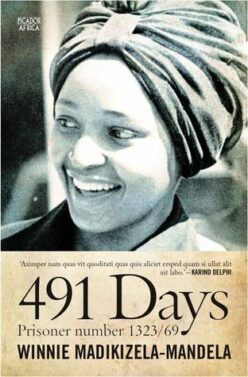
491 Days: Winnie Madikizela-Mandela’s Prison Journal is a poignant collection of secret journal entries and correspondence that documents the 16-month detention of Winnie Madikizela-Mandela between May 1969 and September 1970. The work serves as both a historical record of apartheid’s brutality and a personal account of the psychological toll of solitary confinement. Through her writings and letters exchanged with her husband, Nelson Mandela, the book reveals the defiance of a mother and activist who was stripped of her identity and used as a “political barometer” by the South African security system.
Plot
- Arrest and Initial Detention: The narrative begins on the morning of May 12, 1969, when Winnie is arrested at her Soweto home in front of her young daughters. She is taken to Pretoria Central Prison and held incommunicado under the Terrorism Act, which allowed for indefinite detention and interrogation.
- The Trial of the 22: After months of solitary confinement and a five-day continuous interrogation, Winnie and 21 others are charged with promoting the aims of the African National Congress (ANC). In February 1970, the charges are withdrawn, but the group is immediately re-detained in the courtroom before they can leave.
- Mental and Physical Decline: Back in solitary confinement, Winnie’s health deteriorates significantly. She suffers from heart palpitations, blackouts, and profound anxiety. At her lowest point, she contemplates gradual suicide by refusing food and medication, hoping her death would save her colleagues from further torture and spark international outrage.
- Hospitalization and Final Trial: Following a severe health crisis, she is hospitalized and eventually rejoined with her colleagues for a second trial under the Terrorism Act. This trial includes an MK operative, Benjamin Ramotse.
- Acquittal and Re-banning: On September 14, 1970, the judge acquits the 19 accused, though Ramotse is sentenced to 15 years. Upon her release, Winnie is briefly reunited with her children before being served with new banning orders and house arrest for another five years.
Setting
- Pretoria Central Prison (Death Row): Most of the journal describes a 5′ x 15′ cell with three doors and a light that burned 24 hours a day.
- Compol Building: The headquarters of the security police where Winnie was taken for intense, often multi-day interrogations.
- The Old Synagogue, Pretoria: The makeshift courtroom used for the trials of the anti-apartheid activists.
- Soweto (8115 Orlando West): The Mandela family home, representing the life Winnie was torn away from and the site of constant police harassment.
Themes
- The Cruelty of Solitary Confinement: The journal highlights isolation as a “slow death” designed to destroy the soul.
- Resilience and Defiance: Despite physical and mental agony, Winnie remains steadfast, refusing to provide information to interrogators like Major Swanepoel.
- Family Strain and Sacrifice: The profound pain of being a “single parent” whose children grew up with an absent father and then a detained mother is a recurring motif.
- The Injustice of the Apartheid Legal System: The use of “puppet” magistrates and the practice of re-detaining individuals immediately after acquittal demonstrate the system’s corruption.
Characters
Major Characters
- Winnie Madikizela-Mandela: The author and protagonist; a defiant activist fighting to maintain her identity and sanity.
- Nelson Mandela: Though imprisoned on Robben Island, he is a central presence through letters that provide Winnie with “tons and tons of love” and ideological strength.
- Major Theunis Swanepoel: A lead interrogator known for his brutality; he is Winnie’s primary antagonist during her time at Compol Building.
- Brigadier Aucamp: A senior prison official who used psychological manipulation and restricted Winnie’s access to her family and legal team.
Minor Characters
- Zenani and Zindzi Mandela: Winnie’s daughters, whose childhoods were defined by their parents’ absence and police raids.
- Shanti Naidoo and Nondwe Mankahla: Fellow detainees who heroically refused to testify against Winnie, resulting in their own imprisonment.
- Joel Carlson and David Soggot: Winnie’s dedicated legal defense team who fought for her rights and preserved her secret journal.
- Matron Zeelie: A prison official described by Winnie as a “compulsive liar” who participated in the mistreatment of detainees.
- Thembi Mandela: Nelson’s eldest son, whose death in a car accident during Winnie’s detention adds a layer of tragic loss to the narrative.
Literary Devices
- Extended Metaphor: Winnie describes her struggle against the Security Branch as a “boxing match” with a biased referee, where she must fight without rules while being forced to observe them.
- Imagery: She uses vivid, grim imagery to describe her cell, such as the blood-stained mats that “tell many tales” and the “dim grim dark walls”.
- Personification: The cell walls are described as an “encyclopaedia” of the suffering of previous prisoners, and the mats are treated as witnesses to the torture she hears in the adjacent “assault chamber”.
- Epistolary Style: The inclusion of actual letters between Winnie and Nelson creates a dialogue of resistance, showing how their shared ideals sustained them despite physical separation.
- Symbolism: The sanitary bucket and the bright, unceasing light in her cell symbolize the total loss of privacy and dignity under the apartheid regime.