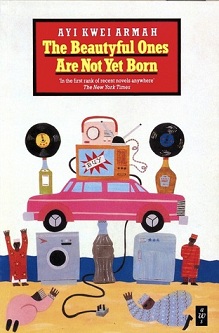
Ayi Kwei Armah’s novel, The Beautyful Ones Are Not Yet Born, provides a searing critique of post-independence Ghana, focusing on the pervasive nature of corruption and the struggle of an individual to maintain human integrity in a decaying society.
Summary of the Novel
The story follows an unnamed protagonist, referred to simply as “the man,” who works as a modest railway clerk. He lives a simple life amidst the “sloth, rot and greed” of a newly liberated African state where materialistic values have replaced the hopes of independence. The man is constantly pressured by his wife, Oyo, and his mother-in-law to “drive fast” toward material success which they call “the gleam” much like his former classmate Joseph Koomson, who has become a wealthy and corrupt Minister.
The man’s refusal to accept bribes, such as one offered by a timber contractor named Amankwa, leads to his isolation and the silent reproach of his family, who view his honesty as a sign of uselessness. He finds some solace in conversations with “Teacher,” a naked man who has withdrawn from society to escape its filth.
The novel reaches its climax when a coup d’état overthrows the government. Koomson, once a “big man,” arrives at the man’s house in a state of abject terror, smelling of “flatulent fear”. To save Koomson from the new regime, the man helps him escape through a literal and symbolic latrine hole, leading him through the filth of the city to a boat for his escape. Afterward, the man returns home, only to see a policeman taking a bribe from a bus driver, signaling that the cycle of corruption remains unchanged despite the new leadership.
Setting
The novel is set in post-independence Ghana (specifically the mid-1960s), largely around the twin cities of Sekondi-Takoradi. Key locations include:
- The Railway & Harbour Administration Block: A massive, decaying building where the man works, characterized by layers of dirt and engine grease.
- The Man’s Home: A cramped space filled with the silent accusations of his family and the physical signs of poverty.
- The Upper Residential Area: Where the elite like Koomson live in “white bungalows” and “villas,” representing the unattainable “gleam” for the poor.
- Public Latrines and Refuse Heaps: These are pervasive throughout the city, serving as constant reminders of the country’s physical and moral decay.
Themes
- Corruption and Moral Decay: The novel depicts a society where “palms getting greased” is the only way to get ahead. Corruption is presented as an organic, inevitable process of rot.
- Materialism (The Gleam): The “gleam” represents the allure of Western luxuries Mercedes cars, expensive perfumes, and shiny houses which distract the people from their suffering and drive them to unethical behavior.
- Post-Colonial Disillusionment: Independence is shown to have merely replaced white masters with “black men trying at all points to be the dark ghost of a European”.
- The Cycle of Life and Death: The novel frequently compares political and social life to the cycle of birth and rapid decay, famously illustrated by the story of the “manchild” who is born, grows old, and dies within seven years.
Key Characters
- The Man: The unnamed protagonist who embodies “profound human integrity”. He is a “silent watcher” who refuses to join the “national game” of corruption.
- Joseph Koomson: The man’s former classmate and a Minister. He represents the “new elite” who have grown fat on the spoils of office but are reduced to cowardly shells when the government falls.
- Oyo: The man’s wife, who longs for the material comforts she sees in others. She initially resents her husband’s honesty but eventually feels gratitude toward him after witnessing Koomson’s downfall.
- Teacher: A cynical, “naked” intellectual who lives in isolation. He uses stories like Plato’s Cave to explain the futility of trying to bring “light” to a people who prefer the darkness.
- Maanan: A beautiful woman who once believed in the promise of independence but eventually goes mad, searching for something lost in the sand.
Literary Devices
- Symbolism of Filth: Excrement, vomit, and refuse are used throughout the novel to symbolize the moral putrefaction of the state.
- The Chichidodo Bird: A central metaphor for the man; it is a bird that “hates excrement with all its soul” but “only feeds on maggots” that grow in it, representing the man’s inescapable connection to a corrupt system.
- Allegory (Plato’s Cave): Used by Teacher to describe a society chained in darkness, where anyone who sees the “light” is treated as a madman.
- Visceral Imagery: Armah uses intense, often repulsive descriptions such as the “diseased skin” of a wooden banister to make the decay of the setting feel organic and living.
- The Title: A hopeful yet tragic phrase seen on a bus at the novel’s end, suggesting that those who will truly save the nation the “beautyful ones” have not yet appeared.