
You can listen to the Book Summary Below
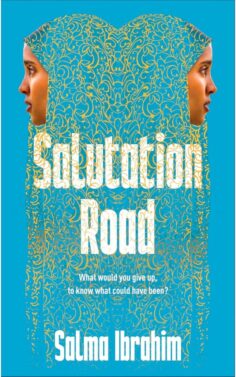
Summary of Salutation Road by Salma Ibrahim
Introduction: The Earlobe of London and the Weight of Nostalgia
The narrative of Salutation Road begins with a meditation on geography and the stillness of time. The protagonist, Sirad Ali, a twenty-three-year-old Somali-British woman, views the Greenwich Peninsula as being “shaped like an earlobe”. Growing up on Salutation Road, she discovered that this specific patch of land was a place where “time stopped moving,” a static corner of London where one could walk out of one life and into another. For Sirad, nostalgia is a recurring, sometimes stabbing sensation that colors her memories of early life in London in a “lavender hue”. These memories are inextricably linked to her father, who was present before 2005, spinning a silver globe to quiz her and her brother on capital cities while frankincense burned on the mantelpiece.
In the present day (around 2016), Sirad’s life is defined by a repetitive cycle of work and survival. She lives in a tower block with her mother (Hooyo) and her sixteen-year-old brother (Ahmed). The family is in a state of quiet crisis. Hooyo has recently been “let go” from her hospital job due to persistent fatigue and “numbness of mind” that made her manager view her as a strain on resources. Ahmed is increasingly rebellious, skipping school to roam the blocks across the river, having abandoned the camera the family bought him as a distraction. Sirad, working a zero-hour advertising sales job, is the primary breadwinner, drowning in unopened white envelopes containing “outstanding payments” and “urgent notices”. This personal struggle occurs against a national backdrop of uncertainty following the Brexit referendum, where the “I-word” immigration features in every discussion.
Part One: The Journey into the Alternate Lifetime
The Letter from UNCLASSIFIED The inciting incident occurs when Sirad finds a small brown envelope tucked into the sofa cushions. The handwritten letter is from a group of anonymous scientists at a London university who are “fascinated by technology and the topic of migration”. They invite Sirad to take part in UNCLASSIFIED, a project that allows “third-culture young people” to experience their roots in an “alternate lifetime” for one day. To begin, she is instructed to take the C5 bus from Tyler Street at 8:00 a.m. on Monday, August 15.
The Crossing to Mogadishu On the designated morning, despite her skepticism, Sirad boards the bus. The journey begins as a standard commute, marred only by a London Underground strike. However, as the bus plunges into the Blackwall Tunnel, a sudden sleepiness overcomes Sirad. When she wakes, the landscape has radically transformed. The grimy windows of East London have been replaced by a view of white stone buildings, palm trees, and camels loitering by the roadside. The bus driver, now wearing a bulletproof vest and black sunglasses, announces that they have arrived in Mogadishu.
Sirad is met by a woman who claims to be her aunt, though Sirad does not recognize her. She is taken to a home where her parents, “Mama” and “Aabo,” reside. This is the “alternate lifetime” where her family never left Somalia (or where her father did not abandon them). In this reality, Sirad has a double named Ubah.
Life in the Parallel World Sirad’s interaction with this alternate family is surreal and emotionally taxing. She meets a version of her father who is an old man with a limp and “callused heels,” a stark contrast to the thirty-something ghost of her London memories. Mama and Aabo explain that their life is difficult they often eat only one meal a day and cannot afford medical treatment but they are “blissfully in love,” an intimacy Sirad’s real parents lacked. Aabo reflects on the “fate” that led one version of the family to leave in 1998 while this version stayed, noting that while Sirad’s London life offers safety, it lacks the rootedness of their world.
The highlight of the journey is meeting Ubah, her double. Ubah lives in a modest home with her husband, though she is “deeply unsatisfied”. Ubah is sharp-tongued and cynical, warning Sirad that she is being “used” by the project organizers. She tells Sirad the folklore of the “half-bodied woman” who wanders the city at night, using her power to keep herself safe, a story Ubah considers “more truthful than history”. Ubah reveals a secret desire to “run away” and leave the country, even asking Sirad if she can get on the bus back to London. At midnight, the bus returns, and Sirad is transported back to Salutation Road, carrying a baati (a traditional dress) from Mama as a souvenir.
Part Two: The Leak and the Betrayal
The Reality of the Cross-Overs Back in London, Sirad finds it impossible to resume her “normal” life. She begins to hear rumors of “undocumented Somali migrants” appearing all over the city, particularly in Greenwich. These people are the survivors of the “bus service” that has backfired on the university academics, having been co-opted by an “underground company” that smuggles people from Mogadishu to London to work as cheap labor.
Sirad discovers that Ubah has succeeded in making her journey. She finds Ubah working and living at the Saint’s Inn, a Victorian hostel that has become a hub for these displaced women. For a brief period, the two act like sisters. They explore London together, visiting Woolwich and Primark. During a trip to a changing room, Ubah breaks down and reveals a hidden trauma: she was pregnant when she made the journey and lost the baby a month prior. Despite this shared intimacy, Ubah is determined to remain “invincible” and create a fake identity, telling Sirad, “I’m not you… I’M NOT YOU!”.
The Act of Treachery The UNCLASSIFIED project organizers, led by Olga Barker, summon the participants to a focus group session at their Salutation Road headquarters. The atmosphere is hostile; the participants, all women, feel “mocked” and “mined” for information without being offered any support for the “existential crisis” the journey caused.
After the group leaves, Olga approaches Sirad privately. She claims they are looking for Ubah to “bring her back” and prevent human trafficking. Olga offers Sirad twenty-five thousand pounds for a written statement detailing Ubah’s workplace and activities. Sirad, crushed by her family’s debt and the “suction” of poverty, succumbs to the bribe. She provides the statement, effectively “snitching” on her double to secure a fresh start for her real family. Shortly after, Ubah sends a final text saying she is going into “hiding” to protect Sirad, unaware that it was Sirad who betrayed her. The money allows Sirad to pay off the family’s rent arrears and bills, bringing “brightness” back to Hooyo’s eyes, but leaving Sirad “all alone in my wickedness”.
Part Three: The Librarian and the Art of Starting Again
Throughout this period, Sirad finds solace in the East Greenwich Library and her relationship with Maxine, the librarian. Maxine is a “village elder” figure, the daughter of a Jamaican miner who came to England on the Windrush. She was the one who helped Sirad through a “mute year” in childhood when the trauma of moving from Mogadishu rendered her unable to speak English. Maxine’s philosophy is “The Art of Starting Again,” an idea that life requires one to keep renewing their intentions and reasons for living.
Maxine encourages Sirad to apply for a job as an Executive Assistant for a new women’s magazine. Sirad gets the job, working under a CEO named Rita. Rita’s first issue theme is “Society’s Invisible Women,” a bitter irony that stings Sirad as she thinks of the women at the hostel she helped dismantle. Under Rita’s mentorship, Sirad begins to rise through the ranks, eventually becoming a features editor and “writing her way out of one mode of existence and into another”.
Part Four: Adulthood, Marriage, and the Second Secret
Marriage to Omar The narrative jumps forward several years. Sirad is now twenty-nine, living in a “forever home” in Blackheath with her husband, Omar. Omar is an orphan of the Somali civil war who arrived in London at age ten. He is a respected deputy head at a school for children with special needs. Their life appears perfect, yet Sirad remains “haunted” by her past crimes, feeling like she is “watching my life from behind a low wall”.
The central tension of their marriage is the topic of children. Hooyo, who has moved back to Garowe, Somalia, to live on a farm with Aunt Najma, constantly pressures them for grandchildren. Sirad is reluctant, feeling she cannot bring a child into a world where she still keeps secrets.
The Discovery of Omar’s Crossing The stability of Sirad’s life is shattered when she discovers a series of images on Omar’s camera. They show Omar in Mogadishu, standing on the beach with a pretty Somali woman and a little girl. The background outlines of the old lighthouse confirm he is in the “alternate” version of the city.
Sirad embarks on a secret investigation, eventually meeting a man named Nabil at a warehouse in West Silvertown. Nabil reveals that Omar is part of an underground operation: he has been crossing over back and forth twice a week to run a “supplementary school” for the children on the other side. The woman and child in the photos are his sister and niece, whom he only discovered existed after he began crossing over.
Part Five: The Final Crossing and Rejection
Finding Ubah Again Driven by a need for “redemption,” Sirad pays Nabil to get her on the bus for one final crossing. She seeks out Ubah’s salon in Mogadishu, “UBAH NURA,” in the Xamar Weyne district. She finds a hardened, older version of Ubah who is running a salon that rumors claim is a front for a brothel.
Sirad attempts to apologize for the betrayal years ago. Ubah’s reaction is one of “visceral pain” and mocking laughter. She rejects Sirad’s apology, asking, “Was I just supposed to give you what you want: an exciting story, some claim to personal growth?”. Ubah reveals she had a child in London but left the baby behind with the father because she “couldn’t be what she wanted” in a life of illegitimacy. She kicks Sirad out of her home, shouting, “Out, out, OUT!”.
The Escape Returning to London, Sirad is overcome by the “ease with which I pack a suitcase and leave Omar”. She checks into a hotel, reflecting on how she inherited this “predisposition for being able to leave a loved one” from her father. During this period of isolation, she hears news that Maxine has died. Maxine’s death is a crushing blow; she died of cancer and heartbreak after the library she fought so hard to save was finally closed down.
Conclusion: The Return to the Tower
Sirad eventually returns to her childhood tower block, climbing the twenty-three flights of stairs when the lift is broken. She finds her room exactly as she left it, but the view from the balcony has changed: the warehouses have been cleared, and she can finally see the river.
Omar finds her there. He reveals that the woman on his camera was indeed his sister and that his parents had a daughter raised by his grandmother whom he never knew until the crossings. Sirad finally confesses her betrayal of Ubah. Omar, in an act of profound grace, tells her, “If what happened to Ubah makes you feel like you don’t deserve to be at peace, I’m letting you know that you deserve it anyway”.
Omar leaves her with a choice: he will wait in his car for the duration of the seven o’clock news. If she joins him, they will drive home together; if not, he will leave her forever. Sirad cleans her mother’s room and watches Omar’s car from the windowsill, where her father’s Toyota once sat. In the final scene, she showers, runs down the stairs, and prepares to “give myself to the unknown current of fate with my eyes closed,” finally ready to go home.
The book ends with Sirad realizing that while the “UNCLASSIFIED” project was a form of violence that “cheaply traded truth for entertainment,” the connections she made however painful were real. She chooses a life that is “righteous and honest” over one that is merely perfect.