
You can listen to the Book Summary Below
Table of Contents
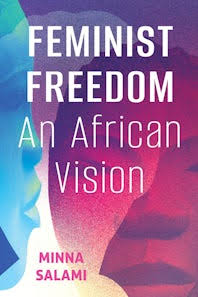
Minna Salami’s Feminist Freedom: An African Vision is an epistemic intervention that seeks to transform the way we understand freedom, identity, and power through the lens of African feminist political philosophy. The book rejects linear, materialist modes of meaning-making in favor of a “dance” with language inventing new terms for realities long misnamed or not yet imagined. At its core, the work addresses the urgent question of how we become “unavailable for servitude“.
The Intellectual Framework: Paradoxes and the “Glitch”
The narrative begins with Salami’s childhood encounter with the film Flashdance, which she interprets as a story of feminist resistance: a woman learning the rules of a patriarchal “dance” only to break them and move to her own rhythm. Salami defines feminist freedom not as something “given” by an oppressor, but as a birthright and a shifting quality always present in our ecosystem.
Salami introduces the concept of the “Glitch” to describe the unstable nature of African identity. She argues that “Africa” is a European invention, a fiction built on the shaky premise that there is a singular, fixed “truth” about the continent. Imperialism not only exploited African soil but also troubled the African psyche, forcing Africans to develop “mythologies of self-regard” as a defense. However, these myths can become a trap if they claim unquestionable truth. African feminism acts as a glitch in the foundations of Eurocentricity and patriarchy by shifting the gaze from Europe to Africa and from maleness to the female experience.
The book is framed by a central, paradoxical question: “Can feminism be African?”. Salami uses this inquiry to prod deeper into the tensions of identity, suggesting that the question itself is generative precisely because it provides no simple answers.
Part One: Africa The Metaphysical and the Material
Metaphysical Africa
Salami distinguishes between Empirical Africa the continent we can measure through GDP, biodiversity, data, and maps and Metaphysical Africa. While Empirical Africa is essential for practical transformation, its dominance in global narratives obscures the “interior” of African reality. Metaphysical Africa is a non-material “place” in the social imaginary, populated with beliefs, ideas, and narratives that shape identity and worldview.
A prime example of this metaphysical nature is “African Time“. Salami argues that African Time is not merely a lack of punctuality but a way of life rooted in an intuitive understanding of temporality cyclical, linear, and “kairos” (the right moment). She contrasts this with Western “industrial time,” where time is synonymous with industry and progress.
Superiorism
Salami coins the term “Superiorism” to describe the belief system that legitimizes racism, sexism, and classism through a logic of superiority. Its defining features are:
- Difference: Asserting that the Self is fundamentally different from the Other.
- Hierarchy: Ranking that difference.
- Competition: Viewing social relations as a zero-sum game.
- Rationality: Weaponizing reason to defend the previous three tenets.
- Control: The ultimate goal of the system.
Superiorism is deeply embedded in Europe’s identity, historically defining itself against the “barbarian” (originally meaning foreigner). Salami argues that Europe turned the “sandbox” of human experience into “sandcastles” (quantifiable matter) to claim power over them.
The Trickster Dualism and Ally Fever
Salami critiques the Self and Other dualism, which she identifies as the “Master Dualism” of Superiorism. She proposes the “Observer and the Observed” as a “Trickster Dualism” (invoking the Yoruba deity Eshu). This framework collapses the distance between the two, as the Observer recognizes that they are also an Other to someone else.
This leads into a critique of “Ally Fever”. Salami argues that the modern role of the “Ally” often reinforces the Teacher/Student dualism. When the “Self” (the privileged) asks the “Other” (the marginalized), “How can I be a better ally?”, they are effectively asking the Other to perform the labor of the Teacher/Educator. This reversal prevents the marginalized person from introspecting and having the agency of an inner world, reducing their identity to an administrative methodology for the Self’s atonement.
The Ghost of Whiteness and the Human Illusion
The “Ghost of Whiteness” is a psychological emblem of the discordant world created by Superiorism. Salami defines it not as a spirit, but as a restless ghost tethered to the world by “unfinished business” the internal conflict of wanting to both renounce and maintain Superiorist structures.
The book traces the “Human Illusion” back to Aristotle, who defined the human by the capacity to reason. This definition historically excluded women and non-Europeans, who were cast as “irrational” or “primitive”. Salami posits that we are currently living through a paradigm shift where this Aristotelian “Vitruvian man” narrative is collapsing. She identifies three waves of decolonization, starting with the Haitian Revolution, which serve as mass resistance against this selective definition of the “human”. The post-pandemic world has accelerated this awakening, exposing the “God trick” that assigns different values to different lives.
Part Two: Feminism Resistance and Recovery
Spider Mentality vs. Harmony Feminism
Salami explores the tension between conformity and non-conformity through the metaphor of the spider. Unlike eusocial insects like bees (who conform to strict social hierarchies), spiders are individualists who build and guard their own webs. “Spider Feminism” involves refusing to shrink under social pressure and weaving a life intimately of one’s own.
She contrasts this with “Harmony Feminism,” which prioritizes progress through concordance and negotiation rather than disruption. Salami uses two South African icons to illustrate this: Miriam Makeba (“Mama Africa”) as a symbol of harmony, and Winnie Madikizela-Mandela as the “feminist killjoy” who disrupts the peace with uncomfortable truths. Salami argues that while harmony is a soothing metaphysical quality, it becomes oppressive when it demands the denial of one’s self to maintain the status quo.
Andro-Africanism
Salami conceptualizes “Andro-Africanism” to describe the conflation of masculine identity with African identity. She traces this back to the 1963 launch of the Organization of African Unity (OAU), where male leaders defined Pan-Africanism through an androcentric lens, often relegating women to “the night”. This “Black Macho” sentiment grew out of the struggle to regain “manhood” stolen by colonialists.
The consequence of Andro-Africanism is that Africanness is not neutral; it is shaped by male experience. Salami argues that if women were the architects of Africanness, the concept would be infused with qualities like healing, imagination, and shakara (insouciance/confidence). She challenges the “matriarchy myth” the idea that Africa was once matriarchal pointing out that it is often used by modern patriarchs to silence feminist calls for change by claiming power will “naturally” return to women.
Homegrown Feminism and the Legacy Trap
Salami makes a critical distinction between protofeminism (historical resistance by women before the formal movement) and feminism (the anti-patriarchal political movement starting in Africa in the 1970s and 80s).
She warns against the “legacy trap,” where feminists try to prove feminism is African by claiming it has ancient roots to mollify critics who say it is “unAfrican”. This trap is a negotiation with Andro-Africanism. Salami insists that chronology is political: African feminism does not need to be ancient to be valid today. By focusing on superhuman “matriarchs” and “queens” from history, the legacy trap obscures the precarious reality of ordinary African women whose ancestors often accepted, rather than resisted, patriarchal rule.
Part Three: Being The Journey Inward
Individuation vs. PAWN
The final section addresses the rise of Populist Anti-Western Nativism (PAWN). PAWN defines Africanness solely in opposition to the West: if the West is “pro-feminism” or “pro-queer,” then Africa must be against them. This “ressentiment” (as Nietzsche put it) uses morality as a weapon, concealing deep wounds of resentment while keeping the “oppressor” as the central focus of the narrative.
Salami proposes “Individuation” (a Jungian concept) as a framework to transcend the individualism/communitarianism dualism. While individualism is the worship of the self, individuation is knowing the self. It involves the “coming-to-be-of-the-self,” a process that requires a healthy amount of aloneness even within a community.
Salami connects individuation to indigenous African cosmologies, such as the Yoruba concept of the Ori (one’s head/destiny). Naming ceremonies and divination practices are traditional tools of individuation, designed to help an individual become who they were meant to be. African feminist individuation seeks to both dissent and love to dissent because it loves, and to love because it dissents.
Epilogue: A Pedagogy of Shakara
The book concludes with a call for a “Pedagogy of Shakara“. In the Nigerian context, shakara implies ostentatious behavior, confidence, and insouciance. Salami defines the shakara mindset as being simultaneously disobedient, powerful, serious, and wise. It is the refusal to let biased narratives whether religious, traditional, or imperial compromise one’s appetite for life.
Salami reflects on a feminist workshop in the Gambia where the energy was “defiant, brazen, and mischievous”. She argues that shakara is one of the defining qualities of African feminist history, embodied by figures like Funmilayo Ransome-Kuti, who reversed patriarchal authority by leading thousands of women to demand a king’s surrender.
Ultimately, Salami’s vision is one of unwavering love for Africa through critique. She challenges readers to become “incrementally more fearless” and to realize that the “man’s world” they live in is not a locked room, but one where they hold the key. To embody feminist freedom is to “paint the mountain. And have it“.