
Table of Contents
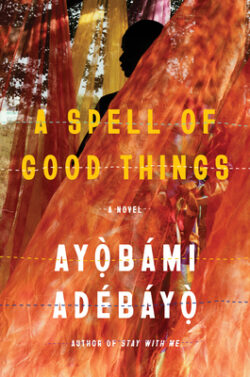
Ayọ̀bámi Adébáyọ̀’s A Spell of Good Things is a sweeping and devastating examination of the widening chasm between the wealthy and the impoverished in modern Nigeria. The novel centers on two protagonists whose lives are shaped by the precarious nature of stability and the ruthless machinations of political power: Ẹniọlá, a sixteen-year-old boy whose family has plummeted into extreme poverty, and Wúràọlá, a twenty-eight-year-old doctor from a highly privileged background. Their parallel narratives eventually converge in a tragedy that exposes the cost of political ambition and the fragility of the “American Dream” in a landscape defined by corruption and inequity.
The Collapse of the Middle Class: Ẹniọlá’s Family
The story of Ẹniọlá’s family is a masterclass in the anatomy of decline. His father, Bùsúyì Òní, was once a respected Vice Principal, a man who took pride in his professional English and his extensive library of history books. The family’s stability is shattered when the state governor retrenches four thousand teachers in a single day, dismissing subjects like history, fine arts, and Yorùbá as useless for “technology, science and technology”. This loss of status sends Bùsúyì into a paralyzing depression, a “darkness” that keeps him bedridden for years, staring at the wall while his family starves.
The family’s descent is marked by the gradual loss of their possessions: first the Volkswagen Beetle, then the television and VCR, then the sofas, and finally the three-bedroom flat itself. They move into a single, mouldy room in a two-storey building where they share an outdoor latrine with other tenants. Ẹniọlá’s mother, Abọ́sẹ̀dé (Ìyá Ẹniọlá), becomes the family’s sole provider, wading through refuse heaps for used plastics to resell and eventually resorting to the ultimate humiliation: street begging.
Abọ́sẹ̀dé orchestrates a scheme where the family takes on characters to solicit pity. Ẹniọlá is forced to dress in rags and carry a sign claiming he is a “deaf and dumb orphan,” while Abọ́sẹ̀dé and her daughter, Bùsọ́lá, pretend to be a blind woman and her guide. This period of begging is defined by “muffled rage” and a deep sense of shame for Ẹniọlá, who is often the target of the principal’s whip at school because his parents cannot pay his fees.
The Facade of Privilege: Wúràọlá and Kunle
In stark contrast, Wúràọlá Mákinwá belongs to the elite. She is the daughter of Ọ̀túnba Adémọ́lá Mákinwá, a wealthy contractor, and Yèyé Christianah Àlàkẹ́ Mákinwá, a successful textile trader. Despite her wealth, Wúràọlá’s life as a medical house officer is defined by exhaustion and the systemic failure of the healthcare system. She works thirty-six-hour shifts without sleep, performing surgeries in darkened theaters where the only light comes from her mobile phone because the hospital lacks diesel for the generator.
Her personal life revolves around her relationship with Lákúnlé (Kúnlé) Coker, the son of her parents’ close friends. Kúnlé is a newscaster whose parents, Professor Babájídé and Professor Cordelia Coker, represent the pinnacle of social aspiration. Kúnlé, however, is a deeply insecure man who failed his own medical exams and carries the weight of his parents’ unfulfilled expectations. This insecurity manifests as an abusive and possessive pathology.
The first instance of physical abuse occurs during Yèyé’s lavish fiftieth birthday party, where Kúnlé slaps Wúràọlá in front of her sister, Mọ́tárá, after Wúràọlá defends Mọ́tárá’s behavior. Wúràọlá, desperate to maintain the “miracle” of her engagement and avoid the stigma of being a single woman near thirty, rationalizes the violence. She convinces herself that Kúnlé is simply “stressed” and that his subsequent groveling and “attentiveness” are proof of his love.
The Intersection: Tailoring and Charity
The two narratives first intersect at Aunty Caro’s tailoring shop, where Ẹniọlá is an apprentice. Yèyé is a “rich madam” customer at the shop, and she recognizes Ẹniọlá from a begging encounter at the cathedral where he had tapped her car window. Moved by a mix of pity and recognition, Yèyé pays Ẹniọlá’s apprenticeship fees in full, a sum his parents could never afford.
This act of charity, however, coincides with a devastating domestic betrayal. Abọ́sẹ̀dé, forced to choose which child to keep in school, decides to pay the fees for Bùsọ́lá who is considered the “smarter” and more academically focused child while transferring Ẹniọlá to a tuition-free but useless public school, United Apostolic Missionary Grammar School. Feeling worthless and discarded, Ẹniọlá rejects his mother’s pleas and seeks a different kind of “freedom”.
Political Thuggery: Honourable Fẹ̀sọ̀jaiyé
At his new school, Ẹniọlá falls in with Rashidi and Sàámú, older students who work as “boys” for Honourable Kọ́lápọ̀ Timothy Fẹ̀sọ̀jaiyé (KTF). Fẹ̀sọ̀jaiyé is a ruthless politician whose family perished in a horrific bus crash, leaving him as the sole survivor and heir a tragedy the community attributes to his mother’s witchcraft. He is currently contesting the ruling party’s governorship primary against Wúràọlá’s prospective father-in-law, Professor Coker.
Fẹ̀sọ̀jaiyé recruits Ẹniọlá into his network of thugs, charmed by the boy’s shared name with his dead brother. Ẹniọlá is given a knife and money, things that provide him with a “lightness of being” he hasn’t felt in years. He begins skipping school to play jackpot and attend rallies, eventually being chosen for a “special assignment” to intimidate Professor Coker’s primary financial backer: Ọ̀túnba Mákinwá.
The Climax: The Night of the Raid
The convergence of these paths occurs during a night raid on the Mákinwá residence. Holy Michael, Fẹ̀sọ̀jaiyé’s chief thug, leads a group including Ẹniọlá to the compound. They set the house and luxury cars on fire and kidnap Ọ̀túnba Mákinwá. Eniola is paralyzed with horror when he realizes the targets are the family that was kind to him.
In a final moment of desperate conscience, Eniola tries to stop a policeman from striking the gagged Ọ̀túnba by slashing the officer’s arm with his knife. He jumps from the moving bus and flees, effectively “snitching” through his actions. In retaliation, Fẹ̀sọ̀jaiyé’s thugs track Eniola to his home and kidnap his sister, Bùsọ́lá, as a warning to keep him silent.
Simultaneously, Wúràọlá’s life collapses. After Kúnlé discovers a journal entry where she admitted she didn’t love him, he brutally assaults her, nearly strangling her and dragging her by her hair. This violence, combined with the news of her father’s kidnapping, gives Wúràọlá the strength to finally break the engagement.
The Tragic Resolution and Aftermath
The search for the missing ends in the hospital morgue. Wúràọlá discovers her father, Ọ̀túnba Mákinwá, dead on an embalming table, his face unscarred but his life extinguished. Nearby, she sees the body of a young girl whose hair is still neatly threaded Bùsọ́lá, who was found in the same bush as Ọ̀túnba.
The novel concludes with the “Foreman” epilogue, set a year later. Governor Fẹ̀sọ̀jaiyé has won the election, and “thank-you” posters featuring his grinning face are plastered over the walls of the city. Ẹniọlá is still working at Aunty Caro’s shop, a “muted version of himself” who has given up on his education, believing he does not “deserve school” after the role he played in the events that killed his sister. Wúràọlá is left to navigate a world where her father is a memory and the “spell of good things” has been proven to be as fleeting as the rain on a hard-rock outcrop.
Key Themes and Symbols:
- The Inevitability of Politics: The novel argues that even those who try to avoid politics, like Ẹniọlá, are eventually consumed by its violence.
- The Fragility of Status: Busuyi’s story illustrates how easily a lifetime of professional achievement can be erased by a single bureaucratic decree.
- The Gendered Experience of Abuse: Wúràọlá’s narrative highlights how societal pressure to marry can blind even brilliant women to the danger of abusive men.
- The Rain and the Outcrop: Drawing from T.M. Aluko, the novel uses the image of rain on rock to symbolize how the footprints of the powerful are quickly washed away, leaving the poor to bear the permanent scars of their passing.