
Table of Contents
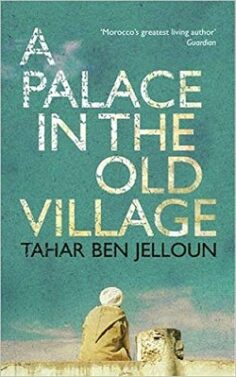
Tahar Ben Jelloun’s A Palace in the Old Village is a haunting, lyrical exploration of the immigrant experience, the psychological toll of retirement, and the unbridgeable chasm between a traditional past and a modern, assimilated future. The novel follows Mohammed, a Moroccan immigrant who has spent forty years as a meticulous and conscientious worker in a French automobile plant in Yvelines. As he reaches the end of his professional life, he is forced to confront the “nothingness” that threatens to consume him a state he refers to as “’tirement”.
The Weight of “’tirement” and the Factory Life
For Mohammed, work was not merely a means of earning a living; it was a “straight line” that provided a rhythm to his existence and protected him from the “ravine of the absurd”. He was a “model worker,” never late, never absent unless bedridden by flu, and obsessed with the conscientious care of the assembly line. He believed that the factory’s success depended on his specific, obsessive care, and the prospect of stopping was not a liberation but a “curse” and an “invisible, two-faced enemy”.
Mohammed perceives retirement as the “introduction to death,” a “trap” and a “diabolical invention” that strips a man of his utility to society. He is haunted by the memory of his friend Brahim, who died just five months after retiring, seemingly done in by “utter uselessness” and the “idle loneliness” of a life without a schedule. Mohammed fears that without his grey overalls and his 5:00 A.M. alarm, he will simply “sink into melancholy”.
Exile and the Fractured Family
The core of Mohammed’s tragedy is his relationship with his five children: Mourad, Rachid, Jamila, Othmane, and Rekya. Although he worked his entire life so they would lack nothing, he finds that he has lost all authority over them. They have become “little Europeans,” assimilated into a culture that Mohammed finds unfathomable and, at times, repulsive.
- Rachid/Richard: Mohammed is deeply wounded when his son Rachid changes his name to Richard to fit in better with French society. To Mohammed, this is an attempt to “erase his roots,” a betrayal of the name given to him during a traditional baptism.
- Jamila: The most painful rift is with his eldest daughter, Jamila, who marries an Italian man against Mohammed’s wishes. Mohammed views this as an abandonment of her faith and culture, leading him to “erase her from the family register”. Jamila, in turn, tells him he is “sick” and needs help for clinging to outmoded traditions.
- Mourad: The eldest son, though respectful, has also distanced himself, choosing to spend his vacations with his Spanish in-laws in the Alpujarras rather than returning to the Moroccan village.
The only child who offers Mohammed unalloyed joy is his nephew Nabile, whom he raised as his own son. Nabile is “special” (described as having Down Syndrome), but to Mohammed, he is an “angel” and a “compass” in a grey life. Nabile is the only one who senses Mohammed’s sadness and tells him, “I’m afraid for you”.
The Vision of the Palace
Driven by a “stubborn dream” to reunite his scattered family, Mohammed decides to use his savings and his retirement to build a massive house in his ancestral village in Morocco. He envisions a “palace” that will be a “little bit of paradise,” a place so magnificent that his children will have “no reason” to live far away from him anymore.
The construction of the house is an act of “folly”. Mohammed ignores the architect’s plans and gives the master mason, Bouazza, nonsensical instructions: he wants the rooms to be “as big as my heart”. The resulting structure is “bizarre,” looking like an “overloaded truck” that tilts to one side. It has many bedrooms with Turkish toilets that his children have never seen, and it lacks basic infrastructure like running water and electricity, despite the empty promises of the local Makhzen (authorities).
Mohammed’s wife, though she realizes he is “feeding on illusions,” says nothing, adhering to their tradition of “pious resignation”. She understands that “France swallowed up the children of foreigners” and that Mohammed’s attempt to “rescue them from the other religion” is destined to fail.
The Supernatural and the Shadow of Death
As the house nears completion, Mohammed’s mental state begins to deteriorate. He is haunted by a “black shadow” a menacing, enigmatic presence that warns him he has built a house on land that “does not belong to humans”. This shadow tells him that his children have already “repudiated” him and that the house will remain empty.
Mohammed turns to his faith for protection, but his religious experiences become increasingly surreal. He discovers that the pages of his Koran have become blank, as if the “verses had been wiped away”. He experiences the “night donkey” dream, a sensation of being paralyzed and crushed by an invisible weight, which he associates with his own approaching death.
The Final Vigil and Apotheosis
The climax of the novel occurs during Eid al-Kebir, the Feast of the Sheep. Mohammed invites all his children to the village for a grand reunion, buying a sheep for each of them. He sits in an old, colonial leather armchair outside the front door, waiting for their arrival.
No one comes. His children send messages or ignore his pleas, viewing the house as a “dinky little dump” and Mohammed as a man who refuses to “move on”. Mohammed remains in the chair for forty days, refusing to eat or speak, even as the armchair and eventually Mohammed himself begins to sink into the earth of its own accord. He suffers from “idle loneliness” and the physical decay of his body, eventually losing the ability to move his limbs.
By the fortieth day, the earth has “swallowed up his head,” and he dies with a “faint smile” on his lips. The villagers, moved by his singular devotion and his “unnatural” death, declare him a saint. His grave, located at the front door of the “palace,” becomes a shrine (a marabout) where people come to pray. The house, which was meant to be a home for the living, becomes a tomb for a man “slain by his retirement”.
Key Themes
- The Invisibility of the Immigrant: Mohammed feels that in France he is “transparent,” a “faithful animal” whose presence is only noted when he is missing from the assembly line.
- Cultural Dislocation: The novel explores the tragedy of the first-generation immigrant who is “not at home where I live” in France but finds that his children are “tourists in their own country” when they return to Morocco.
- The Power of Memory: Mohammed’s life is sustained by memories of “pure honey and argan oil” and the “sweet silences” of his youth, which he tries to recreate in a house that the modern world has already moved past.
- The Failure of Tradition: The novel suggests that the “archaic” ways of the tribe silence, lack of dialogue, and the authority of fear cannot survive the “whirlwind of France”.
In the end, Mohammed’s “palace” stands as a monument to a “grain of wheat” that refused to die in the soil of exile, instead choosing to sink back into the earth of his childhood, transformed by his suffering into a symbol of spiritual peace.