Table of Contents
Summary
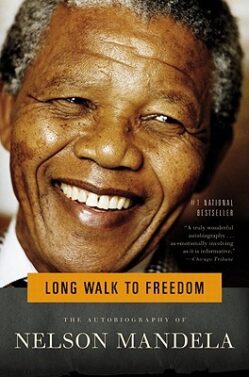
The autobiography chronicles the life of Nelson Mandela, tracing his journey from a rural childhood in the Transkei to his emergence as a prominent leader in the fight against apartheid in South Africa. The narrative documents the evolution of his political consciousness, his pivotal role in the African National Congress (ANC), and his decision to move from nonviolent protest to the armed struggle with Umkhonto we Sizwe (MK). A significant portion of the work details his twenty-seven years of imprisonment, his resilience through suffering, and the subsequent secret negotiations with the government that led to his release, the dismantling of apartheid, and his historic inauguration as the first black president of a democratic South Africa.
Plot
- Part One: Country Childhood: Mandela was born in Mvezo in 1918. Following the death of his father, Gadla Henry Mphakanyiswa, he was taken to Mqhekezweni, the provincial capital of Thembuland, to be raised by Chief Jongintaba Dalindyebo. He attended school and college at Clarkebury, Healdtown, and Fort Hare, where he began to learn of African history and resistance.
- Parts Two & Three: Johannesburg and Polticization: To escape an arranged marriage, Mandela fled to Johannesburg in 1941. He worked at a law firm while completing his B.A., met Walter Sisulu, and became involved in the ANC, eventually helping to found the ANC Youth League to advocate for more militant action against white supremacy.
- Parts Four & Five: The Struggle and Treason Trial: Mandela became a national leader during the Defiance Campaign of 1952. He established South Africa’s first black law firm with Oliver Tambo. In 1956, he was one of 156 leaders arrested in the Treason Trial, an ordeal that lasted four years and ended in a total acquittal.
- Parts Six & Seven: The Underground and Rivonia: Convinced that nonviolence had failed after the Sharpeville Massacre, Mandela went underground and formed the military wing, MK. He toured Africa and London for support before being captured in 1962. After the raid on Liliesleaf Farm, he was tried in the Rivonia Trial and sentenced to life imprisonment for sabotage and conspiracy.
- Parts Eight & Nine: Robben Island: Mandela spent eighteen grueling years on Robben Island, where he fought for better conditions and organized political education for fellow prisoners.
- Parts Ten & Eleven: Negotiations and Freedom: In the 1980s, Mandela was moved to the mainland (Pollsmoor and Victor Verster prisons). He initiated secret talks with government officials, leading to the unbanning of the ANC and his release in 1990. The narrative concludes with the successful 1994 nonracial elections and his inauguration as President.
Setting
- Physical: The story moves from the rural villages of Mvezo and Qunu to the royal residence at Mqhekezweni. Later settings include the crowded townships of Soweto and Alexandra, the clandestine headquarters at Liliesleaf Farm in Rivonia, and the courtroom and prison cells of Pretoria and Robben Island.
- Sociopolitical: The backdrop is the state-institutionalized system of apartheid, a regime of white supremacy that systematically stripped black South Africans of their land, rights, and dignity.
Themes
- The Indomitable Human Spirit: The book serves as a testament to the power of the spirit to transcend a “diabolical system”.
- The Meaning of Freedom: Mandela explores freedom not just as a lack of personal chains, but as the collective right to live with dignity and the obligation to respect the freedom of others.
- Nonracialism and National Unity: A central tenet is the creation of a “rainbow nation” where all people live in harmony regardless of color.
- The Cost of Leadership: Mandela reflects on the personal sacrifice involved in the struggle, specifically the “onerous burden” placed on his family and children because of his commitment to the nation.
- Education as a Tool for Liberation: He consistently emphasizes that education is the “great engine of personal development” and a primary threat to the apartheid state.
Characters
Major Characters
- Nelson Mandela: The protagonist, described as a man of “generosity, fortitude, and patience” who weathered many storms to lead his people.
- Walter Sisulu: Mandela’s mentor and closest comrade; described as “strong, reasonable, and practical”.
- Oliver Tambo: Mandela’s law partner and ANC President-in-exile; described as “pure gold” for his intellectual brilliance and loyalty.
- Winnie Madikizela-Mandela: Mandela’s second wife, who became an “indispensable pillar of support” and a powerful political figure in her own right while he was in prison.
- F.W. de Klerk: The National Party leader who released Mandela and negotiated the end of apartheid.
Minor Characters
- Gadla Henry Mphakanyiswa: Mandela’s father, a stubborn and rebellious chief.
- Jongintaba Dalindyebo: The Thembu regent who raised Mandela after his father died.
- Evelyn Mase: Mandela’s first wife, whose religious devotion eventually conflicted with his political life.
- Chief Albert Luthuli: The ANC President and Nobel Peace Prize winner whose commitment to nonviolence was tested by state brutality.
- Bram Fischer: The Afrikaner lawyer and secret Communist who defended Mandela at Rivonia and later died in prison for his own activism.
- Joe Slovo: A key military strategist for MK and a leader of the SACP.
- K.D. Matanzima: Mandela’s nephew, who became a leader in the government’s bantustan system, placing him at odds with Mandela.
Literary Devices
- Foreshadowing: Mandela’s Xhosa name, Rolihlahla, colloquially means “troublemaker,” which friends later viewed as a premonition of his future role in causing political “storms”.
- Metaphor: Mandela famously compares a leader to a shepherd, who “stays behind the flock, letting the most nimble go out ahead, whereupon the others follow, not realizing that all along they are being directed from behind”.
- Symbolism:
- The leopard-skin kaross he wore to court symbolized his African heritage and defiance of white justice.
- The short trousers in prison were used by the state to symbolize black men as perpetual “boys,” a status Mandela resisted.
- The spear in “Umkhonto we Sizwe” represented traditional resistance against colonial incursions.
- Imagery: Detailed descriptions contrast the “green hills and fertile valleys” of the Transkei with the “bleak, single-sex barracks” and “rusted tin shanties” of Johannesburg and the mines.
- Allusion: Mandela frequently alludes to historical figures like George Washington, Abraham Lincoln, and Gandhi to ground the South African struggle in a global context of human rights.
- Motif: The “Long Walk” serves as a recurring motif for the unceasing and difficult journey toward a goal that, once reached, reveals even more “hills to climb”.