
You can listen to the Book Summary Below
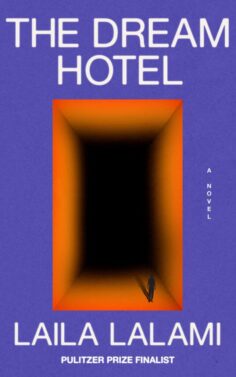
The Dream Hotel by Laila Lalami is a chillingly prescient work of speculative fiction that explores the terrifying intersection of surveillance capitalism, predictive policing, and the commodification of the human subconscious. Set in a near-future United States, the novel details the harrowing journey of Sara Tilila Hussein, a woman trapped in a bureaucratic nightmare after a government algorithm predicts she will commit a crime she has no intention of carrying out.
The Socio-Political Landscape: Pre-Crime and the CPA
The narrative is grounded in the existence of the Crime Prevention Act (CPA), a landmark piece of legislation passed twenty years prior in the wake of the “Super Bowl massacre,” a mass shooting in Miami witnessed live by 113 million people. The shooter, Luca Schmidt, left a digital trail of domestic violence complaints, credit card ammunition purchases, and angry texts that authorities failed to aggregate in time to stop the disaster.
The resulting public outcry led to the creation of the Risk Assessment Administration (RAA). The RAA is tasked with mining private records and using advanced data analytics to identify and detain individuals deemed “likely to commit violent crimes”. This system of “pre-crime” is marketed as a humane alternative to traditional punishment, focusing on “precaution, not punishment“.
Crucial to this system is the Dreamsaver, a neuroprosthetic device originally designed to treat sleep apnea but later marketed as a luxury sleep-aid. Developed by Silicon Valley entrepreneur Eric Hollins, the Dreamsaver promises “deeper sleep in fewer hours” by lengthening REM cycles. However, unknown to many users who signed the extensive terms of service, the device also harvests and transmits sleep data to the RAA. These “entries” are interpreted by algorithms as windows into the subconscious, revealing hidden fears, repressed memories, and most dangerously potential future plans.
The Precipice: The Flagging of Sara Hussein
The story begins on a Friday before Christmas at Los Angeles International Airport (LAX). Sara Tilila Hussein, a thirty-eight-year-old museum archivist and historian of post-colonial Africa, is returning from a professional conference in London. Sara is a “CLEAR” citizen, with a stable home, a loving husband named Elias Rosales, and thirteen-month-old twins, Mona and Mohsin.
However, the automated passport control AI, Scout, refuses to process her, directing her to “Line B” for human inspection. Officer Hastings and Officer Hernandez inform Sara that her “risk score” has risen above the acceptable threshold. She is escorted to the RAA office, where Officer Segura conducts a “holistic review” of her file.
Segura reveals several “flags” that have tipped the algorithm against her:
- A Medical Emergency: On her flight from London, Sara reported an elderly man in the seat next to her for having a heart attack. The man turned on her, accusing her of meddling, which was recorded as a “police encounter” on her report.
- Social Media Harassment: A former neighbor from Berkeley, Darren, had reported Sara’s archival photographs for nudity and spam after a political argument, leading to a temporary suspension that affected her reputation score.
- Familial Connection: The algorithm linked Sara to her cousin Zach Miller, who has an arrest record for forgery a fact Sara didn’t even know.
- The “False Statement”: Sara claimed her employer paid for her trip; the algorithm flagged this as a lie because she had put the flight on her personal Amex to file for reimbursement later.
The decisive factor, however, is Sara’s sleep data. Segura reveals that her Dreamsaver recorded “entries showing a high risk of violence”. Specifically, she has had recurring dreams about harming her husband. Segura interprets these random firings of neurons as imminent plans. Despite Sara’s protests that she loves her husband and would never hurt him, she is declared an “immediate risk” and referred to Safe-X, a private detention contractor, for a twenty-one-day observation period.
Behind the White Walls: The Madison Facility
Sara is transported to Madison, a “Short-Term Forensic Observation Facility” in the town of Ellis, California. Madison was once a public elementary school, but it was sold to Safe-X and converted into a detention ward. The facility maintains the veneer of a school or a “summer camp,” featuring white walls, porthole windows, and a Works Progress Administration (WPA) mural by Victor Arnautoff.
Life at Madison is defined by monotony and absolute compliance. Retainees are given white uniforms to reinforce the idea that they are not prisoners, yet they are subjected to constant surveillance by Guardian cameras equipped with emotion-tracking software. The day begins and ends with “device checks,” where attendants like the handsome but hostile Senior Attendant Hinton scan the neuroprosthetics behind the women’s ears to ensure they haven’t been tampered with.
Sara mark time by milestones her children’s first steps, her own thirty-ninth birthday rather than the calendar. She is assigned to work in “trailers” on the exercise yard lawn. Her job for NovusFilm involves watching thousands of short movie clips generated by AI and answering the question: “IS THIS REAL?”. This labor allows Safe-X to profit from the data-processing needs of Hollywood studios while simultaneously monitoring the retainees’ accuracy and response times as metrics of their “mental status”.
The Geography of Grief: The Retainees
To survive the isolation, Sara forms a circle of friends among the “long haulers” who have had their forensic holds extended repeatedly:
- Toya Jones: A former insurance claims adjuster from Crenshaw who was detained because she had a dream about burning down her house for the insurance money.
- Emily Robbins: A firefighter who previously served time for assault as a teenager; she spends her time drawing a comic book about a pyromaniac mutant named Rina Campoy.
- Marcela DeLeón: A young indie guitarist with a restraining order against her after she attacked a neighbor’s fence with a baseball bat during a dispute over an unlicensed daycare.
- Alice Carter: A mother who leads convoys of autonomous trucks and struggles with health issues that the facility’s Nurse Flores fails to treat adequately.
These women represent the “outliers” of society those who are not profitable or predictable enough for the algorithm. Their stories reveal a system where “crime” is no longer an act, but a statistical probability based on one’s past, relationships, and even their DNA.
Echoes of the Past: The Drowning of Saïd
The RAA’s suspicion of Sara is deepened by a tragedy from her childhood that she has spent thirty years trying to bury. When Sara was nine, her younger brother, Saïd, drowned in a pool during a neighborhood barbecue in Pasadena. Sara had been playing hide-and-seek and had kicked Saïd out of her hiding place in a hallway closet, telling him to find his own spot.
The medical examiner ruled the death an accident, but Sara’s father, Omar Hussein, a physicist at Caltech, was consumed by a need to apportion blame. He retreated into a “resentful silence,” subtly blaming Sara and her mother, Faiza, for the lapse in attention. This trauma turned Sara into a child who was always watching herself, terrified of making a mistake. The RAA agents, however, view this childhood interview not as a record of trauma, but as “relevant context” for a potential propensity for violence.
The Infiltrator: The Case of Julie Renstrom
A pivotal turn in the narrative occurs with the arrival of a new retainee named Eisley Richardson. Eisley claims to be a fitness trainer detained after a weekend in Cabo, and she spends her time proselytizing about Health and Fitness (HF) scores and the importance of individual responsibility. Unlike the others, Eisley is released after only twenty-one days, a rarity that breeds envy among the long haulers.
Weeks later, Sara receives a series of friendly, if awkward, emails from Eisley, who even adds money to Sara’s PostPal account. Driven by a historian’s curiosity, Sara uses the library’s limited computer access to search for “Eisley Richardson”. She discovers that the name belongs to a girl who died decades ago. The woman she knew as Eisley is actually Julie Renstrom, a research and development scientist for Dreamsaver Inc..
The novel provides a meta-narrative perspective through Julie’s own reports. Julie was placed in Madison as an undercover participant in a study to test subconscious product placement. By organically embedding an image of “Katya brand carrot chips” into the participants’ dreams, DI aimed to see if they could influence purchasing behavior at the commissary without the users’ awareness. Julie’s report highlights Sara specifically, noting that Sara’s brain “translated” the code in an idiosyncratic way, dreaming of actual carrots which still led to a spike in her unit purchases. This revelation shatters Sara’s remaining trust in the system; she realizes the retainees are being used as unwitting lab rats in the corporate quest for “DreamSocial” and advertising revenue.
The Crucible: The Perris Wildfire
The fragile order of Madison is destroyed by a catastrophic wildfire that ignites near Lake Perris. As smoke blankets the facility and ash falls like snow on the exercise yard, the Chief Retention Officer (CRO) Patnak remains “AWOL,” leaving the retainees in the dark about their safety.
The evacuation is a study in institutional incompetence and cruelty. Hinton, panicking himself, closes the PostPal comm pods, preventing Sara from checking on her family. Sara and Emily attempt to escape through the kitchen, but they find the doors locked by Permutation codes they don’t know.
The women are eventually herded onto salvage-sale buses and transported ninety miles away to a Beige stucco facility in Victorville. There, they are locked in a windowless gym for five days without soap, clean clothes, or adequate food. Sara experiences the ultimate humiliation when she soils herself while waiting in a line for the single functioning toilet. The ordeal at Victorville strips away any illusions of “precaution”; it is a visceral experience of unmasked imprisonment.
The Uprising: The Strike and the Zine
Upon their return to Madison, the retainees find the facility in a state of decay. A norovirus outbreak spreads rapidly, yet the CRO declares a “public health emergency” while simultaneously demanding that retainees work extended shifts to make up for missed Vox-R contract deadlines.
Sara, radicalized by the fire and the discovery of Julie Renstrom’s identity, decides to negate her cooperation with the system. She organizes a labor strike, convincing Toya, Emily, and Victoria Aguilar to quit their assignments in the data trailers. Sara argues that Safe-X’s profit margins depend on their labor, and that by refusing to work, they can force the facility to become unprofitable.
The strike creates immediate tension with the attendants. Senior Attendant Jackson attempts to “buy” the strikers back with incentives like priority food access and extended visiting time, which Sara recognizes as a desperate ploy to fill vacancies. Retaliation follows: the strikers lose library and commissary privileges, and Toya’s husband’s visit is mysteriously “cancelled”.
In response to the loss of communal spaces, the women plan to start a clandestine zine written in longhand and passed between cells. This act of creative resistance is bolstered by Victoria, who sabotages the Guardian cameras on the residential floor, creating a temporary “blind spot” where the women can talk and be themselves without feeding the algorithm.
The Final Assessment: Themis and the Waiver
The novel reaches its climax when Sara and Toya are suddenly pulled from the cafeteria by Hinton and taken to the Music Room in the annex. Instead of a regular RAA hearing, they are given an “expedited assessment” by Themis Legal Services, a third-party firm hired to clear the RAA’s backlog.
The assessment is conducted by Agent Bradley and Agent Mendoza. They grill Sara on her suspicious dreams, using them to manufacture a narrative of potential murder. Bradley explicitly states that “Every murder starts with a fantasy,” while Mendoza digs into the drowning of Saïd to suggest Sara has a lifelong propensity for “accidents” involving her loved ones.
Just as the hearing seems to be heading toward a further extension, CRO Patnak enters the room. He recommends Sara’s release, arguing that she has served her mandated period and that her record is “fairly clean”. Sara realizes the truth: the CRO isn’t releasing her because she is innocent, but because her presence as an organizer is more damaging to his profits than her release is a risk to public safety.
To secure her freedom, Sara is forced to sign a liability waiver. The document releases Safe-X from any legal or financial responsibility for her detention and binds her to a non-disparagement agreement. It is a “bitter pill,” an impossible choice that requires her to leave her friends behind in order to return to her children.
The Return: A Different Reality
The final section of the book follows Sara’s return to her apartment in Los Angeles. The world she longed for now feels overwhelmingly bright and loud. Her son, Mohsin, is skittish around her, no longer recognizing her without her uniform. Her relationship with Elias is strained by the “shadow self” the algorithm created; she is almost afraid to touch him, haunted by the RAA’s accusation that she is a threat to his life.
However, the novel ends on a note of defiant connection. Sara’s father, Omar, in a rare act of tenderness and protection, offers his own smart device which has a low risk score to allow Sara to call Toya without alerting the RAA. Sara realizes that while she has regained her physical freedom, she is still “entangled” in the web of OmniCloud and predictive policing.
She concludes that freedom is not a blank slate, but a risky and complicated endeavor that must be written in the company of others. The work she started at Madison is not over; she intends to help her friends and fight the system that tried to own her dreams. The final image is of Sara typing Toya’s name and hitting CONNECT, signaling the start of a new, collective journey toward a reality that cannot be quantified.