
You can listen to the Book Summary Below
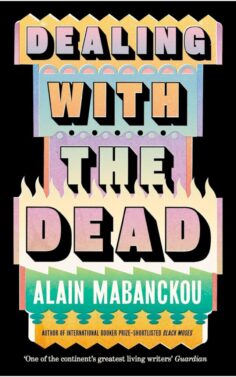
Dealing with the Dead by Alain Mabanckou
Liwa Ekimakingaï, the protagonist of the narrative, experiences the startling sensation of a “new life” beginning exactly one hour after a violent shock rips through the earth, leaving him lying upon a fresh mound of soil topped with a brand-new wooden cross. He initially believes he is breathing and alive, but as daylight emerges over the horizon of the Frère-Lachaise cemetery in Pointe-Noire, he is haunted by the memories of his own funeral procession, where he was trapped inside a coffin and paraded through the streets. He recalls being carried by six muscular men in white suits, a common homage in his town, and he contemplates the grim reality that once laid in the earth, he will eventually be forgotten by all but his grandmother, Mâ Lembé. Despite these depressing thoughts, he attempts to convince himself of his existence by cracking his knuckles and successfully throwing a small pebble, which bounces against a nearby tombstone. He stands upright for the first time since his burial, shaking the reddish earth from his orange crepe jacket and fluorescent-green shirt, noting that his clothes including his purple flares and red Salamander shoes smell of Mananas, an eau de toilette frequently sprinkled on corpses.
As he surveys his surroundings, Liwa is alarmed to find the world upside down: his head feels as though it is at the bottom while his feet are at the top, and the sky appears below him while the earth is above. Every step requires a Herculean effort, echoing in his head like an earthquake, and he attempts to navigate this distorted reality by channeling the “chameleon’s traditional wisdom” taught to him by his primary school teacher, Monsieur Malonga. Despite his efforts to find an exit, he finds himself gasping for breath and walking in circles around his grave, eventually slumping back down under a mango tree that stands by his resting place. It is here that he enters upon “the longest dream of your death,” a state where autonomous images of his life and funeral begin to crowd his mind.
In this dream state, Liwa discovers he has wings and takes flight over the dilapidated roofs of Pointe-Noire, following the Tchinouka river and observing the city’s colonial architecture. He lands in the Trois-Cents district, where he is initially greeted with applause and compared to Superman. However, the mood shifts violently when four men with the heads of animals a white shark, an orangutang, a shrew, and a hyena threaten him and order him back to the cemetery, shouting that he is frightening children and making dogs go crazy. He flees and finds his way to the rue du Joli-Soir, where his grandmother’s house is located. He observes his own wake from a distance, seeing his body under a canopy of palm leaves. He reflects on the Babembé legends told by Mâ Lembé, specifically that a dead person can only see themselves twice. The air of his neighborhood smells of “mood balls,” a yeast-leavened dough sold by Beninese women, which triggers memories of his childhood as an only child who was one of the best pupils in his school.
Liwa recalls his inseparable childhood friends, José Manuel Lopes and Sosthène Mboma. José’s father, known as “the Opposer,” was a militant from the enclave of Cabinda who had fled to Pointe-Noire and decorated his home with images of the Angolan regime’s abuses. Sosthène’s father worked for the Congo–Ocean Railway and obsessively collected miniature locomotives. The three boys were inseparable throughout their adolescence, often meeting at the end of the rue du Joli-Soir to walk two hours to the Trois-Glorieuses secondary school. Liwa, who loved geography, spent much of his time at the Charles-Miningou library, where he devoured The Adventures of Tom Sawyer. He identified so strongly with the book that he nicknamed José “Huckleberry Finn” and Sosthène “Joe Harper,” while casting himself as Tom Sawyer, another orphan raised by an aunt. Their gang gained a reputation for petty criminality, such as stealing mangoes and trashing gardens, which frequently led Mâ Lembé to pay fines at the police station.
To discipline him, Mâ Lembé would invoke the memory of his mother, Albertine, who had died from complications of childbirth at the Adolphe-Cissé hospital. Liwa learned that his father was a policeman whom Mâ Lembé had met in Mouyondzi. The policeman had fathered Albertine and then abandoned Mâ Lembé, who was humiliated by the local community and eventually decamped to Pointe-Noire. In the city, Mâ Lembé established herself at the Grand Marché with the help of Sabine Bouanga, a respected and feared woman who once publicly defied the Mairie officials by exposing herself to protest a trade dispute. Through a traditional women’s credit solidarity system, Mâ Lembé saved five million CFA francs to buy her plot of land in the rue du Joli-Soir.
Liwa’s mother, Albertine, had been a beautiful woman who worked as a trader alongside Mâ Lembé. Her death was a source of great bitterness for Mâ Lembé, who accused the hospital personnel of being “demons in white blouses” tasked with stealing her daughter’s soul. Liwa grew up with this same suspicion, never knowing his father just as Albertine had never known hers. In an attempt to set Liwa on a “right path,” Mâ Lembé had brought him to the Thanks Be to God Pentecostal church, led by a charismatic man known as Papa Bonheur.
Papa Bonheur claimed to be a descendant of the kingdom of Loango and was revered as a man of God who had converted a post office career into a spiritual mission. He was famous for his handmade European suits and his Jeep, and he was even respected by the President of the Republic. However, his reputation was shattered by two major scandals. First, the body of an albino girl was found on the Côte Sauvage, missing several body parts in what was suspected to be a ritual murder. A police inspector named “Pneumatic Drill” relentlessly pursued the pastor. Though initially cleared, a second scandal emerged when it was revealed that Papa Bonheur had fathered around fifty children with underage mothers in his congregation. During his trial, the judge, Madzouka Ma Mbongo, substitutionally presented an albino boy in court, whom the pastor mistakenly identified as his “Chosen One,” effectively proving his involvement in the earlier ritual murder. Papa Bonheur was executed, and the scandal turned Liwa against religion forever.
Returning to the dream of his funeral, Liwa observes that his grandmother seems to flit between youth and old age, leaning on an ivory-headed lion stick he had gifted her. He watches as his body is treated with affection according to the Babembé tradition, which holds that the soul remains in the body for four days until it turns to dust. Professional mourners known as “singer-dancer-weepers” from the Bouenza region dominate the second day of the wake, performing the Muntutu dance and weeping for pay. By the third day, Liwa reflects on his daily life as a commis de cuisine at the Victory Palace hotel, working under his boss, Monsieur Montoir (whom he called “Papa”), and the elderly gardener George Moutaka.
On the fourth day, Liwa is placed in an ebony coffin made by the carpenter Joseph Mompéro and is paraded through the streets. The procession avoids the “MTV” (Made to View) district where the rich live, as popular funerals are prohibited there. He is eventually buried at Frère-Lachaise, a cemetery renamed as a parody of the French Père-Lachaise after President Papa Mokonzi Ayé, alias Zarathustra, failed to deliver on a promise to build a prestigious burial ground for the poor.
After waking from his dream at the grave, Liwa meets Prosper Milandou, a ghost who was once a Director of Human Resources (DHR) for the Lyon Water Board in Paris. Prosper recounts his successful life in France and his decision to return to Congo at the invitation of Minister Rodolphe Xavier Kalala to help his ethnic group, the Kongo. However, Prosper was murdered in his open-plan office by the jealous husband of a woman he had helped. Prosper introduces Liwa to the history of the cemetery, including the story of Mâ Mapassa, whose twin children were murdered by their uncle, the politician Jérémie Ndoki, as a ritual sacrifice to gain power. Ndoki’s crime was so heinous that when he died, both the rich and poor cemeteries went on “strike,” refusing to host his body, until President Zarathustra ordered him to be buried in “Hell”.
Liwa also encounters Lully Madeira, a famous hunchback singer who led the band African Flash. Lully had made a pact with a feticheur named Denzou to host spirits in his back (the hump) in exchange for musical fame. His hit song “Ponton-la-Belle” made him the most famous artist in the country, but he died in a bus accident outside the Victory Palace hotel before he could fulfill his dream of playing at the Olympia in Paris. Next, Liwa meets Black Mamba, the former warden of the cemetery, who spent his life reading the Jerusalem Bible and once made the “mistake” of allowing a sterile couple to have sex on the twins’ grave to conceive. Finally, he meets Liliane Bilongo, known as the “Crow Woman,” who was executed for biting off the genitals of pedophiles in their dreams.
Determined to seek revenge for his own death, Liwa decides to leave the cemetery, stealing a spear from the warden’s lodge. He reflects on the night of August 15, the Independence Day celebrations, when he went to the Ceremonial nightclub dressed in his best clothes and doused in Mananas. There, he met a girl named Adeline, who was actually Samantha, the daughter of Augustin Biampandou, the powerful Director of the Seaport.
Augustin Biampandou, known as the “Right Hand of God,” was a man of extreme influence who was rumored to have sacrificed his own daughter, Samantha, years earlier to secure his political position. Samantha’s body had been found dismembered at the wharf, though the official report claimed it was a drowning accident. Adeline/Samantha, now a vengeful spirit, had lured Liwa to her father’s house. On that fateful afternoon, Liwa was received by Augustin and his house sorcerer, Angelou, who realized that Samantha’s ghost was using Liwa as an agent of vengeance. Augustin, however, chose to poison Liwa with a drink that tasted of spices and kaolin. Liwa died in his room shortly after returning home, which explains his presence in the cemetery.
Returning to the house of Biampandou as a ghost, Liwa finds Angelou has committed suicide, leaving a note that says, “I told you he would return”. Liwa enters Augustin’s bedroom and plunges his spear into the man’s heart. Feeling a sense of relief, Liwa returns to his grandmother’s house one last time to say goodbye. He watches Mâ Lembé from the street, and for a moment, their eyes meet, allowing him to feel a sense of peace. He is joined by the ghost of Samantha, and together they return toward the cemetery, following the advice of the Crow Woman to perform an act of greatness by “breathing life and love into those from whom it has unjustly been withheld”.
The narrative concludes with a Translator’s Note that discusses Alain Mabanckou’s background as a “migratory bird” between Congo and the West, highlighting the complex cultural “marmite” of his writing that blends oral tradition, colonial history, and literary allusion. The note emphasizes that Liwa’s story is a reflection of the “inner soundscape” of an author who lives between the vibrant colors of the Sapeur and the academic halls of UCLA and the Collège de France.