
Table of Contents
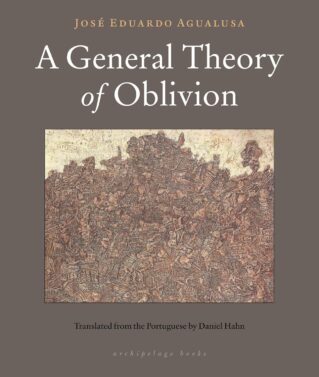
José Eduardo Agualusa’s A General Theory of Oblivion is a complex, polyphonic narrative that spans thirty years of Angolan history, centered on the extraordinary life of Ludovica Fernandes Mano (Ludo), a Portuguese woman who bricks herself into her Luanda apartment on the eve of independence in 1975 and remains there for twenty-eight years. The novel is presented as a reconstruction of her life based on ten notebooks of diaries, poems, and charcoal drawings left on the walls of her apartment, which were recovered after her death in 2010. The story weaves together themes of agoraphobia, colonial trauma, accidental intersections, and the redemptive power of shared humanity.
I. The Genesis of Isolation: Aveiro and the “Accident”
The roots of Ludo’s self-sequestering lie in a deep-seated psychological trauma she refers to as “The Accident”. Even as a small girl in Aveiro, Portugal, Ludo was terrified of open spaces, refusing to leave the house without a vast black umbrella for protection. This primordial dread was calcified by a violent event in the summer of 1955: Ludo was brutally raped by a fisherman in a beach hut on the Costa Nova. The trauma was compounded by her father’s reaction; rather than offering comfort, he vilified her as a “whore” and a “wretch,” beating her and eventually refusing to speak to her for the rest of his life.
Ludo became pregnant as a result of the rape, and her family driven by a sense of profound shame locked her away in a bedroom until the child was born. The baby girl was taken from her immediately, and Ludo spent the following decades living in the shadow of her older sister, Odete. When Odete married an Angolan mining engineer named Orlando Pereira dos Santos, Ludo was brought along to Luanda, where they settled into the top-floor apartment of the luxurious Prédio dos Invejados (the “Building of Those Who Inspire Envy”).
II. The Great Sequestering: November 1975
In the turbulent days leading up to Angolan Independence in November 1975, Luanda was consumed by chaos, demonstrations, and gunfire. Orlando, an Angolan nationalist who took pride in his identity, refused to flee, even as their neighbors traded Luanda for Rio de Janeiro. However, the situation turned tragic on a night shortly before Independence Day when Orlando and Odete went to a farewell party and never returned.
Ludo, left alone in the apartment with Orlando’s albino German shepherd, Phantom, was terrified. She received a threatening phone call from a man claiming to be a Portuguese army officer, demanding “the stones” diamonds Orlando had allegedly stolen from the mining company. Desperate and armed with Orlando’s pistol, Ludo confronted three burglars who tried to break into the apartment. In a moment of panic, she fired through the door, fatally wounding a man named Trinitá. In a surreal act of mercy and terror, she sang to the dying man until he expired, then buried him in a flowerbed on her terrace.
Driven by an absolute need for safety, Ludo used bags of cement and bricks left by construction workers to build a wall in the hallway, physically cutting off the apartment from the rest of the building. For the next twenty-eight years, this wall would define the limits of her existence.
III. Life Behind the Wall: Survival and “Oblivion”
Ludo’s survival in the sequestered apartment is a testament to human resilience and the slow erosion of the self. As the years passed and the city outside was gripped by civil war, Ludo lived on a dwindling supply of tinned food, salt, and flour. When the electricity and water supplies finally failed, she began making small bonfires in the kitchen to cook, using the wooden floor tiles and Orlando’s vast library of thousands of books as fuel.
The narrative details her resourceful, albeit grim, methods of sustenance:
- The Terrace Garden: She grew corn, beans, pomegranates, and bananas in the terrace flowerbeds, one of which served as Trinitá’s grave.
- Pigeon Hunting: She devised traps to catch pigeons, using diamonds she found in Orlando’s study as bait.
- The “Kianda” Chickens: In a moment of desperation, she used a slip noose to steal a rooster and a hen from a neighbor’s balcony below. This theft fueled local superstitions that the apartment was haunted by a Kianda (a water deity or mermaid).
As she ran out of paper, Ludo began to write her life on the walls using charcoal, creating what she called a “general theory of oblivion”. Her isolation was shared only by Phantom, whose death years later left her “emptied” and without the “only creature in the world who loved her”.
IV. Parallel Existences: Jeremias and Little Chief
While Ludo remains stationary, the novel follows other characters whose lives are defined by the same “subtle architecture of chance”.
Jeremias Carrasco, a Portuguese mercenary, survived his own execution in 1975 when a bullet passed through his chest without hitting vital organs. He was saved and hidden by a nurse named Madalena, eventually finding refuge with the Kuvale shepherds in the southern desert. Over decades, Jeremias was “reborn” into the tribe, eventually having a son, António, and becoming a protector of their traditional grazing lands against post-war land grabs by corrupt generals.
Little Chief (Arnaldo Cruz) represents the transition of Angola from a Marxist state to a capitalist one. An idealistic student who was repeatedly imprisoned and tortured by the political police (the DISA), Little Chief famously escaped prison by hiding in a coffin. He spent years living as a “madman” in Luanda to hide in plain sight, during which time he accidentally intercepted a carrier pigeon released by Ludo that contained diamonds. These stones allowed him to build a business empire, Pigeon-Post, eventually becoming a wealthy man who unknowingly purchased the apartment next to Ludo’s.
V. The Convergence: Monte, Benchimol, and the Wall
The various narrative threads converge in 2003, as the “mysteries of Luanda” begin to unravel.
Daniel Benchimol, a journalist who collects “stories of disappearances,” receives a letter from Maria da Piedade Lourenço, a woman searching for her biological mother, Ludovica Fernandes Mano. His investigation leads him to the Prédio dos Invejados and eventually to Ludo’s door.
At the same time, Magno Moreira Monte, the former state security agent who had tortured Little Chief and botched an assassination attempt on a French writer, is also drawn to the building. The climax occurs at Ludo’s door, where a disparate group Little Chief, Monte, Benchimol, Jeremias Carrasco, and his son António all gather in a moment of tense and then hysterical recognition.
The physical barrier of the wall is finally breached not by a soldier or a detective, but by a seven-year-old boy named Sabalu. Sabalu, a street child who had been climbing the scaffolding of the neighboring building, found Ludo after she broke her femur in a fall. He cared for her, bringing her “sodas,” grilled chicken, and medicine bought with her silver cutlery. It was Sabalu who took a pickax to the wall, opening the apartment to the world for the first time in nearly thirty years.
VI. Resolution: The Light and the Pardon
The novel concludes with a series of reconciliations and revelations:
- The Diamonds: Ludo, finally free of her “infinite stupidity” and terror, gives her remaining diamonds to Jeremias Carrasco to help the Kuvale people buy back their ancestral lands.
- The Meeting: Ludo is reunited with her daughter, Maria da Piedade, who traveled from Portugal to find her. Despite her daughter’s offer to take her back to Aveiro, Ludo refuses, stating that Angola a place whose “light is a riot” is now her only country.
- The Fate of Monte: In a final touch of irony, the former agent of silence and censorship, Monte, dies when a satellite dish falls on his head while he is trying to fix it for his wife a death described as the “triumph of free communication over obscurantism”.
Ludo’s final entries on the walls reflect a profound transformation. She realizes that “Paradise is the space we occupy in other people’s hearts” and that, despite her decades of isolation, she is “happy now”. The “general theory of oblivion” she sought to document is ultimately replaced by a theory of remembrance and connection, as she spends her final years in the company of Sabalu and the light of the African sky that she once feared would “crush” her.