
You can listen to the Book Summary Below
Table of Contents
Introduction
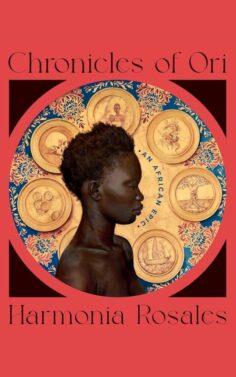
The Foundations of the Narrative The Chronicles of ORI is a linear epic that weaves together West African mythology, folklore, and historical events through the perspective of the Orishas. The author, Harmonia Rosales, foundations the work on the Afro-Cuban proverb, “Cada cabeza es un mundo” or “Every mind is a world,” reflecting the idea that each individual carries a distinct universe shaped by their unique experiences. The narrative aims to connect ancient folklore with the history of forced African migration to the West, offering an alternative history that prioritizes the resilience found in the building of spiritual and physical empires. The story is primarily narrated by Orisha Oya, who invites the reader to walk through the rise, fall, and persistence of her kind.
Book I: Creation
The Birth of the Universe and Earth In the beginning, there was an endless void of darkness until a self-birthed primordial force emerged, initiating cosmic cycles of light and birth. This being reincarnated as Olodumare, a divine force in constant motion that collected the remnants of deceased planets in his belly the “seeds of life”. Journeying to the edge of creation, he encountered Odua, a being of pure hydrogen and transcendent luminosity. Their energies intertwined in a celestial dance, but Odua’s power proved overwhelming, constricting Olodumare until he ruptured in a cataclysmic explosion.
From this detonation, Earth (Onile) was born, and time began. Odua transformed herself into the great ocean to rule Onile’s fate. Olodumare, now a hollow husk, fragmented himself into three mystical beings to enter the Earth without further harming her atmosphere: Eshu (wandering), Orunmila (wisdom), and Obatala (knowledge of seeds).
The Arrival in Orirun These three, known as the Irunmole, landed on the fertile soil of Earth, but the passage through “Mama Onile’s waters” (the atmosphere) dissolved their memories. They were met by four Earth guardians: Oya (wind/pollination), Oko (soil fertility), Ogun (minerals/iron), and Yemayá (protector of seeds). The Orishas called this land Orirun.
The Irunmole journeyed to the soul of Mama Onile, located at the core of an ancient baobab tree. Mama Onile, sitting on a throne of soil and adorned in diamonds and gold, restored their memories but imposed sacred laws: the gold in her soil was never to be harvested; the “giants of the deep” must be respected; and the mortal inhabitants, the Enks, were banned from having a “destiny” to keep their lives simple and free from ambition or regret.
The Creation of the Children of Ori Obatala, the sculptor of life, felt unfulfilled until he met the three sisters of existence: Emi (vitality), Eleda (emotions/dreams), and Ojiji (legacies). They introduced him to Ajala, the exiled blind potter who crafted Oris (destinies) from astral dust.
Obatala and Ajala formed an alliance: Obatala molded clay mixed with the blood of Orishas, Enks, and giants, while Ajala placed Oris within their heads. These were the Children of Ori, the most advanced species Earth had yet seen. They flourished in a walled domain called the Garden of Edin, governed by the first Council of Orishas: Obatala, Ajala, Yemayá, Eshu, Oko, Ogun, and Oya.
The Rise of Humans and the Deluge Curiosity and defiance led some Children of Ori to be exiled from Edin. In the wild lands of Orirun, they interbred with the fur-covered Enks, giving birth to a new race: humans. These humans possessed dormant or obstructed Oris, leading to diverse forms and tribal rivalries.
Two humans, Oah (Child-like) and Dada (Enk-like), united to hunt the carnivorous giants that preyed upon them, a mission that required iron spears forged by Ogun. Their quest disrupted the natural order, and Dada died in the final battle. In retaliation for the loss of her “children,” the primordial ocean Olokun (the chaotic side of Onile’s soul) summoned a massive deluge. To save creation, the Orishas bound Olokun with an massive chain forged by Ogun. The world split into Aiye (the physical realm) and Orun (the spiritual realm).
Book II: The Orishas
Celestial Duality and the Moon The spiritual realm of Orun is governed by solar deities, including Olorun, the guardian of Earth. During Earth’s infancy, a shard of the planet broke away to become the moon, Mawu. Yearning to reunite with Earth, Mawu fragmented part of herself to become the Orisha Yemayá.
The Union of Yemayá and Aganju Yemayá, feeling lonely and unaware of her lunar origins, wandered the rocky lands until she fell into a chasm and found Aganju, the magnificent Orisha of Earth’s molten core. Their passionate union created the four seasons and ignited the spark of creation within Onile’s womb. This resulted in the birth of Oshumare, a rainbow serpent representing balance and perpetual movement.
The Fisher and the Hunter Yemayá’s guardianship was expanded to the “sweet waters” (rivers and springs) by Mama Onile, who used a scale from Oshumare to transform Yemayá’s legs into serpentine tails. Yemayá fell in love with a beautiful mortal fisherman, Erinle. After she shared divine secrets with him, she feared he would embolden mortals against the gods. She used his own blade to sever his tongue before crowning him an Orisha in the form of an elephant that could also transform into a serpent.
Oshosi and the Pursuit of Justice Eshu encountered a righteous hunter named Oshosi and tasked him with capturing a star bird a bird that was the final human incarnation of a celestial being. Oshosi caught the bird, but his mother, who suffered from forgetfulness, accidentally cooked it for dinner. In a fit of grief and a demand for justice, Oshosi shot an arrow into the sky that fell and killed his own mother. Eshu realized Oshosi was the star itself and crowned him the Orisha of justice to govern both realms.
Oshun and the Sacrifice for Rain The division of the Orisha Oko into masculine (planting) and feminine spirits birthed Oshun, the Orisha of love, beauty, and fertility. When Olodumare punished the Orishas with a three-year drought for their autonomy, Oshun sacrificed her identity. She transformed into a magnificent peacock to fly to the sky kingdom and plead with the great god for rain. The heat of the sun, Olorun, turned her feathers to ash, but her selfless sacrifice moved Olorun to infuse her with golden rays and restore the rains.
Book III: Lineage
The East Kingdom and the Cycle of Chaos After the flood, Oah was granted kingship of the East Kingdom in Aiye. His son Haben built a prosperous civilization, but his ambition attracted the Ajogun warriors of darkness who awaken the Osogbos (eggs of chaos) within human Oris. Haben’s children Kana’an, Kerma, Phut, and Kush mostly fell victim to their Osogbos of pride, competitiveness, and greed. Only Kush remained in the spiritual realm to rule the Kushite Empire.
The Exile and Return of Oduduwa Kush’s youngest son, Lamuradu, was sent to Aiye as an infant to reclaim the East Kingdom from the warlord Asshur. Though successful, Lamuradu became consumed by an Osogbo of entitlement, leading to his execution in a rebellion. His son, Oduduwa, was exiled and sought the Iron Kingdom of Ogun.
In Ogun’s court, Oduduwa fell in love with Lakange, a “gift of war” given to Ogun. They escaped to the physical realm with Obatala’s forbidden Book of Creation. Oduduwa began preaching that humans were the masters of their own destinies. He eventually found the community of Oke Ora, where a drunken and disgraced Obatala ruled as “Ooni-Oba”. Oduduwa overthrew the corrupt leadership and unified the settlements into the kingdom of Ife (Yorubaland), becoming its first spiritual leader.
Book IV: The Ogisos
The Golden Serpent Bida As human societies advanced, the Orishas crowned Ogisos (“sky rulers”) as mortal intermediaries. They were given golden crowns that protected their Oris. However, the human obsession with gold gave rise to a unique Osogbo: Bida, a seven-headed golden serpent spawned from Olokun’s womb. Bida created trade routes that brought foreign leaders, the Esin Imale, into Orirun. The Orishas eventually bound Bida with Ogun’s chains, but the trade pathways remained.
The Tale of the Twins Oshun and a prince of Troy named Murat conceived twins, Taiwo and Khende. Because they shared one soul and were bound by an Abiku spirit (destined to die young), Oshun separated them, leaving Taiwo in Aiye and taking Khende to Orun.
Taiwo became the pharaoh of a united Nubian empire but died in battle defending Troy against the Hellenes. Khende, raised in the Romeyetu Empire, was murdered by his rival, Leo, during a voyage back to Orirun. Oshun retrieved their souls, and they were reborn as the Orisha Ibeji, compassionate guides for the lost spirits in the abiku realm, Ile Omije.
The Fall of Wågådu The empire of Wågådu gained immense wealth through a pact with the bound serpent Bida, involving a royal sacrifice every seven years. When the Orisha Oshosi demanded the sacrifice of Princess Abronoma, she and her lover, Prince Kofi, fought and killed Bida. Their bravery released Aje, the Orisha of wealth, who had been trapped in the serpent’s belly.
Book V: Yorubaland
The Reign of Moremi and Oranmiyan Under Oduduwa, the kingdom of Ife prospered. Oduduwa was eventually killed during an invasion by General Sahibu of the Esin Imale. His son, Oranmiyan (secretly the biological son of Ogun), killed the general and took the throne, while his sister Okanbi became the high priestess.
Oranmiyan sought to reclaim the East Kingdom, but his odyssey led him instead to marry Moremi. Moremi, struggling with miscarriages caused by an abiku, made a pact with the river spirit Esmerian. Moremi eventually sacrificed her only daughter to the river to gain the knowledge needed to save Ife from magical “grass creatures” controlled by a vengeful sorcerer.
The Oyo Empire Grief-stricken by the loss of his daughter, Oranmiyan traveled to Igodomigodo, overthrew the tyrant Ogiamwen, and established the kingdom of Benin for his son, Eweka. He later founded the city-state of Katunga, which became the heart of the Oyo Empire. After a spiritual odyssey involving challenges from Oya and Oshun, Oranmiyan returned to Ife and Moremi, having learned to lead with his heart.
Book VI: The Alaafin of Oyo
The Birth and Rise of Shango Jakuta, the primordial deity of lightning, was displaced in the Garden by Ogun. He courted the human princess Torosi to sire a son, Shango, who carried the tempest within him. Shango eventually rescued his half brother, Ajaka, from a Nupe invasion but used the opportunity to seize the throne of Oyo as its third Alaafin. To increase his power, Shango sought his grandfather Aganju and underwent a “baptism by fire” in lava to gain dominion over infernal flames.
The Exile of Obba Shango was placed in an arranged marriage with the quiet Orisha Obba Nani. Oya, consumed by jealousy, tricked Obba into cutting off her own ear to put in a “binding” stew for Shango. Revolved by the act, Shango exiled Obba, who fled to the underworld of Lady Iku to become the record keeper of the dead.
Book VII: The Land of Orirun
Jeggua and the Stolen Kiss Obatala created Jeggua, an Orisha of pure innocence, to act as a vessel that absorbed the whispers of the Ajogun, thereby protecting Onile and the Orishas from human turmoil. Eshu, however, revealed her existence to Shango. Shango stole a kiss from Jeggua, shattering her innocence and unlocking the cage of human Osogbos. Jeggua was then tasked by Obatala to usher souls into the afterlife.
The Blood War Tensions peaked between Ogun and the Council of Orishas when Ogun claimed his iron machines made him more powerful than the gods. Oya, who felt imprisoned in Ogun’s Iron Kingdom, used Shango to betray Ogun. This sparked the Blood War, a conflict that ravaged both realms as Shango’s spirit warriors fought Ogun’s iron giants. Shango eventually imprisoned Ogun in an iron cage, but the victory left the Orishas vulnerable to their own Osogbos.
Book VIII: Eve
The Fall and the Erankos The Esin Imale’s trade routes paved the way for the Erankos (hunters representing European colonial powers), led by the spirit Ariwa. Ariwa sowed seeds of the strangler fig, a parasitic plant that extracted ashé from human Oris and wove vines across the land. Rulers who entered pacts with Ariwa were branded with a mark on their right hands. Many humans were captured and trafficked as slaves, while the Orishas were forced to flee Edin.
The Discovery of Eve In a hidden village of weavers called the Huns, a child named Eve was found in a basket in the river. During an Eranko attack, Eve jumped into a waterfall and entered the spiritual realm, where she met Yemayá. Yemayá revealed that Eve was the prophesied daughter of Moremi and Oranmiyan and gave her the Eye of Orunmila to find the lost Orishas.
Eve gathered the dispersed and diminished Orishas: Eshu (hiding as a fisherman), Oya (a beggar in the market), Obatala (lost in a fog of memories), Shango (ruling the hedonistic city of Palm), and Oshun (owner of an establishment called the Peacock). Together, they freed Orunmila from stasis and Ogun from his iron prison. Eve ascended as the first human Ayaba of Edin.
The Abduction Mama Onile birthed Babalu-aye, an Orisha marred by sores who ushered in a deadly plague. Though he was exiled, he learned to heal the disease by embracing his shadows. While Eve and Shango were searching for him, a majestic white lion appeared and abducted Eve, carrying her west across the great ocean.
Book IX: Olokun’s Ocean
The Ascension of Yemayá Yemayá dove into Olokun’s saltwater domain to find Eve, an act that irretrievably severed her connection to the spiritual realm. At the ocean floor, she found millions of lost souls humans from Orirun who had perished during the middle passage. To release these souls, Yemayá used her ashé and the power of Aganju to shatter the ancient chains binding Olokun, setting the primordial deity free.
The Migration of the Gods The Orishas realized they could not reach their people in the West as gods, so they chose to travel as mortals. They endured the horrors of a slave ship hunger, chains, and the “beast of pain” driven onward by Yemayá’s fierce will. When they reached the docks of the West Lands, they found themselves blocked by a spiritual barrier.
The people of Orirun used their ashé and song to craft masks and robes that allowed the Orishas to transcend the barrier. The Orishas took the guise of Ariwa’s saints: Yemayá became Mary, Ogun became St. George, Shango became St. Barbara, Oshun became Our Lady of Charity, Eshu became St. Anthony, Orunmila became St. Francis, and Oya became St. Teresa.
Book X: The Children of Ori
The Golden Manuscript In the West, the Orishas found Mama Onile, whose silver hair and weathered skin reflected her displacement. She revealed that Eve was trapped within the Golden Manuscript a weapon forged by the Erankos to bind souls within the tales of mortals, siphoning their ashé and imposing forgetfulness. Mama Onile warned that the syncretic masks the Orishas wore were becoming parasitic, feeding off their divine essence.
The Final Battle and Restoration While the council was away, the strangler figs completely encased Edin and the Garden. Plagues and hunger ravaged Orirun, as humans were tempted to eat the figs’ fruit, which exchanged a moment of relief for their remaining ashé.
The Orishas returned to Orirun, and the parasitic masks fell away as they touched their home soil. They retreated to Ife, the only kingdom untouched by the figs, and initiated a war of belief and ashé against Ariwa’s pantheon. The narrative concludes with the ongoing War of the Gods, a struggle to reclaim Oris and belief.
Epilogue
A Seed of Hope In the tangled wilderness of the present day, a woman with vine-bound locs weeps for the lost jungle. She finds a solitary baobab in the desert, under which Mama Onile lies in deep hibernation. The woman speaks to the tree, repeating Orunmila’s prophecy that from this bloodstained war, an Ori is formed that will lead humanity back to the light. The epic ends with the arrival of the light to end the darkness: Imole de, okunkun parada.