
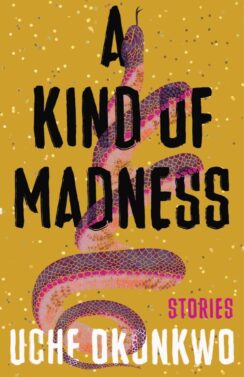
A Kind of Madness is a collection of ten vivid, evocative stories set in contemporary Nigeria, marking a deep exploration of human relationships and the “idiosyncrasies and minutiae of everyday Nigerian life”. The collection unravels the tensions between family members and friends, asking why those we hold closest are often the ones who drive us toward “madness”.
Summary
The collection serves as a critical examination of modern Nigerian society, focusing on the “fierce undertow” of family dynamics and the “ineptness of parents”. The stories navigate a world where traditional beliefs, like those of a dibia (traditional healer), clash with the allure of “the West” and the rise of flashy prosperity-gospel megachurches. Through a mix of humor and heartbreak, the author portrays characters grappling with socio-economic ambition, the burden of reputation, and the clinical or social realities of mental illness.
Plot
Because the book is a collection of ten distinct stories, the plot is defined by several key narrative arcs:
- “Nwunye Belgium”: Agatha manipulates her daughter, Udoka, into breaking her engagement with a local trader, Enyinna, for the prospect of marrying a doctor living in Belgium. When the doctor’s family cancels the wedding to hide their son’s refusal to marry, they spread a malicious rumor that Udoka’s family has a history of madness, destroying their social standing in Umueze.
- “Shadow”: A young boy named Buchi finds emotional solace in his favorite aunt, Ifueko, whom he follows around as her “shadow”. His world is shattered when Ifueko, who is struggling with a history of miscarriages, finally loses another baby; the loss causes her to withdraw from Buchi, leaving him in a state of “quiet grief” as he realizes she no longer wants his companionship.
- “Animals”: Seven-year-old Nedu befriends a one-eyed chicken named Otuanya, performing a naming ceremony and treating it like a family member. His mother, Uzoma, eventually forces the family to slaughter the bird for pepper soup to assert her practicality and household control, leading to a silent, gastrointestinal rebellion from Nedu.
- “The Harvest”: Alfonso, a prideful pastor of a dwindling congregation, refuses to find secular work despite his wife Inimfon’s success as an eatery owner. He eventually watches his remaining members defect to a nearby megachurch led by “Daddy Too Much,” leaving him alone and humiliated in his empty assembly hall.
- “The Girl Who Lied”: Set in a Badagry boarding school, the story follows Kemi, a girl whose elaborate lies and erratic behavior both dazzle and disturb her peers. After Kemi jumps into a well, her friend Tola must decide whether to support the popular “accident” narrative or tell the truth to get Kemi the help she needs.
- “Burning”: A young girl, Adanna, deals with the volatility of her mother’s mental illness. They visit a dibia who labels Adanna an ogbanje (spirit child), leading to a desperate journey to their village, Umuduru, to “unearth” a buried spirit object (iyi-uwa) as a way to fix their lives.
Setting
The stories are set in contemporary Nigeria, moving between diverse locations:
- Urban Centers: Cities like Lagos (specifically areas like Ikoyi, Obalende, and Gbagada) represent the struggle of city life and Western influence.
- Rural Villages: Places like Umueze and Umuduru highlight traditional community life, where gossip and ancestry dictate one’s social value.
- Isolated Environments: The Badagry boarding school creates a high-pressure atmosphere for young students.
Themes
- The Nature of Madness: Madness is portrayed as both a clinical reality (mental illness) and a social weapon used to ostracize others.
- Religious Hypocrisy vs. Desperation: The contrast between the rigid, struggling faith of Alfonso and the “Solutions Supplier” marketplace of megachurches highlights a society desperate for miracles.
- The Burden of Family: The “ineptness of parents” and the weight of their expectations often force children to act as caretakers or scapegoats.
- Socio-economic Ambition: Characters frequently seek “salvation” through marriage to those abroad or through the pursuit of wealth, often losing their integrity in the process.
Characters
Major Characters
- Udoka: An ambitious polytechnic student who abandons her fiancé for a “Belgian doctor” and is subsequently branded “mad”.
- Agatha: Udoka’s materialistic mother who dismantles her daughter’s life in pursuit of status.
- Buchi: A sensitive eight-year-old boy who seeks to be “adopted” by his aunt to escape his own family tensions.
- Alfonso: A pastor who prioritizes his “calling” over the well-being and material needs of his wife.
- Kemi: A rebellious, unstable student whose lies serve as a shield against her internal instability.
- Adanna: A ten-year-old girl forced to navigate and “solve” her mother’s mental health crises through rituals.
Minor Characters
- Uzor: The elusive “Belgian doctor” who never actually appears but whose rejection drives the plot of “Nwunye Belgium”.
- Enyinna: Udoka’s original fiancé, a trader whose pride is wounded by Agatha’s mockery.
- Aunty Ifueko: Buchi’s kind aunt whose own grief over childlessness makes her unable to sustain her bond with him.
- Daddy Too Much: The wealthy, charismatic leader of “Come Ye Global Ministries” who represents the prosperity gospel.
- Soty: A “sickler” (child with sickle cell anemia) who forms a competitive, deep friendship with Chekwube.
- Sovi: The stoic school caretaker who rescues Kemi from the well.
Literary Devices
- Irony: Masterfully used to show contradictions, such as Agatha calling her daughter’s suitor a “blessing” only for him to be the source of their ruin.
- Imagery: Vivid descriptions of food (okpa, jollof rice, pepper soup) and sensory details (the smell of lemongrass, the red dust of unpaved roads) create a thick sense of place.
- Symbolism:
- The well in “The Girl Who Lied” represents a dangerous plunge into the consequences of deception.
- The shadow in Buchi’s story symbolizes his attachment and ultimate feeling of invisibility.
- The chicken in “Animals” symbolizes Nedu’s empathy and the harsh reality of “destiny” in his household.
- Metaphor: “The breeze has blown, and we have now seen the anus of the fowl” is a metaphor used for exposing a secret.

