
Table of Contents
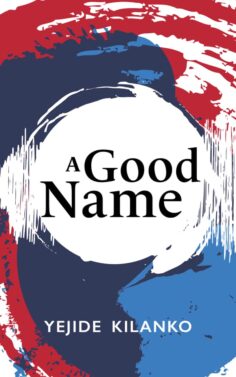
Yejide Kilanko’s A Good Name is a harrowing and meticulously detailed exploration of the immigrant experience, the crushing weight of cultural expectations, and the devastating consequences of toxic masculinity and domestic control. The novel follows the lives of Eziafakaego (Eziafa) Francis Okereke and Zinachidi (Zina) Nwoye, two Nigerians whose lives intersect through an arranged marriage that begins with the promise of “The American Dream” but ends in a visceral, blood-soaked tragedy.
Part One: The Seeker of Legacy and the Village Bride
The story begins in the sweltering heat of Houston, Texas, where Eziafa, a man who has lived through twelve long and harsh Minnesota winters, is struggling to redefine himself. After years of “grey and black” existence in the American Midwest, Eziafa has moved to the South, hoping the humid weather will bring back memories of his home village, Oji, and allow him to “dream in colour” again. Despite having a first-class degree in computer science from a Nigerian university, Eziafa’s twelve years in America have been defined by a “succession of slammed doors” and menial labor, including a traumatic stint at a meat processing factory where he lost his index finger to a spinning saw.
Eziafa is haunted by the feeling that he is at the bottom of every “available ladder to success”. His primary connection to his roots is his best friend, Felix, a man whose head of grey hair at age thirty is a constant startle to Eziafa. At a Houston Igbo Cultural Association party, Eziafa meets Jovita Asika, a voluptuous, Buffalo-born Nigerian-American real estate agent. Jovita represents the kind of woman Eziafa finds intoxicating “beautiful,” “sassy,” and “independent”. However, Eziafa’s internal compass is dictated by a traditionalist binary taught by his father: there are women suitable for marriage and there are “enchantresses” who should only be lovers.
Eziafa’s relationship with Jovita is passionate but marred by his insecurities regarding her “colourful past”. When he learns from gossip that she has lived with multiple men, he finds it impossible to “parade a queen many in their community would consider a second-hand woman”. This conflict is exacerbated by his mother, Cordelia (Nne), who sends him letters from Oji filled with “lofty expectations”. Nne is devastated that Eziafa did not return home for his father’s burial which she claims made it look like the man had “no son” and she demands he come home to marry a “proper” woman so she can carry his children on her back before she joins her ancestors.
Driven by a desire to fulfill his mother’s wish and a “graveside promise” to his father, Eziafa travels to Nigeria in December 2012. He returns to Oji not as the struggling cab driver he is in Houston, but as “Dede Foreign Currency,” a man expected to kill cows and distribute imported lace. During the selection process, Nne and Eziafa’s sister, Evelyn, provide a list of twelve eligible young women. Eziafa rejects several based on physical critiques one’s legs are “too straight,” another’s hips are “too slim” revealing his view of a wife as a biological investment.
He eventually settles on Zinachidi (Zina) Nwoye, an eighteen-year-old girl he spots at a village square. Zina is short and lean, with a “pink tongue” that peeks between parted lips, a feature Eziafa finds attractive. For Zina, the proposal is not a dream but a “punishment”. She is a bright student who has applied for a Business Studies program and is in love with a local boy named Ndu Mbogu. Her mother, however, pressures her, arguing that life in “God’s own country” will be easier than the “endless toil” of their family farm. Zina eventually relents out of a sense of duty, entering the marriage with a feeling of “resignation”.
The wedding is a collision of these two worlds. Eziafa is ecstatic, feeling like his heart is “break dancing and flying,” while Zina’s expression is more appropriate for a funeral. Their first night together in a hotel in Ehiri is a disaster; Eziafa, focused on his own climax, ignores Zina’s moans of pain. He later whispers an apology, but the trauma of that night sets the tone for their future intimacy.
Part Two: The New World and the Silver Button
Zina arrives in Houston in January 2014, a transition marked by “blood-shot eyes” and the terror of airplane turbulence. At the airport, a final ghost from Eziafa’s past appears: he runs into a pregnant Jovita, who reveals she used a sperm bank to have a child on her own terms. This encounter leaves Eziafa shaken, but he turns his attention to “international Zina,” whom he treats like a “child he could order around”.
Zina’s first impressions of America are bleak. Their apartment building is a “drab brown” structure with a “mouldy smell”. Eziafa immediately begins a campaign of total control. He forbids her from talking to neighbors and restricts her from leaving the apartment on her own, telling her that people in America “mind their own business”. Zina suffers from “physical pain” born of sheer boredom.
Her first act of defiance is literal and symbolic: she sneaks out while Eziafa is at work and walks to a “Piggy Market” (a small grocery store). She is nearly hit by a car while trying to cross a busy road, until a young boy teaches her how to use the pedestrian crossing button. This small piece of knowledge makes her feel “wiser,” and she begins to understand that every time she disobeys Eziafa, she gains independence.
The central conflict of their early years in Houston is Zina’s career. Eziafa, obsessed with “lucrative professions” that will allow him to “reinvent himself,” decides that Zina will study nursing at Houston Community College. Zina is repulsed by the idea of “sick people and blood” and wants to study business. Eziafa ignores her pleas, telling her that “money helps to lessen the pain” and using her family’s financial needs as a weapon to force her compliance.
Eziafa also enforces birth control not out of concern for Zina’s health, but because he cannot afford a baby until his “almighty spreadsheet” balances. He forces her to get an IUD, an experience that leaves Zina feeling like a victim of “domestic abuse,” as the clinic nurse correctly identifies.
Zina finds solace in two people: Titilope Ojo, a Nigerian divorcée she met at the airport, and Nomzamo Gray, a “resilient five-star badass” she meets on her first day of school. Nomzamo teaches Zina that she doesn’t have to be a “mumu” a Nigerian pidgin term for a pushover. Under Nomzamo’s influence, Zina learns to navigate the American system, eventually opening a secret bank account and splitting her paycheck to hide money from Eziafa.
Part Three: Transformation, Betrayal, and the “Bathroom House”
By the time Zina graduates and becomes a registered nurse at Mercy Cross Hospital, she has bloomed into a “stunning woman” who no longer covers her smile. She loves pediatric nursing, finding joy in the children’s smiles, a secret she keeps from Eziafa because he “still needed to be right about everything”.
Eziafa, meanwhile, is descending into a state of “chronic arthritis” and hypochondria. He stops driving his taxi and takes a lower-paying job at a tortilla factory, which he hides from Zina because he cannot bear the “weight of her pity”. He spends his days “shouting at the television” and obsessing over the mansion he is building in Oji. This house, overseen by the unreliable Dede Matthias, becomes a “reputable lizard refuge” and a financial black hole. The ultimate humiliation occurs when Zina discovers that Dede Matthias used gold bathroom tiles for the outside walls, turning the house into a “village laughingstock”. Zina mocks it as the “bathroom house” and vows never to set foot in it.
The emotional core of Part Three is Zina’s relationship with Raven Giesbrecht, a male nurse from a rural Mennonite community in Ohio. Raven is everything Eziafa is not: he is “kind,” “appreciative,” and sees Zina as a “complete human”. Their connection begins with lunch dates and evolves into a shared intimacy after the death of Zina’s favorite patient, Genna, from cardiac arrest. In a moment of shared grief at the Williams Waterwall, Zina and Raven have sex for the first time.
Zina’s affair with Raven is not just about lust; it is an attempt to “wake up in the morning and feel excited about her day”. Raven gives her a key pendant and eventually a garnet ring, asking her to marry him and promising to visit Nigeria to ask for her father’s permission. Zina is “scared silly” but decides to leave Eziafa, realizing that she “belongs to herself”.
The tragedy is set in motion by a series of accidents. Nomzamo, trying to reach Zina for a backup shift, accidentally calls Eziafa and reveals that Zina’s “New Orleans training trip” was a lie. Eziafa’s suspicions are confirmed when he finds birth control pills in Zina’s bag pills she had been taking secretly while he believed they were struggling with infertility. He finally witnesses Zina and Raven kissing in broad daylight in front of the hospital.
The Climax: “Oji Decreed It!”
When Zina returns home to pack her things and ask for a divorce, Eziafa is waiting in the dark. The confrontation is a brutal collision of their irreconcilable worldviews. Zina tells him she never loved him and that he only viewed her as a “rainy-day investment”. Eziafa, consumed by a “white-hot rage,” accuses her of being a “public toilet” and a “whore”.
In a terrifying display of his need for “order and decorum,” Eziafa decides to “strip the whore naked” just as they do back in Oji. He rips her clothes off, including the garnet ring she wore on a chain. Zina’s defiant screams “I belong to me!” only further incense him. As she thrashes, Eziafa enters a state of “calm” where he believes his actions are “justified”.
The novel ends with the news of Zina’s death. Eziafa leads the Houston police on a high-speed chase before being blockaded and arrested. As he is dragged from his car, he shouts, “Zina’s death was not my choice. Oji decreed it!”.
The Epilogue: The Inferno and the Good Name
The Epilogue provides a final, bitter irony. News of Zina’s “mutilated body” reaches Oji, sparking a massive riot. The youth of the village, led by her former love Ndu Mbogu (now a police public relations officer), torch Eziafa’s mansion. In a tragic twist of fate, Eziafa’s mother, Nne, who so desperately wanted the house and the marriage, is caught in the inferno and suffers severe burns.
Eziafa remains under suicide watch in a Houston jail, pleading not guilty by reason of insanity, while the Harris County state attorney seeks the death penalty. The “good name” Eziafa’s father urged him to protect the meaning of his name, Eziafakaego has been completely and irrevocably destroyed.
Thematic Summary of “A Good Name”
1. The Meaning of Names and Identity
The central theme is the weight of names. Eziafa’s name means “A good name is worth more than money”. Throughout the book, he pursues the opposite, sacrificing his name, his marriage, and eventually a life to the pursuit of a “visible testament to success” in the form of a house and a “moldable” wife. Zina, whose name means “She who strives,” lives up to it by overcoming a forced marriage to find a career she loves, though she is ultimately “flattened” by Eziafa’s ego.
2. Immigrant Masculinity and the “Crushed Dream”
Eziafa represents a specific type of immigrant trauma: the highly educated man who finds himself working “at the bottom” in the West. His loss of a finger is a physical manifestation of this “immigrant rite of passage” that turned into a “sad reality”. His obsession with controlling Zina is a direct response to his lack of control in the American professional world.
3. The Female Body as an Investment
The novel depicts the female body as a site of negotiation and control. Zina’s parents see her as a “lifeline” to move them out of poverty. Eziafa sees her as a “rainy-day investment” whose purpose is to provide a “Nursing salary” and “ten grandsons”. Her secret use of birth control is her primary mode of reclaiming her autonomy, a “disrespect” that Eziafa cannot forgive.
4. Cultural Clashes and the “Drums of Marriage”
The book highlights the “bit of difference” between traditional Oji values and the “land of the free”. Felix notes that the “drummers have changed their beats” and that men must learn “new dance steps” to survive. Eziafa’s refusal to “bend a little” leads directly to the collapse of his world.
5. Violence and the “Gossip of the Village”
Kilanko explores how domestic violence is often shielded by a “veneer of respectability”. Elinma’s death murdered by her husband in front of her children serves as a prophetic warning that Zina and her friends ignore until it is too late. The characters are caught between the “pious class” of church-goers and the “basket mouths” of the community, showing how shame can be a deadly force.
The novel concludes as a warning to future generations. It is dedicated to “sisters we lost,” framing Zina’s story as one of many in a cycle of silence and suffering that the author, a children’s mental health therapist, seeks to expose.