
You can listen to the Book Summary Below
Table of Contents
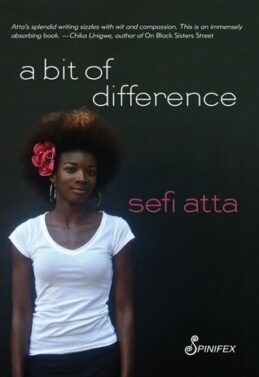
Sefi Atta’s A Bit of Difference is a layered and insightful exploration of the life of Deola Bello, a thirty-nine-year-old Nigerian auditor living in London, as she navigates the complexities of professional identity, cultural displacement, family expectations, and the search for personal fulfillment. The novel is set against the backdrop of the early 2000s, moving between London, Atlanta, and Nigeria (Lagos and Abuja). At its core, the book examines the “bit of difference” that exists between being a “resident alien” in the West and being truly “at home” in Nigeria, while critiquing the global “business of humanitarianism.”
Part I: Professional Landscapes and the “Tarzan Complex”
The narrative begins with Deola on a business trip to Atlanta, Georgia, representing her employer, LINK, an international charity foundation. Deola serves as the director of internal audit for the London office. Her trip to the United States is framed as a “reorientation” to learn how the Atlanta office managed the launch of Africa Beat, an HIV awareness campaign.
During her time in Atlanta, Deola is hosted by Anne Hirsch, the director of international affairs. Their interactions highlight a recurring theme: the disconnect between Western charity workers and the African reality they seek to “save.” Deola is cynical about the foundation’s use of images such as a photograph of an African woman captioned “I Am Powerful” and the “Tarzan Complex” exhibited by colleagues who view Africa primarily as a site of suffering and orphans. Anne, who is in a same-sex relationship with a florist named Ali, often speaks with a “monopoly on compassion,” which Deola finds exhausting. Deola notes the subtle differences in race relations between the US and England, observing that while Americans are more inclined to talk about race, she often feels more of a “resident alien” in London.
The professional atmosphere at LINK is further defined by Deola’s colleagues in London: Kate Meade, the director of international programs who is frequently distracted by her family’s various illnesses, and Graham, the executive director who favors “photo-op” philanthropy and is suspicious of Nigerian NGOs. Deola struggles with the performative nature of her job, including “speaking phonetics” mimicking a clipped English accent to ensure she is taken seriously by her Western peers.
Part II: The Social Tapestry of London
In London, Deola’s life is anchored by three primary friends, each representing a different facet of the Nigerian diaspora experience:
- Subu: A high-powered vice president at an investment bank who is also a devout born-again Christian. Subu is financially conservative, argues against the efficacy of foreign aid, and believes that “giving never cured poverty.” Her life is a mix of high-stakes finance and intense religious fellowship, and she frequently pressures Deola to join her church.
- Bandele: A “grumpy writer friend” and an aristocrat of the Nigerian society whose family has a history of elite English education (Harrow). Bandele is cynical, depressed, and deeply defensive about his work, which he feels is pigeonholed by a Western publishing industry that only wants stories of African “gloom and doom.” He harbors a deep, traumatic secret involving the death of his brother, Seyi, and a family steward.
- Tessa Muir: A red-headed actress friend from Deola’s boarding school days in Glastonbury. Tessa’s arc involves her engagement to Peter, a younger man whose Australian father is overtly hostile toward her. Through Tessa, Deola explores the concept of “shared history” and why she feels she can only truly be herself with a Nigerian partner.
Part III: The Homecoming and the Memorial
The middle section of the novel, titled “Foreign Capitals,” details Deola’s return to Nigeria for a work assignment and her father Sam Bello’s five-year memorial. Returning to Lagos triggers a sensory “reorientation” for Deola, as she navigates the chaos of Murtala Mohammed International Airport, the traffic-choked streets of Ikoyi and Victoria Island, and the pervasive presence of electricity generators and Pentecostal churches.
Deola’s family dynamics are central to this section. Her mother, Remi, is a formidable woman who maintains a stately household despite the lack of a driver and the noise from the church next door. Deola’s brother, Lanre, is a deputy managing director at the family’s business, Trust Bank, and struggles with his own “playboy routine” and a marriage to Eno that is strained by a lack of trust. Her sister, Jaiye, is a doctor whose marriage to Funsho is collapsing due to his infidelity and his mother’s traditionalist interference.
The memorial service serves as a gathering of the “Ikoyi crowd” wealthy Nigerians who benefited from the oil boom and whose children are mostly “Aways” (living abroad). Deola observes the hypocrisy and competition among her mother’s friends, like Aunty Fadeke, Aunty Simi, and Aunty Yinka, who pressure her about marriage and returning home while their own families are often in states of quiet disarray.
Part IV: The Audits and the Encounter with Wale
While in Nigeria, Deola conducts two major audits:
- Dr. Sokoya: A public health specialist running a malaria NGO. Initially suspicious of Deola’s privilege, Sokoya proves to be running a legitimate operation that focuses on the distribution of treated mosquito nets.
- WIN (Women In Need): An NGO for widows in Abuja run by Rita Nwachukwu. During her visit to Abuja, Deola meets Elizabeth Okeke, Rita’s vice president, who alleges that Rita is misdirecting funds and using the NGO as a personal “hustle.” Elizabeth advocates for a microfinance scheme, which Rita opposes a conflict that highlights the tension between charitable aid and local self-sufficiency.
The most pivotal event of the Nigeria trip is Deola’s meeting with Wale Adeniran, the owner of the boutique hotel where she stays in Lagos. Wale is a widower and a businessman who supplies computer hardware in Abuja. He is characterized by a “calm and respectful” demeanor and a skepticism toward the pervasive religiosity of Nigerian society.
After a night of drinking Cointreau in Abuja, Deola and Wale have a sexual encounter. The encounter is marred by an “accident” a broken condom which throws Deola into a state of panic regarding HIV and unplanned pregnancy. Wale takes her to a pharmacy for the morning-after pill, but the experience leaves Deola feeling vulnerable and uncertain about their future.
Part V: The Consequences in London
Upon returning to London, Deola is haunted by the encounter. Despite taking the morning-after pill, she discovers she is pregnant. This discovery forces a “reorientation” of her entire life plan. She decides she cannot go through with an abortion and realizes that she wants to have the child and return to Nigeria for good.
This period is also marked by significant confrontations:
- LINK and the Resignation: Deola clashes with Kate and Graham over her audit reports. She criticizes LINK’s vetting policies and suggests a microfinance shift for Nigerian NGOs, which they dismiss as “too messy.” When Kate sends an email calling Deola’s criticism a “gross betrayal,” Deola realizes she can no longer work for an organization that views Africans as “disposable” or merely as charity cases. She submits her resignation.
- Bandele’s Secret: While accompanying Tessa to a wedding dress fitting, Deola discovers that the dressmaker, Helen, knows Bandele and his partner, Charles (Charlie). Deola realizes that Bandele is gay and has been keeping this from her for years. When she confronts him, Bandele reveals a tragic past: his brother Seyi had caught him with a male steward in their youth and had beaten the steward, an event Bandele believes led to the car crash that killed Seyi. This revelation deepens their friendship, as Deola realizes they have both been performing roles to survive.
- The HIV Scare: Deola undergoes an HIV test at a clinic, experiencing “the greatest terror of all” while waiting for the results. She tests negative but remains shaken by the fragility of life. She eventually persuades Bandele to get tested as well, and he also receives a negative result.
Part VI: Resolution and “For Good”
The final act of the novel begins when Wale Adeniran arrives in London to find Deola. He has told his family about her and expresses a desire to be a father to their child, though he initially insists on seeing her medical test results to ensure she hasn’t “jeopardized” his health.
Deola and Wale reconcile, and they spend ten days together in London and Barcelona. Wale reveals more about his own background: he is the son of a prominent lawyer but was born to a mother who was not married to his father; he was raised as a Christian by his Muslim mother; and he is a devoted father to his daughter, Moyo. They decide to build a life together in Nigeria. Deola plans to start a business training consultancy in Lagos, leveraging her experience to improve the professionalism of local organizations.
The novel concludes with a visit to Subu’s flat. Subu has returned from a trip to Shanghai, but her flat is now filled with “saint candles, novena cards, and holy water,” and her mother has arrived unexpectedly from Nigeria to “pray for her.” Although it is never explicitly stated, the scene strongly implies that Subu may have tested positive for a serious illness (likely HIV), a tragic irony given her earlier judgmental stance on the “contagious” nature of other people’s problems. Deola, however, finds a sense of “calm” in the act of breaking bread with Subu and her mother, accepting that while “man proposes, God disposes,” she is finally ready to return home “for good.”
Major Themes
- Identity and Belonging: Deola’s struggle with being a “resident alien” in London and her decision that she can only truly have a “shared history” with a Nigerian partner.
- The Critique of Charity: The novel skewers the Western humanitarian industry for its “Tarzan Complex” and its tendency to diminish Africans to raise funds, while also acknowledging the internal corruption that hampers African progress.
- Family and Tradition: The complex web of Nigerian family life marked by secrets, the pressure to marry, and the enduring influence of deceased patriarchs.
- Class and Privilege: The specific experiences of the “Ikoyi crowd” well-educated, wealthy Nigerians who must navigate the decay of their society and the “racialism rubbish” they encounter abroad.
- Agency and Motherhood: Deola’s transition from a “capricious” woman to one who takes charge of her future as a mother and a professional in her home country.
The title, A Bit of Difference, refers to the small but significant shifts in perspective, location, and circumstance that ultimately lead Deola to reclaim her life and identity.