
You can listen to the Book Summary Below
Table of Contents
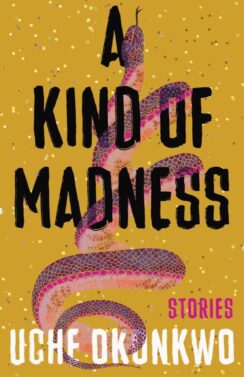
Uche Okonkwo’s A Kind of Madness is a collection of ten evocative short stories set in contemporary Nigeria that explore the delicate and often dangerous boundaries between love, expectation, domestic life, and mental instability. The book chronicles the “idiosyncrasies and minutiae of everyday Nigerian life” with a focus on the tensions inherent in relationships between parents and children, husbands and wives, and lifelong friends. Through these narratives, Okonkwo invites readers to consider why the people and places held closest are so often the catalysts for personal “madness”.
Nwunye Belgium (Belgium Wife)
The collection opens with the story of Udoka, a student at Awka Polytechnic, and her mother, Agatha, who is determined to secure a high-status marriage for her daughter. Agatha discovers that her friend Marigold in Orlu has a son, Uzor, who is a doctor living in Belgium. To ensure Udoka is the primary candidate, Agatha maliciously tells Marigold that the other prospective girl, Gloria, is “public property” and a “prostitute”. Agatha pressures Udoka to abandon her current fiancé, Enyinna, a local trader whom Agatha dismisses as “wretched” despite his shop doing well. Agatha sells Udoka on a dream of Belgium, where she will attend a “proper school,” have “fresh” skin that is “shining white,” and send back “plenty of dollars” to expand Agatha’s shop.
Udoka and Agatha visit Marigold’s modern house, which features a terrazzo floor, stainless-steel sinks, and a gas cooker. During the visit, Udoka undergoes a series of “tests” to prove her worthiness as a submissive and skilled daughter-in-law. She is assigned the difficult task of preparing egusi soup and handling live, unshelled periwinkles, which she must break with a machete. Marigold even asks Udoka directly if she is a virgin, and Udoka lies, recalling a singular sexual experience in college but answering “Yes, Mama” to satisfy the requirement.
However, the dream collapses when Marigold cancels the wedding, claiming that her family discovered a secret: Agatha’s grandmother had a “great-aunt who went mad”. Marigold uses this “madness story” to cover for the fact that Uzor has unexpectedly returned to Belgium without seeing Udoka. Marigold admits to her husband, Mazi Okoro, that she invented the story because she does not know why Uzor refuses to marry, suspecting he might be homosexual or have a foreign girlfriend. The story concludes with Udoka being mocked by her community as “Nwunye Belgium”. She attempts to reconcile with Enyinna at his shop in Onitsha, but he publicly humiliates her, offering her a Coke and telling his fellow traders she was rejected because of the “madness in her family”. Udoka finally realizes that her mother’s desperate hunger for salvation through a man was its own kind of madness.
Shadow
“Shadow” follows a young boy named Buchi and his intense emotional attachment to his Aunty Ifueko, who lives in New Jersey and visits Nigeria every December. Buchi is known as Ifueko’s “shadow” because he constantly follows her, finding in her a kindness that his stern father and critical Aunty Agnes lack. Buchi resents his father’s “disappointed gaze” and the way his mother has become “vacantly calm” due to “headache pills” after years of marital fighting.
The dynamic shifts when Ifueko arrives pregnant. Buchi feels a “pulling apart,” fearing that the new baby will replace him as the center of Ifueko’s world. He begins to draw “collages of mutant babies with tails and hydra heads,” which he then soaks into pulp and flushes down the toilet in a ritual of symbolic destruction. A year later, the family reveals that Ifueko lost the baby. While the adults are mournful, Buchi feels a blooming hope that he can now ask to move to America with her. However, when he visits her in her room, he finds a woman “slack” with grief who tells him to “shut the door when you leave”. Buchi realizes that his plan to be “absorbed into her life” as a son is impossible because the version of Ifueko he loved the one who needed him no longer exists.
Debris
In “Debris,” a young boy named D’boy navigates a life of extreme poverty and abandonment in Lagos. After being left by his mother at the doorstep of a man known as Spanner, who may be his father, D’boy learns “Rule Number One: every man for himself” and “stomach before conscience“. He lives in a “dank and airless” room and survives by picking pockets at bus stops. The narrative reaches its peak when an organization arrives at a local school to hand out “free” food packs of jollof rice. Realizing the food is running out, D’boy abandons the long queues and leads a violent stampede of children to seize the food. The story serves as a stark meditation on survival as the ultimate law of his existence.
Long Hair
Set in a girls’ boarding school, “Long Hair” explores the jealousy and social hierarchies triggered by a new student named Jennifer. The unnamed narrator envies Jennifer’s light skin and long, relaxer-straightened hair, which earns Jennifer special treatment from both students and staff. The tension escalates when a student named “Senior Vision” dreams that a “Mami Wota” (water spirit) agent has been sent to the school to “make trouble”.
The narrator maliciously suggests to her bunkmate, Dumebi, that Jennifer talks to her fellow Mami Wota girls in her sleep. This rumor sparks a school-wide hysteria where every misfortune is blamed on Jennifer’s supposed demonic nature. Eventually, Dumebi attacks Jennifer in the middle of the night with a pair of scissors, attempting to cut off her hair. In the ensuing fight, Jennifer stabs Dumebi in the thigh with the scissors. Jennifer is suspended but eventually returns to school with her hair cut short, a change that the narrator finds satisfying because “nobody is special”.
Animals
“Animals” centers on a family in Lagos and their complicated relationship with a one-eyed chicken named Otuanya. The boy, Nedu, becomes deeply attached to the bird, performing a “naming ceremony” with peanuts and Fanta to prevent his mother, Uzoma, from cooking it. Uzoma, however, is struggling with a “strange unrest” following an encounter with a policeman who humiliated her husband, Ebube, by making him lie on the ground. She finds herself both repulsed by her husband’s “softness” and secretly aroused by the memory of the aggressive officer.
To regain Uzoma’s respect, Ebube decides to kill the chicken himself. Despite Nedu’s attempts to release the bird, the family catches it, and Ebube slaughters it in the backyard. That night, Uzoma is “impressed” by Ebube’s display of control, leading to a brief sexual reconnection. However, the story ends on a somber note for Nedu, who attempts to “eat around” the chicken in his soup but eventually forces himself to vomit the meal into the toilet, unable to stomach the betrayal of his friend.
Milk and Oil
The friendship between two nine-year-old girls, Chekwube and Soty, is the focus of “Milk and Oil”. Chekwube is fascinated by Soty’s “soft” life in a quiet part of Isolo, characterized by drinking tall glasses of milk and having a bedroom filled with purple gauze and seashells. Soty has sickle cell anemia, and her caregiver, Aunty Ngozi, obsessively treats her with “healing olive oil” from her church, which she claims will transform Soty’s blood into the “blood of Jesus”.
Chekwube, jealous of the special attention Soty receives and resentful of Aunty Ngozi’s strict rules, manipulates Soty’s mother, Mrs. Onwuchekwa, into stopping the oil treatments. She also begins a campaign of psychological warfare against Soty, mimicking her lisp and physical postures to make Soty feel insecure. After Chekwube goads Soty into playing in the rain, Soty suffers a severe sickle cell crisis. Chekwube is overcome with guilt, fearing she killed her friend. The story ends with Chekwube visiting a recovering Soty and finding comfort in the “sweet smell of ink” on Soty’s superhero drawings, realizing that their bond survives despite her petty cruelties.
The Harvest
“The Harvest” critiques the commercialization of religion through the eyes of Alfonso, the pastor of a struggling small church in Obalende. Alfonso is obsessed with his “Build Him a House” fundraising campaign, ignoring the fact that his congregation is dwindling as members defect to a nearby megachurch led by a pastor nicknamed “Daddy Too Much”. Alfonso’s wife, Inimfon, has lost faith in his “prophecies of supernatural provision” and has started a successful restaurant to support them.
Alfonso visits the rival megachurch and is shocked to find his protégé, Brother Ifeanyi, working there as an usher. Ifeanyi defends his defection, noting that Alfonso’s church offered no “connections” or “good jobs,” only endless requests for money. Alfonso is left “emptied and hollowed out,” realizing he cannot compete with the “Apostles” who sell miracles. The story ends with Alfonso and Inimfon sitting alone in their empty assembly hall on a Sunday morning, the silence between them filled only by the rattling of their old car.
Eden
In “Eden,” siblings Madu and Ifechi discover their father’s pornographic videotape, titled A Taste of Paradise, and watch it in secret. The story explores the loss of innocence as the children attempt to reconcile the “moaning sounds” on the screen with their parents’ strict moral and religious rules. Ifechi overheard an adult conversation about “big girls” and blood, leading her to believe that any touch from a boy can result in pregnancy.
A power cut leaves the tape stuck in the player, and when the parents return, the father discovers their “sin”. Madu heroically takes the sole blame to protect his sister and is brutally beaten with a koboko (whip). Weeks later, after a school incident where Madu is exposed to a pornographic magazine, Ifechi intentionally confesses to her parents that she also watched the film. She endures her own beating, explaining to a shocked Madu that she did it “because I am bad too,” choosing solidarity in their perceived “badness” over a false “goodness”.
The Girl Who Lied
“The Girl Who Lied” is set at Badagry Model Secondary School and follows the friendship between the narrator, Tola, and a “spoiled” but magnetic girl named Kemi. Kemi is a compulsive liar and performer who tells tall tales about seeing the queen of England or having demons in her dreams. Kemi is fixated on Chaka, a chimpanzee kept in a cage on the school grounds, which was an “inheritance” from a former wildlife conservatory.
Kemi’s behavior grows increasingly erratic; she goads the chimpanzee until it bangs her body against the cage, and later she jumps into a well behind the hostel. While the other students and the school staff lie to the principal, claiming Kemi fell by accident to avoid trouble, Tola insists on the truth: “Kemi jumped“. Tola’s truth-telling results in Kemi being withdrawn from the school by her mother. Twelve years later, Tola still searches for Kemi online, wondering if telling the truth was worth losing her friend and realizing that Kemi remains a “ghost haunting the halls of my mind”.
Burning
The final story, “Burning,” depicts the life of Adanna, whose mother suffers from a severe and untreated mental illness that manifests in “changing faces” sometimes cheerful, sometimes catatonic, and sometimes “hard as stone”. The mother is convinced that Adanna is an ogbanje (a spirit child destined to die and be reborn) and takes her to a series of religious and traditional healers. A dibia (traditional healer) demands that Adanna reveal where she buried her iyi-uwa (the spirit object that binds her to the spirit world).
Desperate for relief from her mother’s “onslaught” and the dibia’s scrutiny, Adanna lies and says the object is buried in her mother’s home village, Umuduru. The family and the dibia travel to the village, where Adanna leads a procession of men with shovels on a fruitless search. Eventually, the dibia finds a random piece of rusted metal and declares it to be the iyi-uwa to end the farce and collect his payment.
Back in Lagos, the mother’s illness inevitably returns. They end up at a white-garment church, waiting in a long queue to see an “apostle”. Adanna has a moment of profound clarity, realizing that none of these rituals the prophetesses, the dibias, or the apostles are actually about her. She understands that her mother is searching for a salvation Adanna cannot provide. The collection ends with Adanna accepting a bowl of jollof rice from her mother, knowing it is “warm and easy like an old lie,” and choosing to settle into that lie because it is the only way to survive her mother’s love.
Themes and Literary Significance
Throughout the collection, Okonkwo explores several recurring themes:
- The Weight of Maternal Expectation: Mothers like Agatha in “Nwunye Belgium” and Uzoma in “Animals” project their own insecurities and social ambitions onto their children, often with devastating results.
- The Perception of Madness: The title, A Kind of Madness, refers not only to clinical mental illness as seen in “Burning” but also to the social and religious manias that grip communities, such as the Mami Wota scare in “Long Hair” or the prosperity gospel in “The Harvest”.
- Social Class and the West: The characters often measure their worth against Western standards, whether it is the “proper schools” of Belgium, the “snowy winters” of New Jersey, or the “imported boxes of cereal” in “The Girl Who Lied”.
- The Loss of Innocence: Children like Buchi, Madu, and Chekwube are forced to navigate adult hypocrisies and traumas, often losing their “softness” in exchange for a hard-won cynicism.
Critics have praised Okonkwo’s “sinuous” language and her “clear-eyed pragmatism” in depicting these complex characters. The collection stands as a “gut-punching” exploration of the human psyche within the specific cultural landscape of modern Nigeria.