Full Book Summary
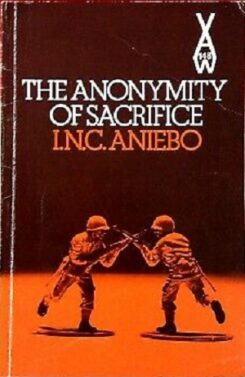
The novel follows two protagonists Captain Benjy Onwura and Sergeant Cyril Agumo during the Nigerian Civil War (Biafran War).
Part One and Two: Captain Benjy Onwura’s Command
The narrative begins with Captain Benjy Onwura, a professional and sensitive officer in his late twenties, driving back from a romantic interlude with his fiancée, Franca Odunze,. Their relationship represents a hope for a stable future; Benjy, the sole survivor of his family after the 1966 Kaduna massacres, is desperate to preserve his family name,,.
Upon returning to Uyo, Benjy is promoted to battalion commander and ordered to the Awka sector to stem a massive enemy push. At the front, Benjy faces a dire situation:
- Logistical Failure: Reinforcements often arrive unarmed or without basic equipment, forcing commanders to rely on weapons captured from the enemy,.
- Paranoia and Propaganda: The enemy uses loudspeakers to broadcast that Biafran officers are “saboteurs” who have sold out their men for millions of pounds,,.
- Psychological Strain: Benjy is haunted by flashbacks of his imprisonment and the torture of fellow officers in the North.
Benjy’s command is marked by his attempts to maintain military discipline. He places a “playboy” officer, Lieutenant Dike, under arrest for being AWOL and eventually promotes Sergeant Cyril Agumo to a “local second lieutenant” to fill the vacuum left by dead officers,,.
Part Three and Four: The Rise and Paranoia of Cyril Agumo
Sergeant Cyril Agumo is a veteran of the old Nigerian Army with a “boxer’s physique”,. His motivation for fighting is deeply personal; his wife, Maria, taunted him for being a “coward” who stayed in the rear while “small boys” became officers. Agumo is a man of contradictions deeply religious, frequently quoting Ecclesiastes 3 (“A time to kill, and a time to heal”), yet capable of extreme violence,.
Agumo proves to be a formidable soldier. When his platoon commander, Second Lieutenant Ekemezie, is killed by a mortar bomb, Agumo takes charge. He holds his position against waves of enemy attacks using ogbunigwes (Biafran-made mines) and a heavy machine gun, even as his men desert him,.
However, Agumo’s battlefield success is poisoned by growing paranoia:
- He becomes convinced that Benjy is a saboteur because Benjy orders tactical withdrawals and sends unarmed reinforcements,.
- He believes Benjy is betraying Awka, Benjy’s own hometown, which Agumo cannot comprehend.
- Agumo’s mental state further deteriorates after his young batman, John, is killed by a sniper.
The Climax: The Murder of Benjy Onwura
The tension culminates when Benjy orders Agumo to withdraw to a secondary defensive line. Agumo flatly refuses, sending back a signal that his company is “holding fast”. Benjy travels to Agumo’s location to personally arrest him for disobedience during wartime.
As Benjy orders his orderly to disarm Agumo, the sergeant acting on the belief that he is “saving” the cause from a traitor draws his pistol and shoots Benjy three times, killing him instantly. Agumo justifies the murder to himself, thinking, “The captain was my enemy and I had to kill or be killed”.
Epilogue: The Futility of Sacrifice
The novel concludes in a detention cell where Agumo is held alongside other sergeants, Godfrey and Augustine, who also murdered their officers. Agumo remains deluded, dreaming of a pardon from the Head of State and believing he is a hero.
The sources reveal a final, crushing irony:
- Agumo discovers that his promotions were never official; he was never a lieutenant or even a WOII in the eyes of the army.
- His “sacrifice” is rendered anonymous as he is labeled a common criminal who impersonated an officer.
- The book ends with Agumo being tied to a stake and executed by a firing squad, while the civil war continues unabated.
Setting
- Time: Roughly seven months into the Nigerian Civil War (circa 1967-1968), following the 1966 massacres in Northern Nigeria.
- Place: Various locations in the secessionist state of Biafra, including Uyo, Oron, Port Harcourt, and Owerri. The primary action occurs at the war front near Awka, specifically in Ndiagu-Obinofia and Ugwuoba.
Themes
- The Futility and Anonymity of Sacrifice: The title reflects the central theme both men make immense sacrifices for their cause, yet they are ultimately destroyed by their own side, their deaths rendered meaningless by internal strife.
- Class and Generational Conflict: There is a sharp divide between the “educated schoolboy” officers and the “experienced” NCOs. Agumo resents the young officers’ lack of practical skill, while Benjy struggles to maintain discipline over men who do not trust his leadership.
- Paranoia and Sabotage: The fear of “saboteurs” (or “sabos”) permeates the ranks. This paranoia is weaponized by enemy loudspeakers to turn Biafran soldiers against their commanders.
- Masculinity and Identity: Agumo’s desire to fight is driven by a need to prove his manhood to his wife. Benjy’s motivation is to preserve his family name as the sole survivor of a massacre.
Characters
- Captain Benjy Onwura: A professional, Western-trained officer who tries to balance his duty with his personal life. He is realistic about the war’s progress but is unfairly labeled a traitor.
- Sergeant (Local 2nd Lt.) Cyril Agumo: A “boxer-physique” veteran who finds fulfillment in battle. His religious fervor and battlefield success are marred by his lethal paranoia and resentment of the officer class.
- Franca Odunze: Benjy’s fiancée who works for the Housing Corporation; she represents the life of peace and stability Benjy hopes to return to.
- Captain Madike: The Brigade Major and university graduate who is candid about his intense fear of death and the poor administration of the army.
- Captain Singer-Brown: A cool, kaikai-drinking commander of the 70th Battalion who serves as an example of a hardened front-line soldier.
Literary Devices
- Parallelism: The narrative juxtaposes Benjy’s perspective (the officer trying to manage a failing system) with Agumo’s (the soldier experiencing the war’s raw violence).
- Flashbacks: These are used extensively to provide backstories for both men, such as Benjy’s romance with Franca and Agumo’s harrowing escape from the North.
- Irony: The most profound irony is that Agumo kills Benjy to “save” Biafra from a “saboteur,” only to be executed himself by the very state he thought he was protecting.
- Imagery: Aniebo uses vivid and violent imagery to describe the shelling such as the “diamond pattern” of explosions that flings human flesh into the air and the ogbunigwe, which becomes a symbol of Biafran technological desperation.
- Foreshadowing: Benjy’s overwhelming sense of “fatality” and “brooding silence” early in the book hints at his tragic end.