
Summary
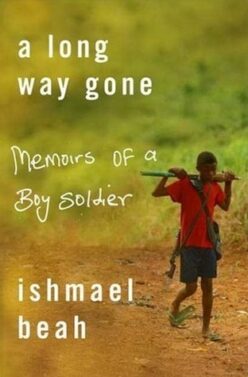
A Long Way Gone: Memoirs of a Boy Soldier is Ishmael Beah’s firsthand account of his journey from a lighthearted child in Sierra Leone to a government-recruited child soldier, and eventually to a rehabilitated advocate for peace. The narrative begins in 1993, when twelve-year-old Ishmael, his brother Junior, and their friends travel to a neighboring town for a talent show, only to find their home of Mogbwemo has been attacked by rebels. For months, the boys wander the countryside, struggling with starvation and the constant threat of the Revolutionary United Front (RUF).
After being separated from his family and eventually his brother, Ishmael is recruited by the Sierra Leone Armed Forces in the village of Yele. Under the influence of drugs like “brown-brown” (cocaine mixed with gunpowder) and the brainwashing tactics of Lieutenant Jabati, Ishmael becomes a “junior lieutenant,” performing horrific acts of violence as a survival mechanism and a means of avenging his family. His life changes again when UNICEF workers remove him from the front lines and take him to a rehabilitation center in Freetown. Through the patience of a nurse named Esther and the power of his childhood passion—rap music—Ishmael begins to reclaim his humanity. After reuniting with his Uncle Tommy and traveling to New York City to speak at the United Nations, Ishmael is forced to flee Sierra Leone once more after a violent military coup in 1997.
Plot
- The Loss of Innocence: Ishmael, Junior, and Talloi leave home for Mattru Jong to perform rap music. While they are away, Mogbwemo is attacked, and they are never able to return home or find their families.
- Survival and Wandering: The boys flee from town to town, witnessing the gruesome aftermath of rebel massacres. They are often treated with suspicion by villagers who fear “seven boys” are rebel scouts. Ishmael is eventually separated from Junior during a rebel attack on Kamator.
- Life in the Forest: Ishmael spends a month alone in the forest, struggling with isolation and the physical toll of survival. He eventually meets a new group of boys, including Alhaji and Kanei, and they travel toward the coast.
- Recruitment into the Army: The boys reach Yele, which is under military control. Lieutenant Jabati uses the threat of the approaching rebels to force the boys into service. Ishmael is drugged and trained to see the “enemy” as those responsible for his suffering.
- The Killing Contest: Ishmael becomes a lethal soldier. In one instance, he wins a competition by being the first to slit a prisoner’s throat. He is given the rank of junior lieutenant.
- Rehabilitation at Benin Home: UNICEF intervenes and takes Ishmael and several other boys to a center. At first, the boys are violent and experience severe drug withdrawal. Nurse Esther uses a Walkman and Bob Marley cassettes to build a bridge of trust with Ishmael.
- Repatriation and the UN: Ishmael moves in with his Uncle Tommy’s family in Freetown. He is selected to travel to New York City for an international children’s parliament, where he speaks about the resilience of children.
- The Coup and Escape: In 1997, the AFRC/RUF oust the government, and Freetown descends into lawlessness. After Uncle Tommy dies of illness, Ishmael escapes to Guinea to seek a new life with Laura Simms in New York.
Setting
- Sierra Leone (1993–1997): The primary setting, ranging from rural mining villages like Mogbwemo to the dense forests and the urban capital of Freetown.
- The Forest: A place of both sanctuary and psychological torment where Ishmael experiences total isolation.
- Yele: A military-occupied village that transitions from a place of apparent safety to a training ground for child soldiers.
- Benin Home (Kissy Town): The rehabilitation center on the outskirts of Freetown where Ishmael undergoes his psychological recovery.
- New York City (1996): Representing a world of glittering lights and freezing temperatures that contrasts sharply with the war-torn landscape of Sierra Leone.
Themes
- Resilience and Survival: The core of the memoir is the capacity of children to “outlive their sufferings” and adapt to unthinkable circumstances.
- Loss of Childhood: The war robs Ishmael and thousands of others of their innocence, turning soccer games and rap music into memories that are eventually replaced by the “art” of killing.
- The Psychological Impact of War: The sources detail the trauma of war through Ishmael’s migraines, nightmares, and the numbing effects of drugs like cocaine and marijuana.
- The Power of Storytelling and Music: Music, specifically hip-hop and reggae, serves as a recurring motif of humanity. It saves Ishmael’s life multiple times and is the tool that facilitates his rehabilitation.
- Revenge vs. Redemption: Ishmael is recruited through a desire for revenge but eventually learns at the UN that revenge creates a never-ending cycle of violence.
Characters
Major Characters
- Ishmael Beah: The narrator and protagonist. He transforms from a talented dancer into a ruthless soldier and finally into an eloquent advocate for children’s rights.
- Junior Beah: Ishmael’s older brother. He is Ishmael’s protector during their early travels but disappears during the attack on Kamator.
- Esther: A nurse at the Benin Home rehabilitation center. Her “genuine tone” and use of music are instrumental in Ishmael’s recovery.
- Uncle Tommy: Ishmael’s uncle in Freetown, a carpenter who takes him in after rehabilitation. He provides Ishmael with a sense of “new family”.
- Lieutenant Jabati: The commander of Ishmael’s squad. He uses Shakespeare and a shared hatred for the rebels to manipulate the boys into fighting.
- Laura Simms: A storyteller in New York City who becomes a mother figure to Ishmael and eventually facilitates his move to the U.S..
Minor Characters
- Alhaji: A close friend of Ishmael in the army known as “Little Rambo”. He is rehabilitated alongside Ishmael.
- Kanei, Musa, Saidu, Jumah, and Moriba: The group of boys Ishmael travels with. Musa is a storyteller; Saidu dies from “parts of him” slowly dying each day; Moriba is killed in combat.
- Gasemu: A man from Ishmael’s village who leads the boys to their families just as they are killed. He dies from gunshot wounds.
- Mambu: A violent boy at the rehabilitation center who becomes Ishmael’s friend but eventually returns to the front lines.
- Mohamed: Ishmael’s childhood friend who eventually reunites with him at the rehabilitation center and moves in with Uncle Tommy.
Literary Devices
- Imagery: Beah uses visceral and harrowing descriptions to depict the war, such as “intestines spilling out through bullet holes” and “blood… like rain on the nearby leaves”.
- Symbolism:
- The Moon: Represents goodness, peace, and the presence of the ancestors. An old man in Kabati says, “We must strive to be like the moon” because no one grumbles when it shines.
- Rap Cassettes: Symbolize Ishmael’s connection to his pre-war life and childhood innocence. They are literally the things that save his life when villagers suspect him of being a rebel.
- Flashbacks: The narrative is frequently interrupted by memories of Ishmael’s childhood, such as learning to skip stones with Junior or his name-giving ceremony, highlighting the stark contrast between his past and present.
- Foreshadowing: Early in the book, refugees warn that “the war would eventually reach our town,” a warning Ishmael’s imagination at ten could not grasp.
- Irony: Ishmael recites Shakespeare’s “Julius Caesar” for adults as a child to show his command of English, only to later discuss the same play with a commanding officer who uses its themes to justify war.

